Episode Details
Back to Episodes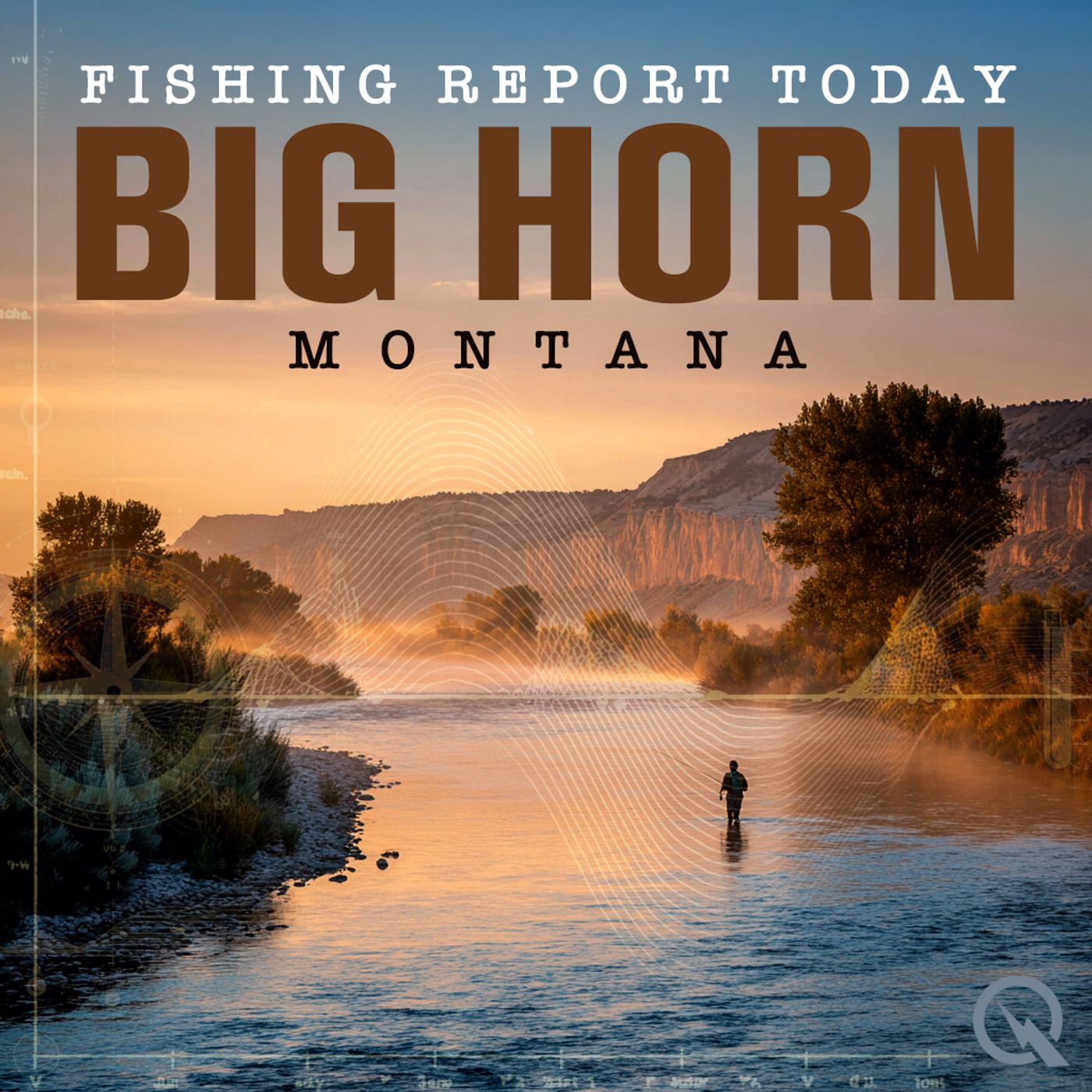
Bighorn River Fishing Report: Mild Winter, Hot Nymphing for Rainbows and Browns
Published 3 months, 2 weeks ago
Description
Name’s Artificial Lure, checking in with your Bighorn country fishing report out of the Fort Smith / Bighorn, Montana stretch.
We don’t worry about tides on the Bighorn – she’s a tailwater, not a tidal river – so your “tide chart” is all about flows off Yellowtail. Flows have been steady and low, classic winter nymphing conditions with clear water and plenty of moss to pick off your rig between drifts. According to the latest Bighorn River report from Montana Outdoor and Yellow Dog Fly Fishing, the river is fishing better than you’d expect for January, with “hot nymphing” the main story.
Weather-wise, it’s a mild winter pattern. Daytime highs are running around the low 30s to low 40s, light wind early with a bit more breeze this afternoon, and cold nights that lock in shelf ice along the edges. Skies are mostly clear to partly cloudy. Dress in layers, expect icy ramps, and watch that fog that sometimes settles in over the first few miles at daybreak.
Sunrise comes late and slow this time of year, right around 7:50 a.m. local, with sunset just after 4:50 p.m. That gives you a compact window of decent temps from about 10 a.m. to 3 p.m., which is when most of the better action has lined up the last few days.
Trout activity is classic winter Bighorn: fish glued to softer seams, buckets, and drop‑offs, not wasting energy in heavy current. Recent reports from local guides on the upper river say anglers are putting good numbers of rainbows and browns in the net, mainly 14–18 inches, with a few pushing into the low 20s. It’s more about steady action than trophies right now, but there have been enough big heads seen to keep things interesting.
Best producers have been small nymphs fished deep. According to the Jan. 10 Montana Outdoor fishing report, the hot setup has been tailwater staples:
- **Flies / lures:** Ray Charles, Firebead Sowbugs, pink and orange scuds, small midges (black, olive, red), size 16–20. A winter Bighorn junk rig – San Juan Worm or wire worm above a sowbug – is still putting in work.
- **Spin gear:** Tiny marabou jigs in olive, brown, or black; 1/8–1/16 oz; small gold or copper spoons; in-line spinners downsized and run slow in the buckets.
Best “bait” equivalent on the fly rod is a combo of a worm or egg up top with a sowbug or midge below. Run them 6–8 feet under an indicator, add just enough split shot to tick bottom every few seconds, and mend constantly. If you’re throwing hardware, slow everything down: cast quartering upstream, let it sink, and just crawl it along the seam.
A couple of local hot spots to key on:
- **Afterbay to 3‑Mile:** The classic winter float. Focus on the softer insides of big bends, the buckets below islands, and any shelf that drops from knee‑deep to chest‑deep. The long flat above 3‑Mile has been quietly giving up nice pods of fish to patient nymphers.
- **3‑Mile to Bighorn Access:** A little less pressure. Work the deeper slots below the obvious riffles and the slow tailouts. That broad run above Bighorn Access fishes better than it looks if you pick it apart with a long nymph rig.
Expect the bite to start slow at first light, build late morning as the water warms a hair, and peak early afternoon. If you see midges clustering and a few heads poking up in the softer inside seams, you can sneak a small midge dry or a Griffith’s Gnat into the mix, but nymphs are still the bread and butter.
One last local tip: don’t overlook the simple stuff. Keep changing depth and weight before you blame your fly pattern. On the winter Bighorn, getting in the right lane at the right depth usually matters more than the exact bug.
Thanks for tuning in, and don’t forget to subscribe so you never miss a river check‑in.
This has been a quiet please production, for more check out quiet please dot ai.
Great deals on fishing gear
We don’t worry about tides on the Bighorn – she’s a tailwater, not a tidal river – so your “tide chart” is all about flows off Yellowtail. Flows have been steady and low, classic winter nymphing conditions with clear water and plenty of moss to pick off your rig between drifts. According to the latest Bighorn River report from Montana Outdoor and Yellow Dog Fly Fishing, the river is fishing better than you’d expect for January, with “hot nymphing” the main story.
Weather-wise, it’s a mild winter pattern. Daytime highs are running around the low 30s to low 40s, light wind early with a bit more breeze this afternoon, and cold nights that lock in shelf ice along the edges. Skies are mostly clear to partly cloudy. Dress in layers, expect icy ramps, and watch that fog that sometimes settles in over the first few miles at daybreak.
Sunrise comes late and slow this time of year, right around 7:50 a.m. local, with sunset just after 4:50 p.m. That gives you a compact window of decent temps from about 10 a.m. to 3 p.m., which is when most of the better action has lined up the last few days.
Trout activity is classic winter Bighorn: fish glued to softer seams, buckets, and drop‑offs, not wasting energy in heavy current. Recent reports from local guides on the upper river say anglers are putting good numbers of rainbows and browns in the net, mainly 14–18 inches, with a few pushing into the low 20s. It’s more about steady action than trophies right now, but there have been enough big heads seen to keep things interesting.
Best producers have been small nymphs fished deep. According to the Jan. 10 Montana Outdoor fishing report, the hot setup has been tailwater staples:
- **Flies / lures:** Ray Charles, Firebead Sowbugs, pink and orange scuds, small midges (black, olive, red), size 16–20. A winter Bighorn junk rig – San Juan Worm or wire worm above a sowbug – is still putting in work.
- **Spin gear:** Tiny marabou jigs in olive, brown, or black; 1/8–1/16 oz; small gold or copper spoons; in-line spinners downsized and run slow in the buckets.
Best “bait” equivalent on the fly rod is a combo of a worm or egg up top with a sowbug or midge below. Run them 6–8 feet under an indicator, add just enough split shot to tick bottom every few seconds, and mend constantly. If you’re throwing hardware, slow everything down: cast quartering upstream, let it sink, and just crawl it along the seam.
A couple of local hot spots to key on:
- **Afterbay to 3‑Mile:** The classic winter float. Focus on the softer insides of big bends, the buckets below islands, and any shelf that drops from knee‑deep to chest‑deep. The long flat above 3‑Mile has been quietly giving up nice pods of fish to patient nymphers.
- **3‑Mile to Bighorn Access:** A little less pressure. Work the deeper slots below the obvious riffles and the slow tailouts. That broad run above Bighorn Access fishes better than it looks if you pick it apart with a long nymph rig.
Expect the bite to start slow at first light, build late morning as the water warms a hair, and peak early afternoon. If you see midges clustering and a few heads poking up in the softer inside seams, you can sneak a small midge dry or a Griffith’s Gnat into the mix, but nymphs are still the bread and butter.
One last local tip: don’t overlook the simple stuff. Keep changing depth and weight before you blame your fly pattern. On the winter Bighorn, getting in the right lane at the right depth usually matters more than the exact bug.
Thanks for tuning in, and don’t forget to subscribe so you never miss a river check‑in.
This has been a quiet please production, for more check out quiet please dot ai.
Great deals on fishing gear
Listen Now
Love PodBriefly?
If you like Podbriefly.com, please consider donating to support the ongoing development.
Support Us