Episode Details
Back to Episodes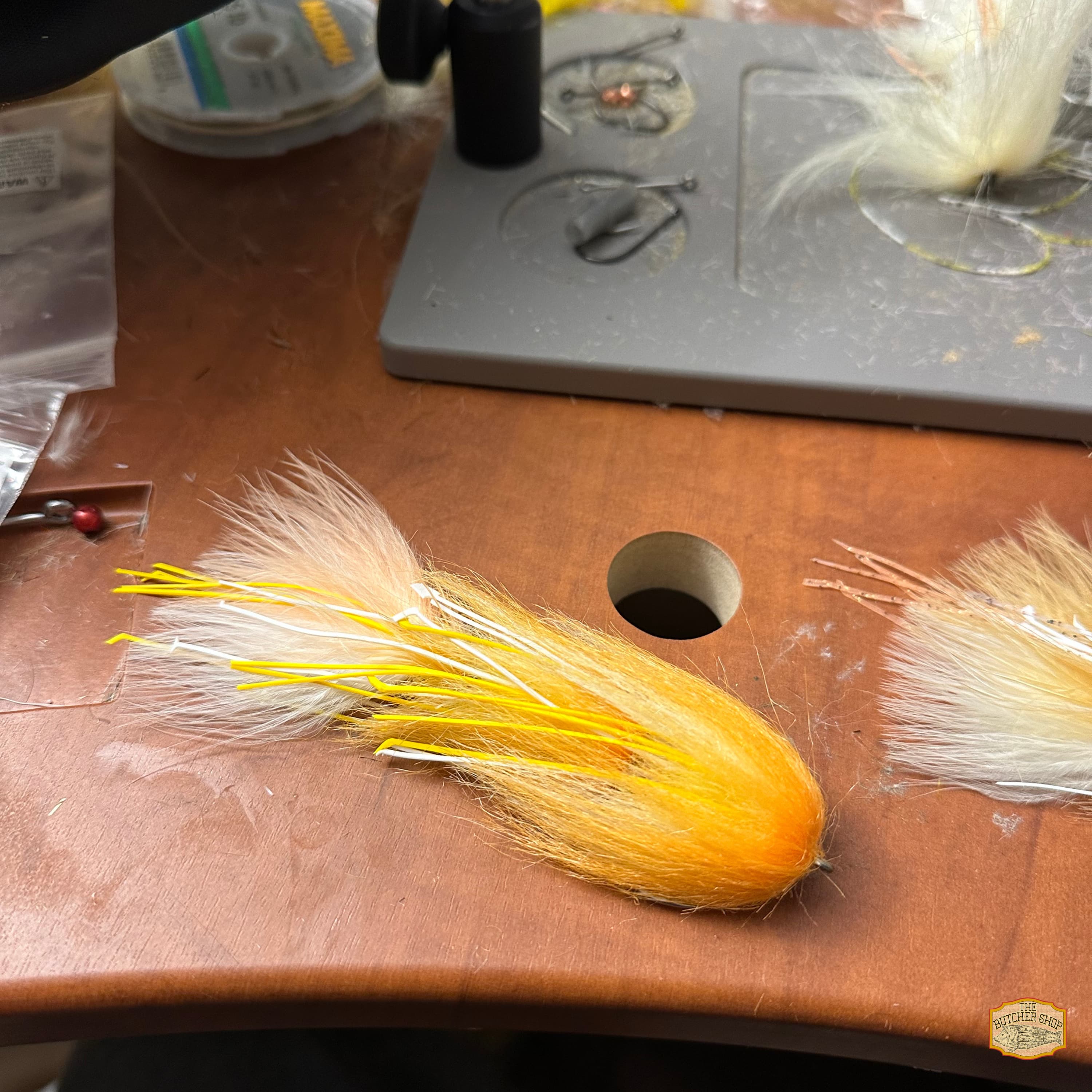
Crafting The Nut Job: A Deep Dive with Brendan Ruch
Description
Episode Overview
In this episode of The Butcher Shop fly fishing podcast, host Marvin Cash sits down with Brendan Ruch, the innovative tier behind the Nut Job, to explore every dimension of this game-changing swim fly pattern. From its accidental birth on Logjam Live to its current status as a go-to predator pattern for serious smallmouth and trout anglers, Brendan walks through the complete evolution of the fly. The conversation covers Central Pennsylvania waters where the pattern has proven deadly on big smallmouth and trout, particularly during spring high water conditions. Brendan details his craft fur-based approach, explaining how the synthetic material provides superior castability and a distinctive glide bait action compared to traditional hen saddle patterns. The discussion moves from vise to water, covering everything from material selection and proportioning to advanced retrieve techniques that maximize the fly's strip-and-stall bite trigger, making this essential listening for any angler pursuing large predatory fish on the fly.
Key Takeaways
- How to tie a swim fly with predictable glide bait action using craft fur instead of expensive hen saddles, resulting in easier casting and better material availability
- Why positioning rubber legs on top of the shank rather than on the sides creates critical parachute action that allows the fly to suspend and trigger strikes during the pause
- When to adjust tungsten bead weights between 3/16" and 7/32" based on current speed to keep the fly in the strike zone without losing the neutral buoyancy that makes the pattern effective
- How introducing slack through rod tip manipulation and strategic mends maximizes the fly's side-to-side glide within a confined 12-inch zone where fish are holding
- Why dark colors like olive-and-black with copper flash outperform bright patterns in off-color spring water, while yellow-orange combinations excel as visibility improves
Techniques & Gear Covered
The episode centers on Brendan's systematic approach to fishing articulated swim flies with emphasis on strip-and-stall retrieves that create glide bait action. He details using rod tip manipulation—upward jerks, downward strips, lateral movements combined with mends—to introduce slack that allows the Nut Job to kick side-to-side within a tight zone. Tying techniques focus on craft fur density and proportioning, including ripping tips rather than cutting to preserve bulk, using finesse chenille as a low-drag core and positioning 4-8 rubber legs to create suspending action. Brendan discusses hook configurations ranging from size 2 Trout Predator to 1/0 hooks paired with 15-25mm shanks connected via Maxima Chameleon 25lb, with tungsten bead options from 3/16" to 7/32" for varying current speeds. Line selection covers Type 3 sink tips for early season high water transitioning to intermediate lines as flows normalize, paired with fluoro leaders built from 30-35lb stepping down to 16-20lb tippet.
Locations & Species
The Nut Job has proven effective across East Coast waters, with Brendan's primary focus on Central Pennsylvania smallmouth fisheries where the pattern excels during high water conditions typical of March through May. He references success on the West Branch of the Delaware targeting trout with smaller versions of the pattern and discusses adaptations for musky fishing and striper applications along coastal waters. The fly's design addresses the challenges of fishing swollen spring rivers with off-color water, where heavy tungsten keeps patterns in the z