Episode Details
Back to Episodes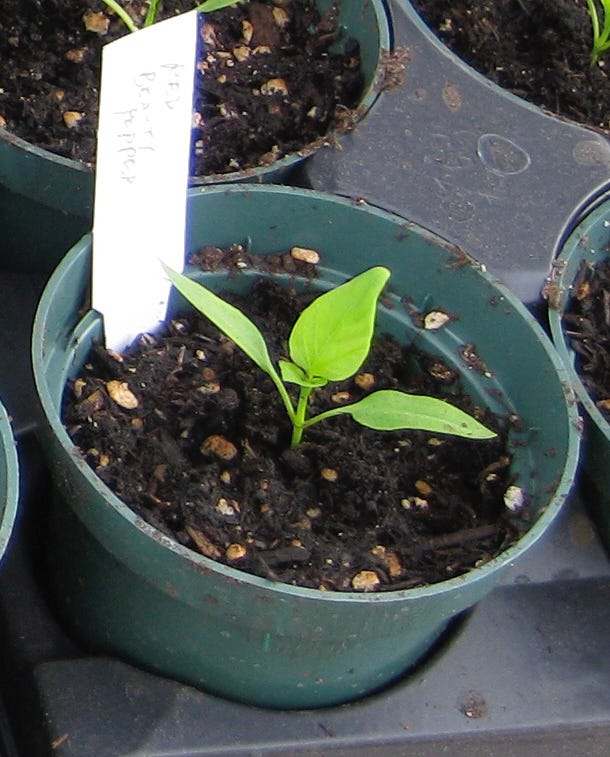
January is Seed Starting Time For Many Vegetables (Resending)
Description
(Note: this post was sent early this morning, but only a few people received it. I’m not sure what the problem is at Substack, but I’m sending it again. Hope you get to read and listen to it!)
Don’t give up on certain seed varieties that seem to really take their time, germinating and growing indoors. Among the warm season vegetables that are frustratingly slow to germinate are onions, peppers, parsley, basil, and dill. To make the wait even more maddening, it can take 8 to 12 weeks for certain vegetables to grow before they can be transplanted in the garden, including onions, parsley, eggplant and celery.
Add to that the seeds of flowering plants that take awhile (8 to 12 weeks, or more) to germinate and grow to a transplantable size: snapdragons, begonias, vinca, lisianthus, strawflower, impatiens, statice, geraniums, petunias, rudbeckia and coleus.
No wonder we talk about Seed Starting Tips in early January!
In today’s newsletter podcast, America’s Favorite Retired College Horticulture Professor, Debbie Flower, offers five great hints on starting seeds of vegetables and flowers, including peppers:
• How soaking pepper seeds in hydrogen peroxide can speed up germination; and, how seeds germinate.
• Why seeds don’t need fertilizer.
• How to know when to transplant those seedlings into larger containers.
• Why seedlings need a light period and a dark period each day.
• The importance of air movement and the development of reaction wood* for the young seedlings.
Slow-to-germinate pepper seeds can take up to three weeks to show their first set of true leaves. And, several other vegetables, especially some herbs, take weeks to sprout. Among them are celery, parsley, rosemary, asparagus, lavender, artichoke,
What you’ll need for successful seed germination and growth, according to Debbie:
• Small, clean seed trays or containers with drain holes.
• A soilless seed starting mix. (We offer up several homemade recipes, too)
• The benefit of soaking pepper seeds for a few minutes in hydrogen peroxide.
• Bottom heat via a propagation mat.
• Consistent moisture.
• Lights, once the seedlings appear.
• Air movement.
• Transplanting those seedlings into bigger containers once roots pop out of the bottom.
Debbie Flower is a horticultural treasure. Just one listen to what she has to say isn’t enough. She is offering up so many great tips for gardeners in our “scenic bypasses”, that it really pays to either listen a couple of times or read the entire transcript (below, for paid subscribers).
I am amazed at all I am learning from her; and, I’m listening to what she has to say at least four times (the original interview, two editing sessions, proofing the final) and polishing the transcript. And reading and editing that transcript, although last on the list, reveals more great gardening information that I had missed before.
We also discussed the importance of gentle watering of seedling trays, so as not to dislodge the seeds (Debbie’s favorite is the Dramm 1000 shower nozzle). We have different ideas about the best sort of gentle watering equipment to use. A list and links of all the seed starting implements that we discussed, including watering equipment, is here**: