Episode Details
Back to Episodes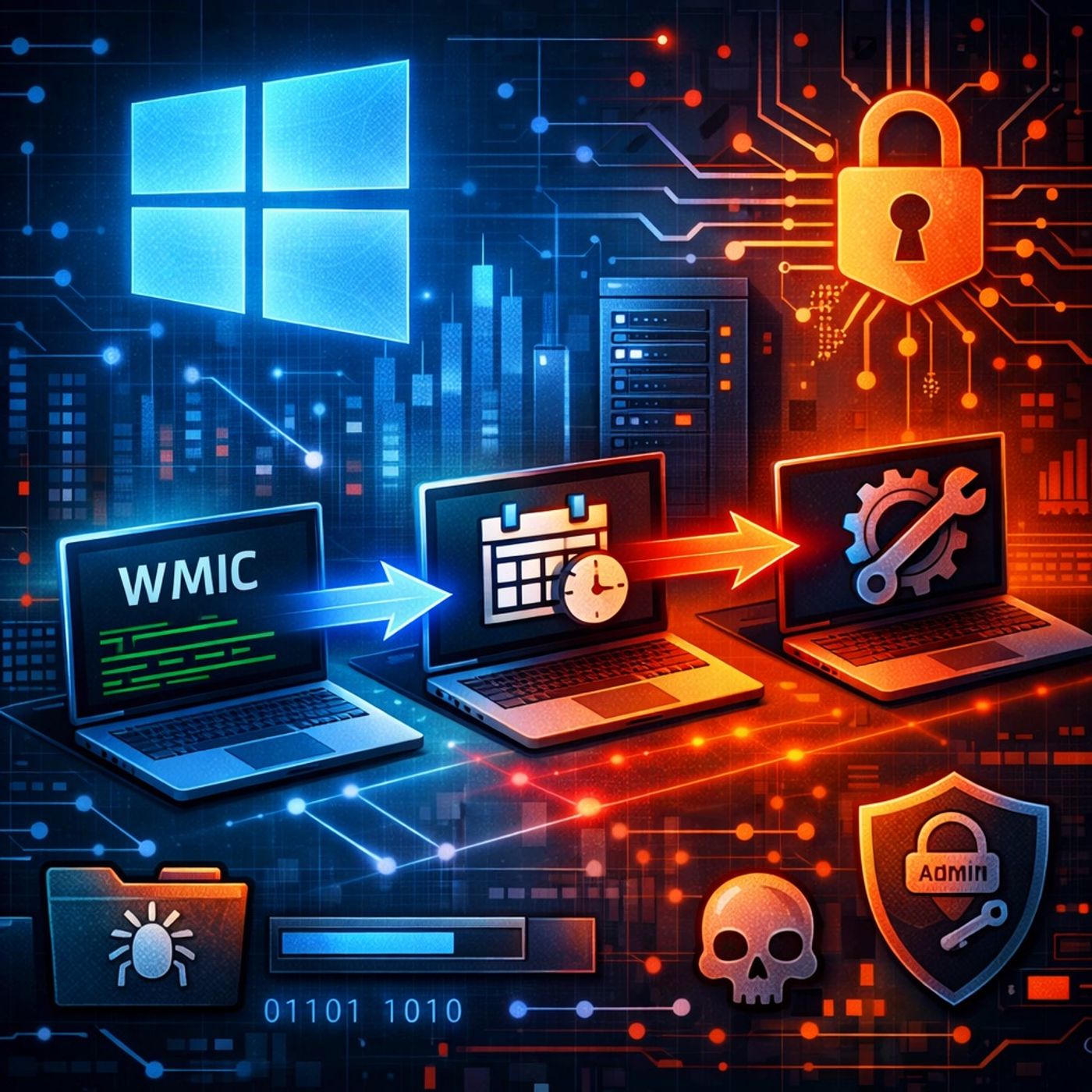
Course 16 - Red Team Ethical Hacking Beginner Course | Episode 5: Windows Lateral Movement: Manual Execution via WMIC, Scheduled Tasks
Published 7 months, 3 weeks ago
Description
In this lesson, you’ll learn about:
- The purpose of manual lateral movement in red team operations
- Why native Windows utilities are critical for stealth and reliability
- Three core lateral movement methodologies used in authorized engagements
- Privilege context differences between execution methods
- How these techniques relate to common automated tools
- Less noisy
- More flexible
- Harder to detect when used responsibly in controlled testing
- The attacker targets a remote host by explicitly specifying it
- Remote interaction is used to:
- Validate access
- Confirm file placement
- Trigger execution of an existing payload
- Requires administrative privileges on the target
- Execution occurs under the credential context of the initiating user
- Commonly used for:
- Quick pivots
- Testing administrative access
- Lightweight remote execution
- A payload is staged on the target system
- A task is created remotely with:
- A one-time execution
- Immediate triggering behavior
- Execution configured under a high-privilege account
- Can execute under NT AUTHORITY\SYSTEM
- Allows privilege escalation beyond domain admin
- The “run once” approach prevents repeated execution
- Mimics legitimate administrative behavior
- Blends into system management activity
- Provides strong control over execution timing
- A specially designed service-compatible executable is required
- The payload is registered as a new service on the target
- Starting the service triggers execution automatically
- Executes as SYSTEM by default
- Explains the mechanics behind tools like PsExec
- Requires careful payload preparation due to service constraints
- Extremely powerful
- Highly privileged
- More detectable if not carefully managed
Listen Now
Love PodBriefly?
If you like Podbriefly.com, please consider donating to support the ongoing development.
Support Us