Episode Details
Back to Episodes![EA152: 10 Steps for Creating Standard Operating Procedures for Architects [Podcast]](https://artwork.captivate.fm/6145cd01-3020-434f-bd52-39a5caadacd8/sopsfeature.png)
EA152: 10 Steps for Creating Standard Operating Procedures for Architects [Podcast]
Description
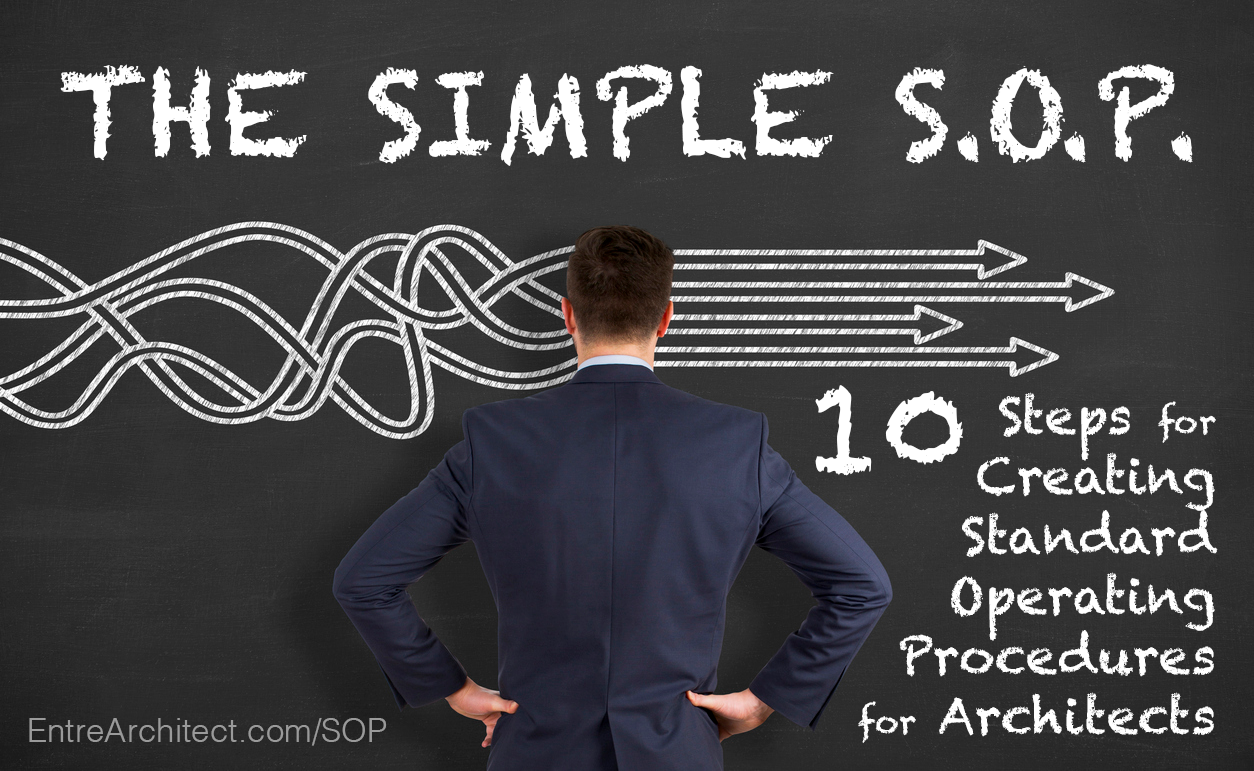
10 Steps for Creating Standard Operating Procedures for Architects
Michael Gerber, the author of The E-Myth Revisited, said, “Organize around business functions, not people. Build systems within each business function. Let systems run the business and people run the systems. People come and go, but the systems remain constant.”
This week at EntreArchitect Podcast, Simple SOPs: 10 Steps for Creating Standard Operating Procedures for Architects.
In business, standard operating procedures are the answer to your questions. How do you make more money? How can you find more work? How can you get your employees or contractors to do what you want them to? How do I get more done?
The answer is SOPs; Standard Operating Procedures for Architects. They make you a stronger, more effective leader. They clarify your vision and communicate, support and help with decision-making for realizing that vision. SOPs build a better culture. They’re an intentional reinforcement of the behaviors that help us realize our vision and the kind of workplace that we want our firms to be. SOPs allow us to build better businesses, so we can be better architects. Once they’re developed, they allow us to focus on what matters most to us and spend more time on the things that we love to do. Creating SOPs might be the most important task we have as entrepreneurs.
Unfortunately, most of us don’t have standard operating procedures. Why? Because we feel that the systems will hinder our creativity? That if we great a standard process we’ll start to create standard projects?
Of course not! They’ll allow us to have more time to spend on developing our creativity and give us more opportunities to be better architects.
Or maybe we don’t create processes because we were never taught. We’re not business people, we’re architects.
What are the 5 components of every SOP?
- A process, the manual methods used for accomplishing a task. Effective processes are clear, replicable, documented, supported by tools, and easily accessible.
- Systems, or automated methods for accomplishing tasks.
- Roles are the expectations for how someone doing the work should use his/her skills to achieve the goals.
- Skills are complete sets of knowledge that are used to execute the processes.
- Structure is how the different roles interact.
“For the first 25 years of my life, I wanted freedom. For the next 25 years I wanted order. For the next 25 years I realized the order is freedom.” – Winston Churchill
10 Steps to Creating Standard Operating Procedures for Architects
1. Company Identity // Your firm’s name, logo, letterhead. Maybe you want to document your firm’s mission and vision to remind your firm of the purpose of your work.
2. Introduction // Have clear communication about the background for the SOP. What is the purpose and scope? Why are you creating it? If your SOPs are digital, you can have keywords that are searchable for future reference.
3. Role // Which role is responsible for this SOP?
4. Responsibilities // What is included in performing this SOP?
5. Skills // What is required to accomplish this task? You want to align the skills with the responsibilities and roles, so pick someone who possesses the strengths needed for this role.
6. Resources // What do you need to accomplish this SOP? Organize a list of links, a book, a specif
Listen Now
Love PodBriefly?
If you like Podbriefly.com, please consider donating to support the ongoing development.
Support Us