Episode Details
Back to Episodes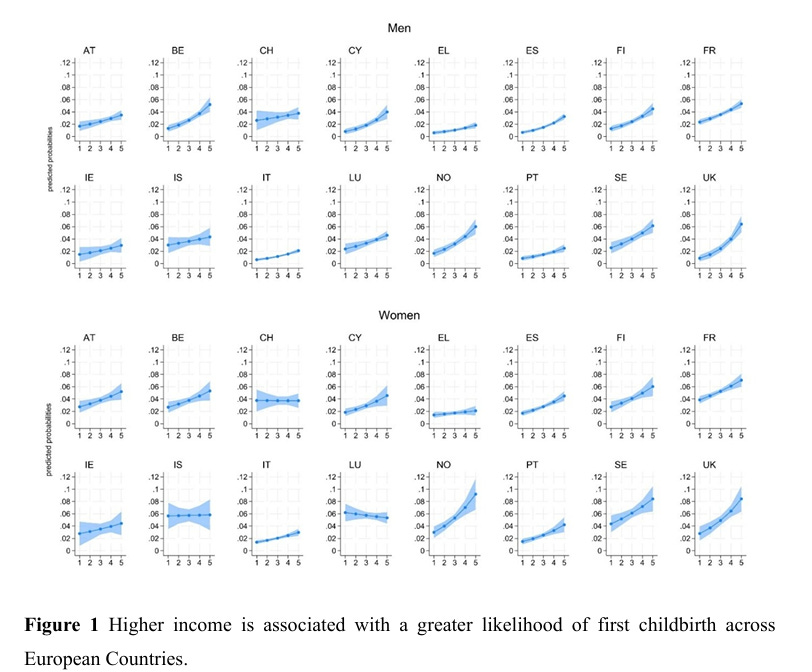
Giving Poor Populations Money Lowers Their Birth Rate?
Description
In this eye-opening discussion, Malcolm and Simone Collins dive deep into a shocking demographic shift happening in wealthy countries: the complete inversion of the traditional fertility-wealth relationship.
For decades, poorer families had more children while richer ones had fewer. But starting around 2017, in nations with generous social services (free childcare, healthcare, education), higher-income and higher-educated people are now having MORE kids — while lower-income groups are having fewer.
We explore:
* Why universal free childcare and welfare might unintentionally reduce fertility among lower-income groups
* How modern “poor” lifestyles increasingly resemble historical elite living (outsourced child-rearing, conspicuous consumption, work outside the home)
* How modern “rich” lifestyles are starting to look like historical peasant life (homesteading, stealth wealth, focus on home/family, less external work)
* The implications for fertility collapse, dependency ratios, and whether generous in-kind social services could accidentally “solve” collapsing birth rates by boosting high-earner fertility
Backed by 2025 research from Western Europe, Nordic data, and real-world examples. Is giving people free services the unexpected key to higher birth rates among taxpayers? Or is something deeper happening with culture and household structure?
Episode Outline
What it means to be rich, and what it means to be poor, is fundamentally changing, and not like you’d think.
Rich people are starting to live like poor people used to live, and poor people are increasingly live like rich people used to live
And you can see this coming up in all sorts of places, but most notably in recent shifts in fertility
This is a big deal and I think we should explore it.
SETTING THE SCENE
* In September, New Mexico’s governor announced that New Mexico will be the first US state to offer universal free childcare, regardless of income
* Average household savings are estimated at around $12,000 per child, per year (major understatement; when we had just three kids, we were spending around $4K/month—so around $50K/year for a daycare with a terrible reputation)
* This comes at a time when polling indicates Americans want the US to focus on measures like this to combat declining fertility rates
* WHAT WE WOULD EXPECT FROM THINGS LIKE FREE CHILDCARE:
* If the state covers major basic costs of having kids, rich people would have fewer kids as their standards for raising kids would be higher
* Wynnell anecdote: $1M/kid/year
* THE COUNTERINTUITIVE TREND
* Starting in 2017, we’ve seen a shift in wealthy countries—that largely cover things like childcare, education, and healthcare—in which wealthier and more educated families are having more children than poorer and less educated families.
* KEY QUESTION
* Why does giving resources to poor people not increase their fertility proportionately to rich people?
* WHAT PEOPLE ARGUE:
* When the state doesn’t offer generous social services, wealthy families aren’t willing to pay for having kids (but somehow poor families are)
* Having to work—as poor people do—competes with family demands
* WHY I HESITATE
* Wealthy people still work and have aggressive schedules
* Wealthy people also generally choose to have kids in more expensive ways—i.e. Waiting until they are old and infertile and then having kids expensively—and they’re struggling with that cost
* E.g. IVF is so expensive, people are traveling abroad to get it
* E.g. One couple found a clinic in Bogota, Colombia “offering a dramatic price difference—a package of four IVF rounds in Colombia for $11,000 compared to around $60,000 for four rounds in the U.S. Medication