Episode Details
Back to Episodes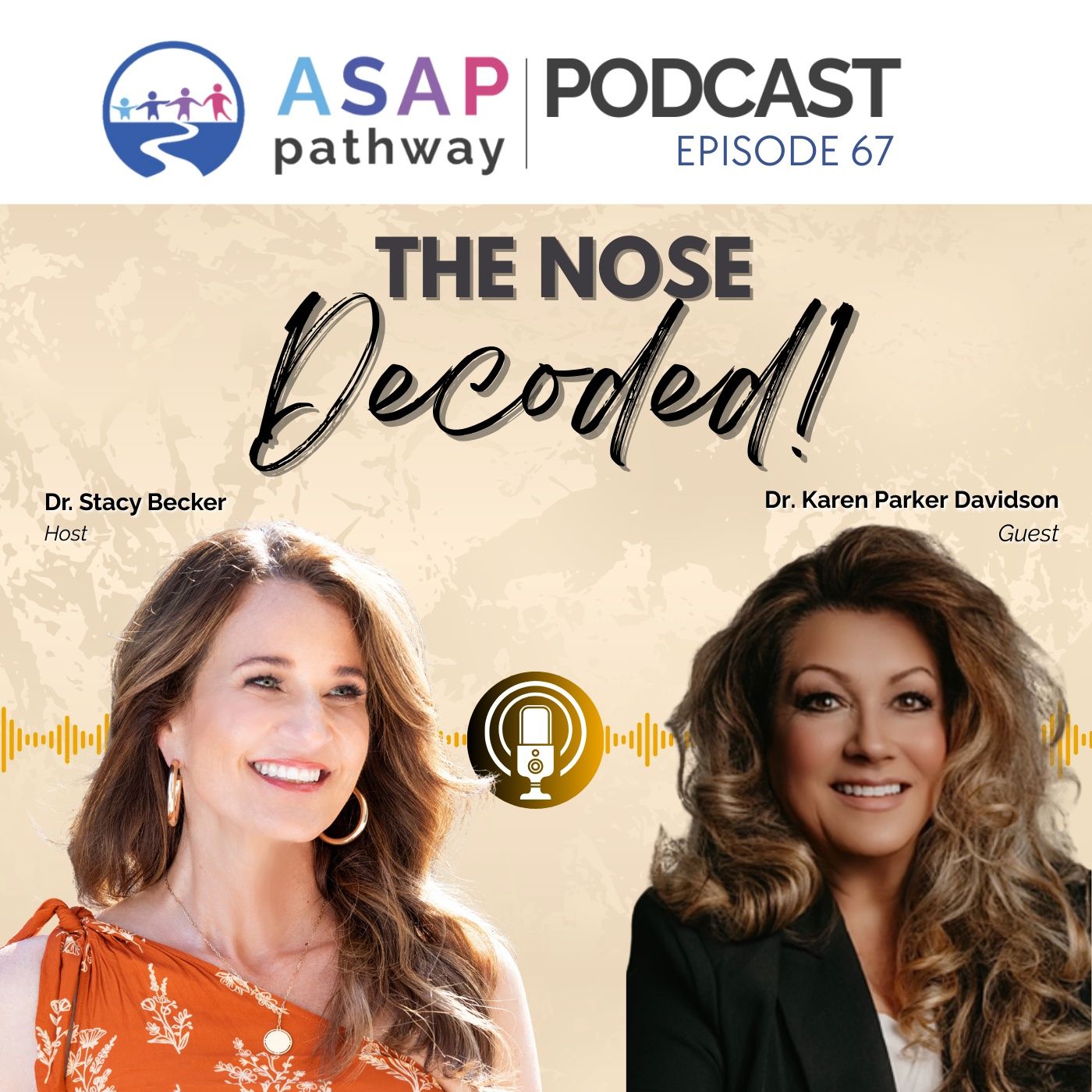
Ep.67, The Nose Decoded!, Dr. Karen Parker Davidson
Season 4
Episode 10
Published 6 months, 1 week ago
Description
🎙️ PODCAST DESCRIPTION
In this episode of the ASAP Pathway Podcast, Dr. Stacy welcomes one of the most respected and passionate voices in airway science: Dr. Karen Parker Davidson—airway clinical nurse specialist, medical researcher, innovator, and widely known as “the nose nerd.”
This conversation goes far beyond nasal breathing and into the complex physiology of nasal function, pressure regulation, neurology, gut health, posture, and sleep. Dr. Parker Davidson explains why the nose is not simply a passageway for air—but a diagnostic organ that reflects the body’s overall health, adaptation, and dysfunction. Together, they unpack why widening the airway does not always equal better breathing, how pressure differentials shift throughout the body, and why nasal resistance—not just anatomy—must be measured objectively. From rhinomanometry and facial phenotypes to CPAP intolerance, tongue posture, orthodontic expansion, and the dangers of oversimplified treatment protocols, this episode challenges conventional thinking and calls for deeper, more individualized diagnosis.
The conversation also honors the legacy of Dr. Klaus Vogt, a pioneer in rhinology and mentor to Dr. Parker Davidson, whose work continues to shape the future of airway medicine. This is a must-listen episode for dentists, orthodontists, ENTs, sleep physicians, therapists, and patients seeking a clearer, more nuanced understanding of airway health.
LinkedIn Dr Karen Parker Davidson
Instagram "The Nose Knows", Dr Davidson
Facebook Dr Karen Parker Davidson
Dr Karen Parker Davidson's Website!
🌟 KEY LEARNINGS
00:00 – Welcome to ASAP Pathway & Introducing Dr. Karen Parker Davidson
01:23 – Why Karen Is Known as “The Nose Nerd”
02:45 – From Critical Care to Airway Science
04:08 – Introducing Rhinomanometry & Objective Nasal Data
05:21 – The Nose as a Diagnostic Organ
09:48 – Facial Phenotypes & What the Face Reveals About Breathing
11:06 – Nasal Resistance: Slow, Sneaky & Insidious
16:25 – Tongue Instability, Pseudo-UARS & Misinterpreted Airway Collapse
17:05 – Expansion, Pressure Shifts & the “Honeymoon Period”
20:54 – Jaw Position, Vertical & Neurological Feedback Loops
29:57 – CPAP Intolerance &
In this episode of the ASAP Pathway Podcast, Dr. Stacy welcomes one of the most respected and passionate voices in airway science: Dr. Karen Parker Davidson—airway clinical nurse specialist, medical researcher, innovator, and widely known as “the nose nerd.”
This conversation goes far beyond nasal breathing and into the complex physiology of nasal function, pressure regulation, neurology, gut health, posture, and sleep. Dr. Parker Davidson explains why the nose is not simply a passageway for air—but a diagnostic organ that reflects the body’s overall health, adaptation, and dysfunction. Together, they unpack why widening the airway does not always equal better breathing, how pressure differentials shift throughout the body, and why nasal resistance—not just anatomy—must be measured objectively. From rhinomanometry and facial phenotypes to CPAP intolerance, tongue posture, orthodontic expansion, and the dangers of oversimplified treatment protocols, this episode challenges conventional thinking and calls for deeper, more individualized diagnosis.
The conversation also honors the legacy of Dr. Klaus Vogt, a pioneer in rhinology and mentor to Dr. Parker Davidson, whose work continues to shape the future of airway medicine. This is a must-listen episode for dentists, orthodontists, ENTs, sleep physicians, therapists, and patients seeking a clearer, more nuanced understanding of airway health.
LinkedIn Dr Karen Parker Davidson
Instagram "The Nose Knows", Dr Davidson
Facebook Dr Karen Parker Davidson
Dr Karen Parker Davidson's Website!
🌟 KEY LEARNINGS
- The nose is not just for breathing—it is a diagnostic organ.
It reflects neurological, inflammatory, postural, and systemic changes. - Nasal resistance is sneaky, slow, and often invisible.
Patients adapt for years before symptoms become obvious. - Bigger airways do not guarantee better breathing.
Function depends on pressure differentials—not just volume. - There is no universal “normal” for nasal resistance.
Each nose is as unique as a fingerprint. - The tongue cannot function properly with high nasal resistance.
Tongue posture is neurologically dependent on nasal airflow. - Expansion and mandibular advancement shift pressure gradients.
Improvement in one area may create dysfunction elsewhere. - Mouth breathing is a reflex, not a habit.
It signals underlying resistance or obstruction. - Objective measurements matter.
Symptoms alone can mislead diagnosis and treatment planning. - Over-reduction surgeries can worsen quality of life.
Empty Nose Syndrome highlights the danger of “more space = better.” - Airway care must be collaborative, not siloed
00:00 – Welcome to ASAP Pathway & Introducing Dr. Karen Parker Davidson
01:23 – Why Karen Is Known as “The Nose Nerd”
02:45 – From Critical Care to Airway Science
04:08 – Introducing Rhinomanometry & Objective Nasal Data
05:21 – The Nose as a Diagnostic Organ
09:48 – Facial Phenotypes & What the Face Reveals About Breathing
11:06 – Nasal Resistance: Slow, Sneaky & Insidious
16:25 – Tongue Instability, Pseudo-UARS & Misinterpreted Airway Collapse
17:05 – Expansion, Pressure Shifts & the “Honeymoon Period”
20:54 – Jaw Position, Vertical & Neurological Feedback Loops
29:57 – CPAP Intolerance &