Episode Details
Back to EpisodesThe Gibbet, Hanged in Chains
Description
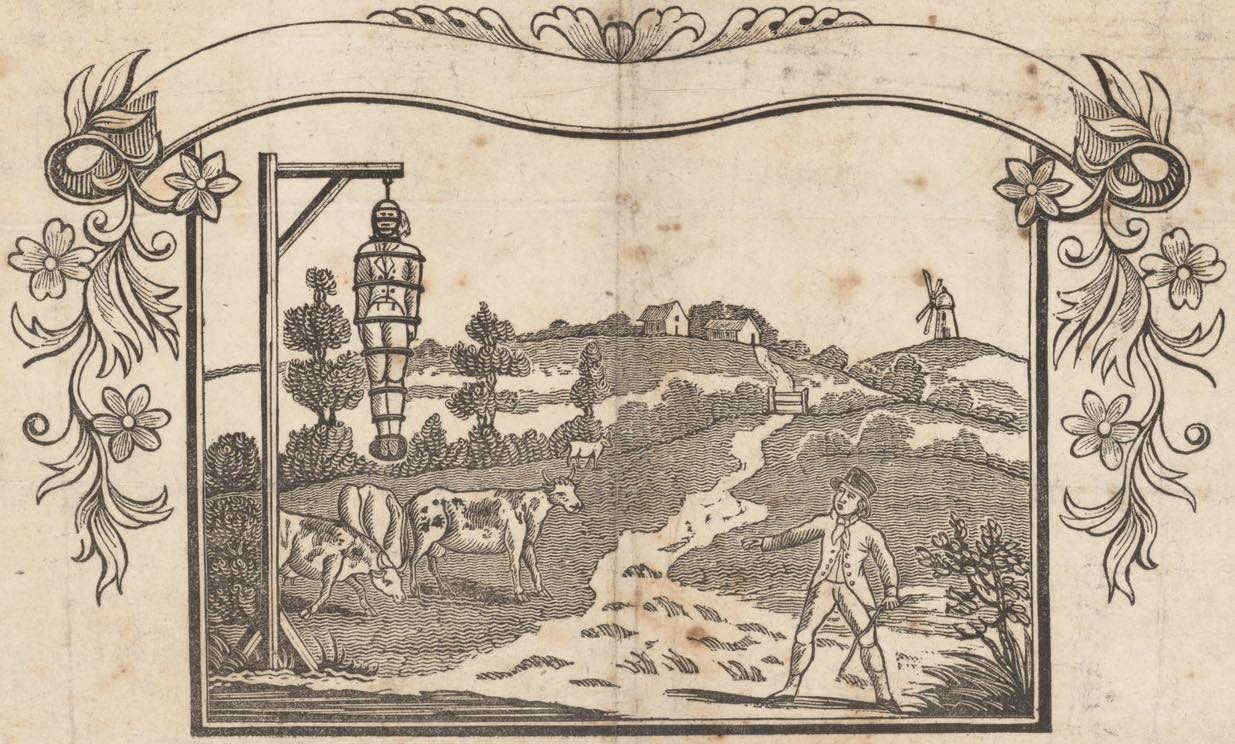
The gibbet was a hanging iron cage used to display the corpses of criminals in 18th and early 19th-century England. To be thus “hanged in chains,” in the judicial jargon and thinking of the day, subjected the criminal to an extra measure of postmortem shaming and offered the general public a rather extravagant cautionary example. Naturally, this frightful spectacle also generated a fair measure of folklore, which we explore in this episode as a follow-up to our “Gallows Lore” show.
The gibbet was a relatively rare punishment reserved for the crime of murder, and only then used in particularly heinous or high-profile cases. Though it was sometimes employed before 1751, its use was more widespread thanks to The Murder Act instituted that year. This bit of legislation offered this extra punitive measure in response to a sort of inflation of the penal code attaching the death penalty to increasingly minor crimes, such as acts of theft.
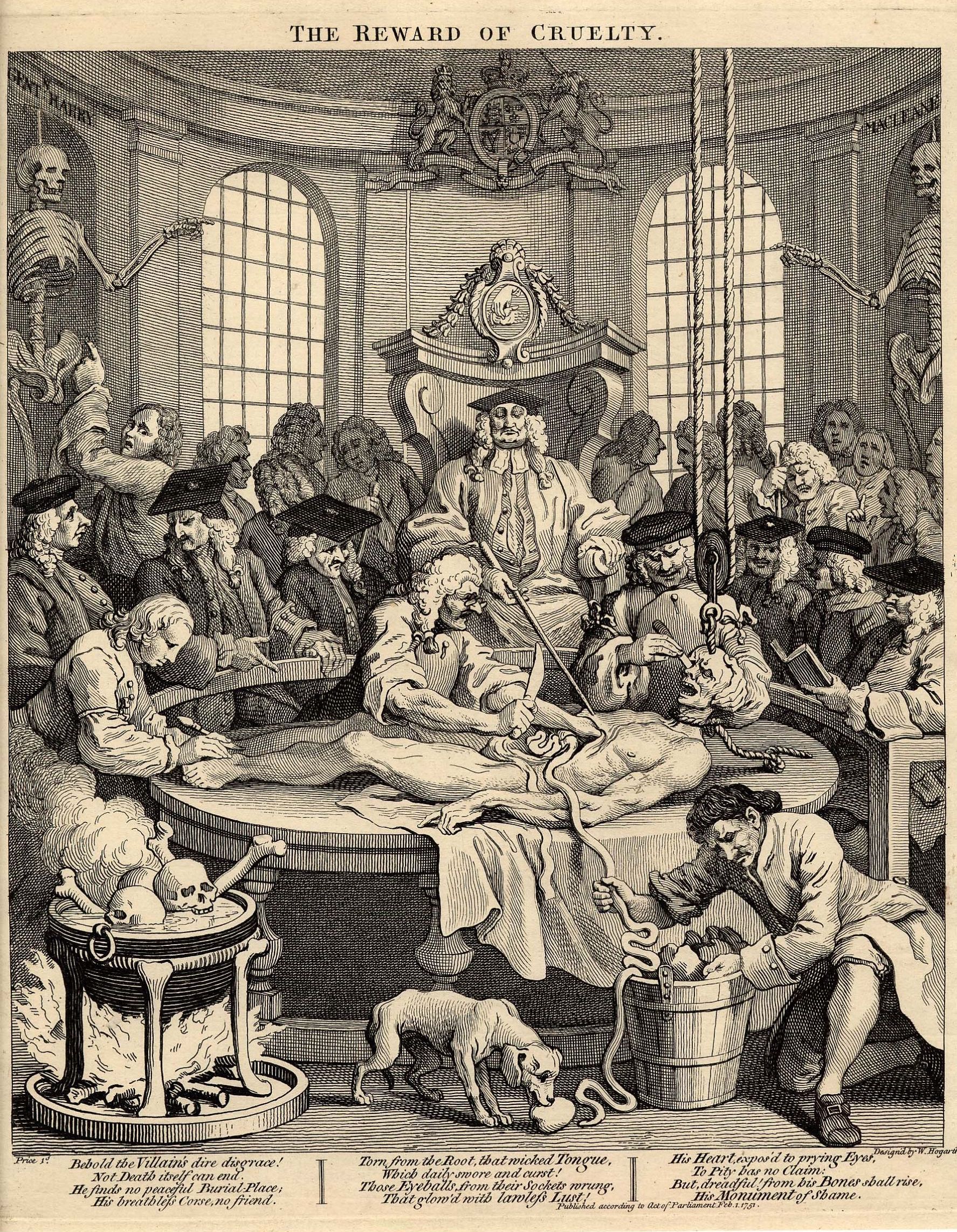
The Murder Act also designated anatomical dissection of the criminal body as an additional option for postmortem punishment, a fate actually much more common than the gibbet. Dissection may have been intended primarily to enhance physicians’ medical knowledge, but it also provided the surgeons with body parts and substances that could be sold off for other purposes. We make a grisly digression from gibbets to explore some of the ways the human byproducts of executions were made use of in folk-medicine, magic, and certain professions.
Listen Now
Love PodBriefly?
If you like Podbriefly.com, please consider donating to support the ongoing development.
Support Us