Episode Details
Back to Episodes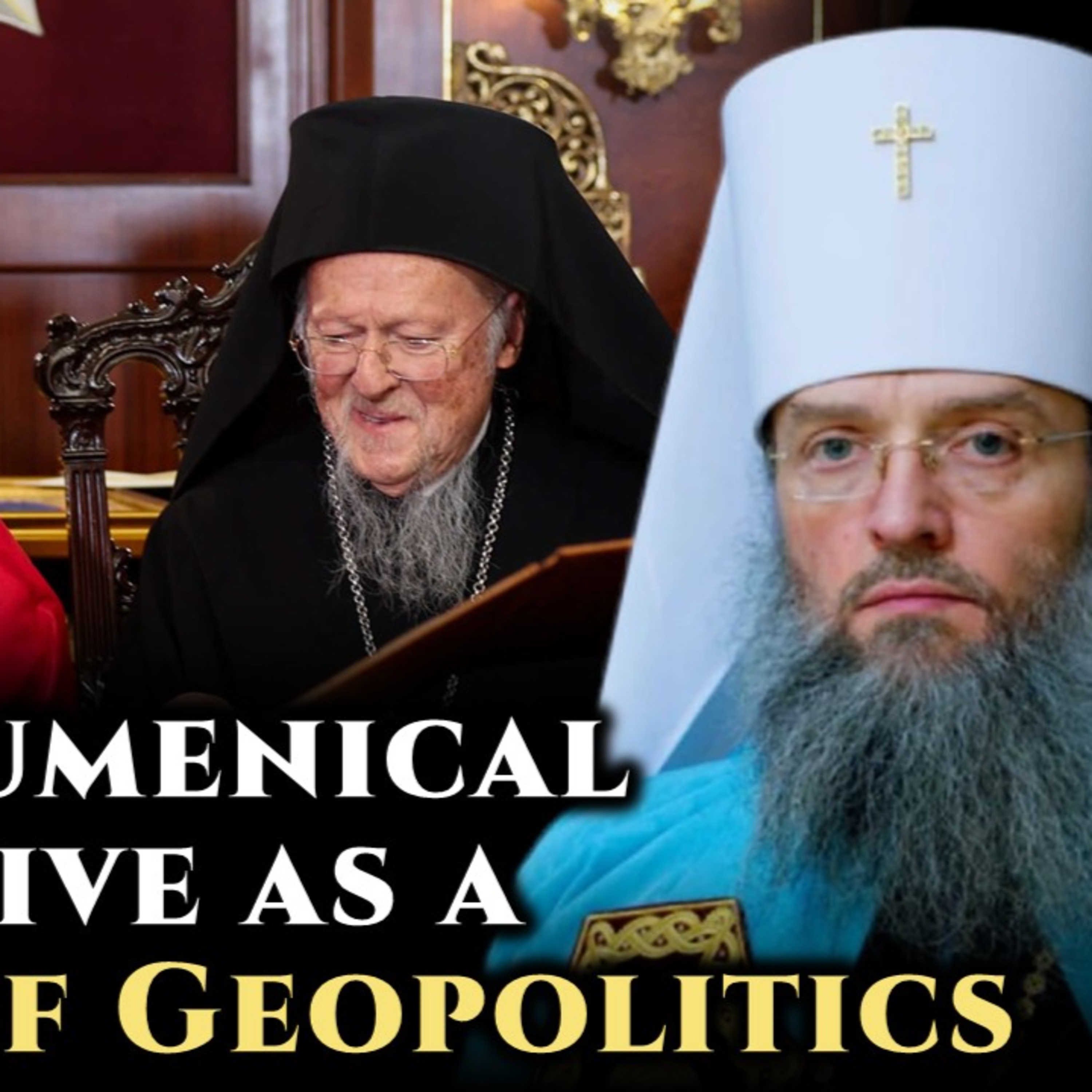
The Ecumenical Offensive as a Tool of Geopolitics (Dec 4, 2025) - Met. Luke of Zaporizhzhia
Description
Met. Luke of the Ukrainian Orthodox Church (UOC) delivered this address on December 4, 2025 at the conference titled: "The Crucifixion of Orthodoxy in the 21st Century: Spiritual Wars, Ecumenical Offensive, and Global Politics" hosted by Center for Geostrategic Studies in Belgrade, Serbia.📖 The Ecumenical Offensive as a Tool of Geopolitics: Media, Finances, and Diplomacy of the Vatican and the Phanar by Met. Luke of Zaporizhzhia and Melitopolhttps://uoj.news/en/news/85834-uoc-bishop-calls-for-statement-on-boundaries-of-ecumenism🎧 On the Canons of the Ecumenical Councils - Fr. Seraphim Rosehttps://youtu.be/d3nDu6TlWLA🎧 Ecumenism is "Downright Scum, Spiritual Filth" - St. Porphyrios of Kafsokalyviahttps://youtu.be/QxFFmBHbFqM🎧 Ecumenism: One of the Most Dangerous Heresies - St. Sophrony the Athonitehttps://youtu.be/7A0_Vw--4LU🎧 Does the Russian Orthodox Church Need to Participate in the Ecumenical Movement? (Part I/II)https://youtu.be/FjCGKeBaMzw⛪ FIND an Orthodox parish and monastery near you: https://orthodox-world.org/https://orthodoxyinamerica.org/🎁Support my work here:https://buymeacoffee.com/orthodoxwisdom_______Met. Luke teaches:Modern geopolitical struggle extends far beyond economics and military security, actively invading the spiritual sphere. It influences the life of the Church, distorting the understanding of canonical order and the true state of affairs. In this context, ecumenical initiatives of the Vatican and the Ecumenical Patriarchate (Phanar) play a special role, rapidly transforming from platforms for inter-Christian dialogue into instruments of “soft power.” Through media channels, material support, and direct participation in diplomatic processes, these centers influence elite sympathies, legitimize new church (and quasi-church) structures, and alter the balance of power in entire regions, as vividly demonstrated by the example of Ukraine.Modern ecumenism, initiated by the Vatican and the Phanar, often goes beyond theological dialogue, turning into a means for forming geopolitical alliances, exerting pressure on local Orthodox churches, introducing liberal social agendas, and justifying the legitimacy of secular state interference in internal church processes. Thus, the form of “dialogue” is used as a diplomatic platform for advancing influence.The Vatican demonstrates significant experience in constructing interconfessional dialogue, humanitarian initiatives, and political diplomacy, creating for itself the image of a “peacemaker”. Ecumenical dialogue is used by it as a channel for forming special relations with influential states, influencing religious processes in Eastern Europe, and promoting Catholic social doctrine as a global norm.The risks and consequences of this activity for Orthodoxy include:-Doctrinal dilution and institutional subordination to the Vatican.-Polarization within the Orthodox world, as there is a threat of division into supporters of different centers.-Instrumentalization of religion by secular states through support for certain church actors.-Loss of trust among believers, who may begin to perceive the Church as a political project.-Escalation of inter-Orthodox conflicts using information campaigns and sanctions.6. Spiritual and Theological Measures-Increase in conciliar anathematizations and public condemnations of modern forms of ecumenism and “Eastern Papism” (following the example of the ROCOR decisions of 1983 on ecumenism).-Revival everywhere of the practice of public reading of the “Synodikon of Orthodoxy” on the Sunday of the Triumph of Orthodoxy, with additions for modern threats.-Periodic prayer services for the enlightenment of those who have fallen away (in the diocese entrusted to me, I commemorate “those who cause us afflictions” during the Great Entrance when transferring the Gifts).