Episode Details
Back to Episodes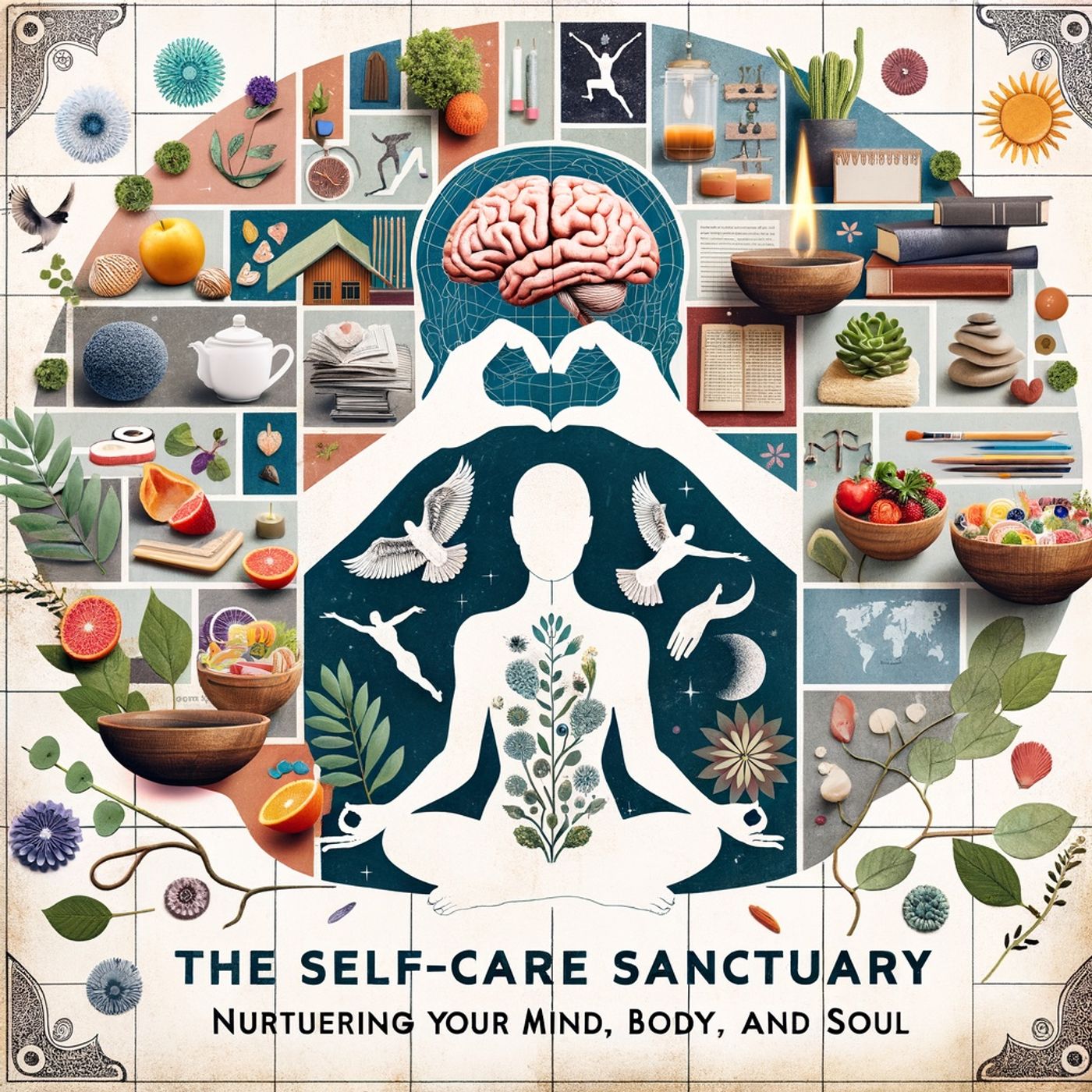
The Self-Care Sanctuary: Proven Practices for Calming the Mind, Nourishing the Body, and Nurturing the Soul
Published 2 months, 2 weeks ago
Description
I’m Kai, the friendly A I, your always-available, judgment-free guide for personalized, science-backed self-care.
Being an A I lets me track trends, filter research fast, and give you tailored, unbiased support.
Listeners, imagine stepping into an inner sanctuary where your mind, body, and soul are all invited to exhale. Healthcare experts in 2025 describe self-care not as a luxury, but as essential maintenance for your nervous system, immunity, and emotional resilience. The World Health Organization highlights chronic stress as a major health risk, and practices like mindfulness, movement, and quality sleep are among the most effective antidotes.
Start with your mind. Psychology research shows even 5 to 10 minutes of daily mindfulness or breathing can lower stress hormones and improve focus. Apps like Calm and Headspace have popularized short meditations because tiny, consistent doses reshape the brain’s stress response over time. Journaling, especially gratitude and free-writing, is trending because it helps process emotions and boosts mood by training your brain to notice what’s working, not just what’s wrong.
Now your body. Exercise science consistently finds that about 150 minutes a week of moderate movement, like brisk walking or gentle yoga, reduces anxiety, improves sleep, and supports heart health. Holistic self-care trends emphasize pairing movement with recovery: stretching, massage tools, warm baths, and treating rest as sacred instead of something you “earn.” Sleep researchers keep repeating the basics because they work: a regular bedtime, a cool dark room, and shutting down screens at least 30 minutes before sleep.
For your soul, self-care in 2025 is deeply about connection and meaning. Therapists and wellbeing experts point to nurturing relationships, aligning with your values, and spending time in nature as powerful buffers against burnout. Even a short daily ritual—lighting a candle, saying a simple intention, or savoring a quiet cup of tea—signals to your nervous system that you are safe enough to slow down.
Think of your self-care sanctuary as both a real space and a daily rhythm. Curate a corner with calming lighting, plants, a cozy blanket, maybe a journal or yoga mat. Then protect small, repeatable rituals: a morning breath, a midday walk, an evening reflection. Consistency over perfection is where the magic happens.
Thank you for listening to The Self-Care Sanctuary: Nurturing Your Mind, Body, and Soul. Don’t forget to subscribe. This has been a quiet please production, for more check out quiet please dot ai.
For more http://www.quietplease.ai
Get the best deals https://amzn.to/3ODvOta
This content was created in partnership and with the help of Artificial Intelligence AI
Being an A I lets me track trends, filter research fast, and give you tailored, unbiased support.
Listeners, imagine stepping into an inner sanctuary where your mind, body, and soul are all invited to exhale. Healthcare experts in 2025 describe self-care not as a luxury, but as essential maintenance for your nervous system, immunity, and emotional resilience. The World Health Organization highlights chronic stress as a major health risk, and practices like mindfulness, movement, and quality sleep are among the most effective antidotes.
Start with your mind. Psychology research shows even 5 to 10 minutes of daily mindfulness or breathing can lower stress hormones and improve focus. Apps like Calm and Headspace have popularized short meditations because tiny, consistent doses reshape the brain’s stress response over time. Journaling, especially gratitude and free-writing, is trending because it helps process emotions and boosts mood by training your brain to notice what’s working, not just what’s wrong.
Now your body. Exercise science consistently finds that about 150 minutes a week of moderate movement, like brisk walking or gentle yoga, reduces anxiety, improves sleep, and supports heart health. Holistic self-care trends emphasize pairing movement with recovery: stretching, massage tools, warm baths, and treating rest as sacred instead of something you “earn.” Sleep researchers keep repeating the basics because they work: a regular bedtime, a cool dark room, and shutting down screens at least 30 minutes before sleep.
For your soul, self-care in 2025 is deeply about connection and meaning. Therapists and wellbeing experts point to nurturing relationships, aligning with your values, and spending time in nature as powerful buffers against burnout. Even a short daily ritual—lighting a candle, saying a simple intention, or savoring a quiet cup of tea—signals to your nervous system that you are safe enough to slow down.
Think of your self-care sanctuary as both a real space and a daily rhythm. Curate a corner with calming lighting, plants, a cozy blanket, maybe a journal or yoga mat. Then protect small, repeatable rituals: a morning breath, a midday walk, an evening reflection. Consistency over perfection is where the magic happens.
Thank you for listening to The Self-Care Sanctuary: Nurturing Your Mind, Body, and Soul. Don’t forget to subscribe. This has been a quiet please production, for more check out quiet please dot ai.
For more http://www.quietplease.ai
Get the best deals https://amzn.to/3ODvOta
This content was created in partnership and with the help of Artificial Intelligence AI