Episode Details
Back to Episodes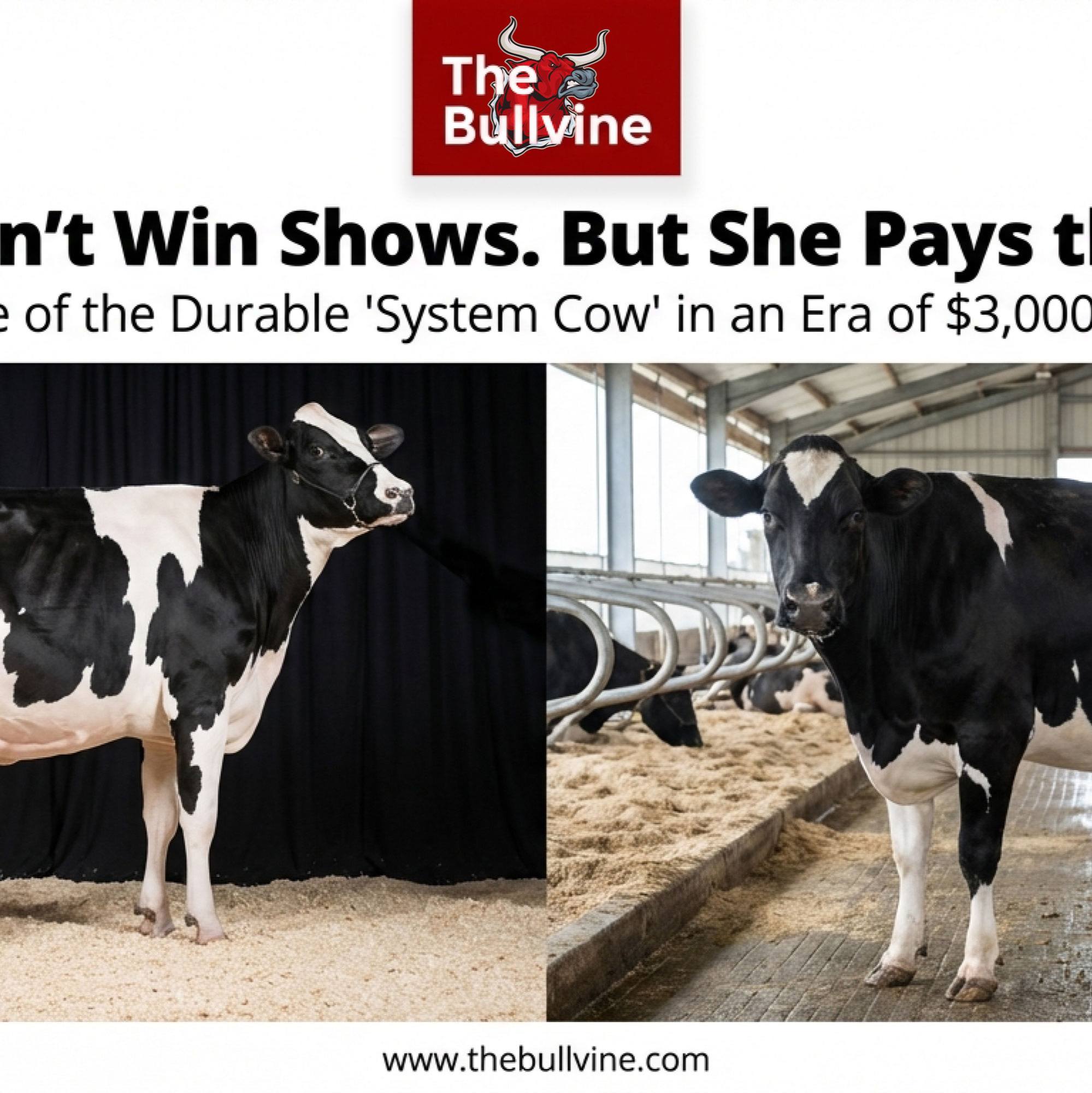
E442 She Won’t Win Shows, But She Pays the Bills: The Rise of the $3,000 ‘System Cow.’
Description
The prettiest cow on your dairy might be your most expensive mistake. With replacement heifers hitting US$3,000+ and CoBank projecting tight supplies through 2027, the economics of "the ideal cow" have fundamentally shifted. This episode challenges decades of conventional breeding wisdom and asks a question every commercial dairy producer needs to answer: Are you breeding cows to win shows—or to pay bills? We break down the research, the math, and the practical playbook that forward-thinking operations are using to save six figures annually by breeding for system fit, not ribbons.
Key Takeaways:
- Why University of Florida research suggests optimal productive life is 5 years—yet most herds average just 2.5–3.5 lactations
- The replacement rate math: How dropping from 35% to 28% saves approximately US$180,000 per year in a 1,000-cow herd
- "Dairy Triangle" vs. "Power Rectangle": What genetic research reveals about stature, longevity, and why tall cows tend to leave the herd sooner
- The lameness detection gap: Why farmers catch only 1 in 4 lame cows and what it's costing you at US$300+ per case
- How Net Merit 2025 is evolving—and why USDA now applies negative weight to body weight composite
- The beef-on-dairy funding strategy: Using calf premiums to finance more selective genetics programs
- Five questions to ask your genetics supplier this year that will change the conversation
Deeper Dive – Why Listen:
This episode synthesizes the latest peer-reviewed research, government data, and real-world producer insights into a practical framework for breeding decisions in 2025 and beyond.
We examine findings from Al De Vries, PhD, at the University of Florida, whose Journal of Dairy Science research on longevity economics demonstrates that when heifers get expensive, keeping good cows longer makes more economic sense. Yet there's a striking gap between what's economically optimal and what's actually happening in commercial herds.
The episode introduces the "Power Rectangle" concept—a moderate-framed, structurally sound cow built for capacity and durability rather than extreme dairy character. Genetic studies from the Czech Journal of Animal Science and Frontiers in Genetics confirm what progressive producers are seeing on the ground: tall cows tend to have poorer functional longevity.
Most importantly, this episode delivers actionable tools. We share four metrics that indicate whether your longevity focus is working and five specific questions to bring to your next genetics conversation. Whether you're running 200 cows or 2,000, the underlying approach scales to your operation.
This isn't about abandoning genetic progress—it's about redefining what progress means when a replacement heifer costs more than some used trucks.
Resources & Engagement:
The full feature article with complete research citations, cost calculations, and downloadable resources is available at https://www.thebullvine.com/genetics/she-wont-win-shows-but-she-pays-the-bills-the-rise-of-the-3000-system-cow/. Search "System Cow" or find the link in our show notes.
Subscribe to The Bullvine Podcast so you never miss an episode. New episodes drop regularly with the insights commercial dairy producers need to stay profitable in a challenging market.
Have a take on the "System Cow" concept? Share your thoughts on social media and tag The Bullvine. We want to hear what's working on your operation.