Episode Details
Back to Episodes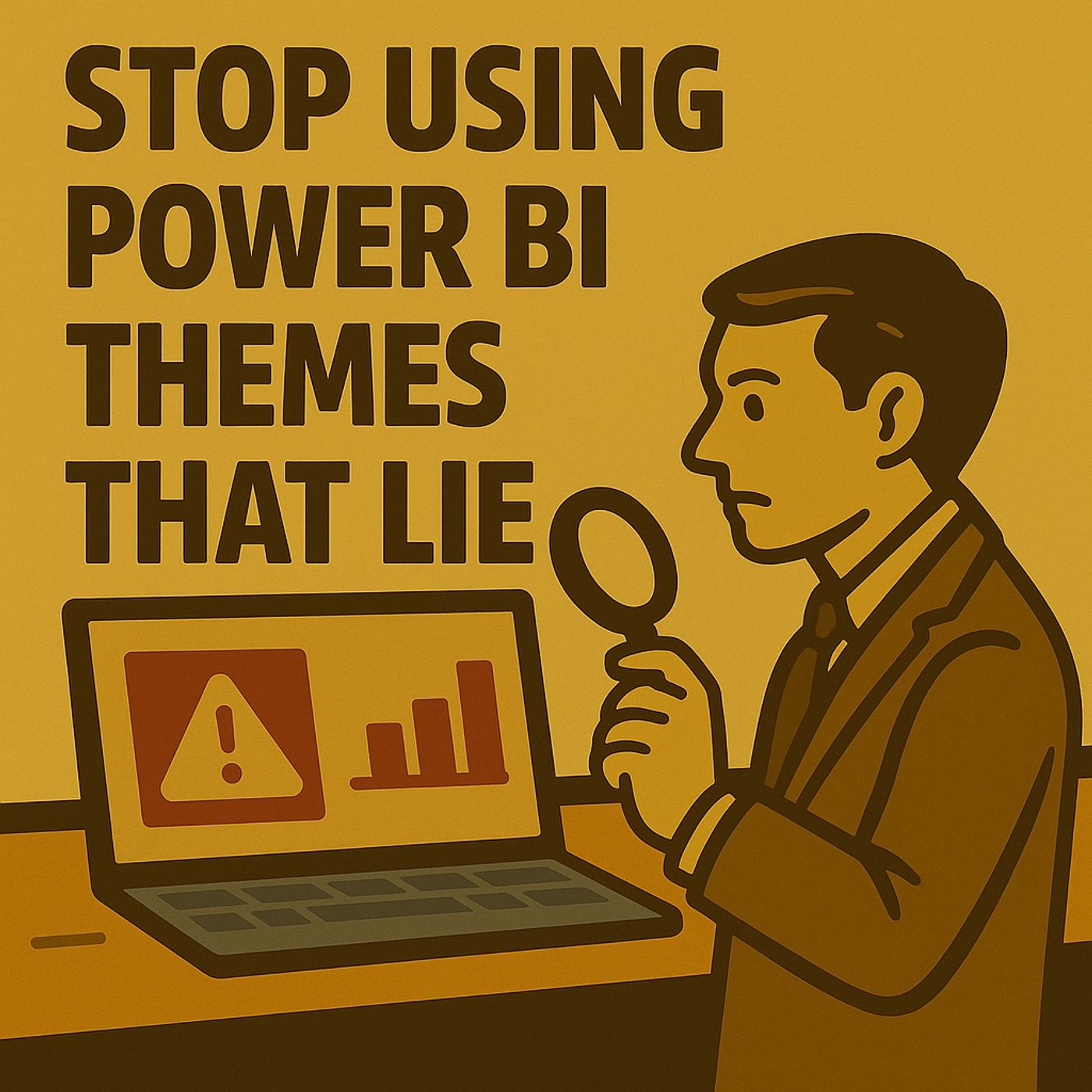
Stop Using Power BI Themes That Lie: Accessibility, Contrast, Slicers, and KPI Design for Trustworthy Dashboards
Season 1
Published 7 months, 4 weeks ago
Description
(00:00:00) The Power of Theme in Power BI
(00:00:00) The Hidden Dangers of Color Themes
(00:00:18) The Five Invisible Failures
(00:00:37) Contrast: The First Line of Defense
(00:01:11) The Four Laws of Contrast
(00:01:59) Redundancy: The Secret to Visibility
(00:02:23) The Containment Procedure for Alerts
(00:04:57) The Matrix Matrix: Subtotals in Disguise
(00:06:17) The Subtotal Containment Protocol
(00:09:40) Tooltips: The Hover Hazard
Most creators treat Power BI themes as “brand colors,” but those hues can bury alerts, erase subtotals, distort slicer states, and hide KPIs in plain sight. Your reports look polished, but executives miss risk, analysts misread filters, and nobody can agree on what the numbers are actually saying. In this episode of m365.fm, Mirko Peters exposes five invisible theme failures and walks through a ruthless validation protocol that turns themes from decoration into a governance layer for clarity, accuracy, and accessibility.
WHEN YOUR ALERTS ARE INVISIBLE: THE ACCESSIBILITY REACTOR
Your alerts are not “subtle” — they are disappearing. Low contrast between alert text, KPI cards, and background layers turns critical signals into decorative noise, especially on projectors, laptops in bright offices, and for anyone with color vision differences. Mirko explains how to treat AA/AAA contrast ratios as non‑negotiable requirements, why “on-brand but unreadable” is a design failure, and how to define positive, warning, and danger colors in your theme JSON so they survive across visuals, pages, and devices.
THE MATRIX SUBTOTAL LEAK: WHEN AGGREGATES ARE CAMOUFLAGED
A matrix that hides subtotals and grand totals is not “minimalist,” it is misleading. If subtotals look identical to detail rows or vanish at 80% zoom, leaders cannot see rollups, forecast risk, or margin erosion. This episode shows how to style subtotal and total selectors directly in the theme, strengthen the visual hierarchy with weight, bands, and dividers, and apply a fast “one‑second recognition” test: can someone instantly spot the totals across a dense table without hunting with their eyes.
TOOLTIP CHAOS: LOSING CONTEXT AT THE MOMENT IT MATTERS MOST
Tooltips are where users go for clarity — and too many themes break them. Translucent backgrounds let chart noise bleed through, low-contrast text becomes unreadable over dense visuals, and inconsistent styles across pages make it hard to trust what you are hovering. Mirko walks through how to style tooltip headers, values, and backgrounds in theme JSON so they are opaque, readable, and consistent, and how to keep tooltip content lean and performant so it renders fast enough to actually help.
CARD VISUAL URANIUM: WHEN KPIS ARE LOUD BUT UNCLEAR
Card visuals carry enormous perceptual weight. When labels and values share the same weight, random font sizes compete for attention, and formats change from page to page, users stop trusting the dashboard. This episode explains how to standardize card typography, enforce a clear label‑to‑value ratio, lock contrast and number formats, and align cards on a grid so the layout feels intentional instead of improvised. The goal: KPIs that read instantly and consistently, not a wall of shouting numbers.
(00:00:00) The Hidden Dangers of Color Themes
(00:00:18) The Five Invisible Failures
(00:00:37) Contrast: The First Line of Defense
(00:01:11) The Four Laws of Contrast
(00:01:59) Redundancy: The Secret to Visibility
(00:02:23) The Containment Procedure for Alerts
(00:04:57) The Matrix Matrix: Subtotals in Disguise
(00:06:17) The Subtotal Containment Protocol
(00:09:40) Tooltips: The Hover Hazard
Most creators treat Power BI themes as “brand colors,” but those hues can bury alerts, erase subtotals, distort slicer states, and hide KPIs in plain sight. Your reports look polished, but executives miss risk, analysts misread filters, and nobody can agree on what the numbers are actually saying. In this episode of m365.fm, Mirko Peters exposes five invisible theme failures and walks through a ruthless validation protocol that turns themes from decoration into a governance layer for clarity, accuracy, and accessibility.
WHEN YOUR ALERTS ARE INVISIBLE: THE ACCESSIBILITY REACTOR
Your alerts are not “subtle” — they are disappearing. Low contrast between alert text, KPI cards, and background layers turns critical signals into decorative noise, especially on projectors, laptops in bright offices, and for anyone with color vision differences. Mirko explains how to treat AA/AAA contrast ratios as non‑negotiable requirements, why “on-brand but unreadable” is a design failure, and how to define positive, warning, and danger colors in your theme JSON so they survive across visuals, pages, and devices.
THE MATRIX SUBTOTAL LEAK: WHEN AGGREGATES ARE CAMOUFLAGED
A matrix that hides subtotals and grand totals is not “minimalist,” it is misleading. If subtotals look identical to detail rows or vanish at 80% zoom, leaders cannot see rollups, forecast risk, or margin erosion. This episode shows how to style subtotal and total selectors directly in the theme, strengthen the visual hierarchy with weight, bands, and dividers, and apply a fast “one‑second recognition” test: can someone instantly spot the totals across a dense table without hunting with their eyes.
TOOLTIP CHAOS: LOSING CONTEXT AT THE MOMENT IT MATTERS MOST
Tooltips are where users go for clarity — and too many themes break them. Translucent backgrounds let chart noise bleed through, low-contrast text becomes unreadable over dense visuals, and inconsistent styles across pages make it hard to trust what you are hovering. Mirko walks through how to style tooltip headers, values, and backgrounds in theme JSON so they are opaque, readable, and consistent, and how to keep tooltip content lean and performant so it renders fast enough to actually help.
CARD VISUAL URANIUM: WHEN KPIS ARE LOUD BUT UNCLEAR
Card visuals carry enormous perceptual weight. When labels and values share the same weight, random font sizes compete for attention, and formats change from page to page, users stop trusting the dashboard. This episode explains how to standardize card typography, enforce a clear label‑to‑value ratio, lock contrast and number formats, and align cards on a grid so the layout feels intentional instead of improvised. The goal: KPIs that read instantly and consistently, not a wall of shouting numbers.
Listen Now
Love PodBriefly?
If you like Podbriefly.com, please consider donating to support the ongoing development.
Support Us