Episode Details
Back to Episodes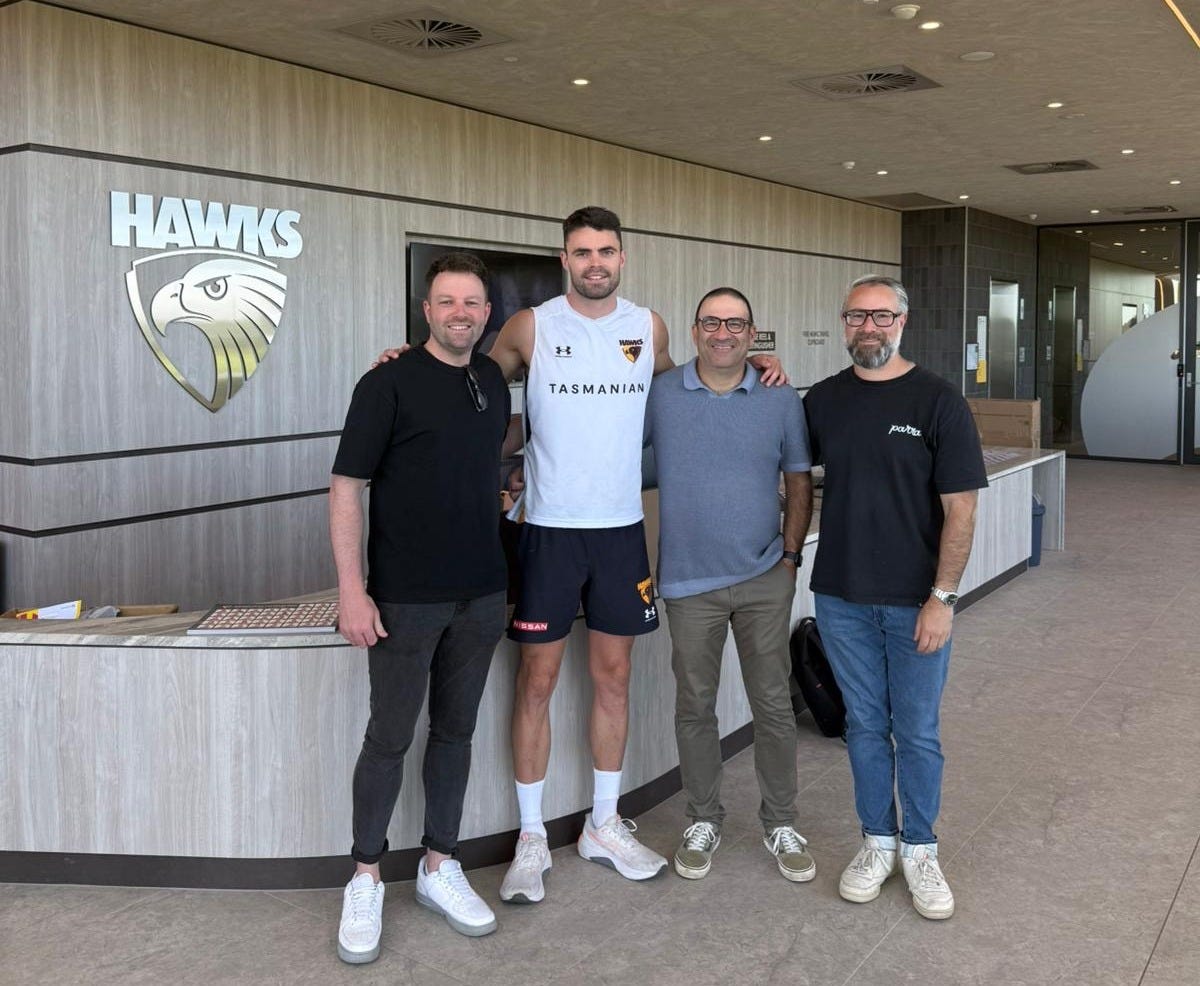
Inside Hawthorn's new $113m home
Description
Subscribe to Hawks Insiders for the most in-depth and wide ranging Hawthorn cover there is. From exclusive interviews to analysis, match recaps to podcasts, the Insiders have you covered.
What a difference a year makes. When the Hawks Insiders team last visited the Kennedy Community Centre in November 2024, there wasn’t a single blade of grass on the AFLW and Community Oval.
This time around — when Ash, Danny and Daz were given a grand tour by lifelong Hawks nuffies, CEO Ash Klein and COO Jacob Attwood — we couldn’t quite believe our eyes. The grass was down. The ovals were defined. The buildings were a hive of activity. Players were training the house down, staff were embedded, and the Kennedy Community Centre had gone from a major construction project (and HI regular Paddy Malone’s dream) to a fully functioning football home.
🎧 You can hear our full recap in the podcast above.
From scale to substance
Last year, it was impossible not to be overwhelmed by the sheer ambition of the site. Two full-sized ovals sitting side by side on a vast parcel of land, with room to grow. A facility that felt big, bold and future-facing, but still very much mid-build.
This visit was different. The scale is still jaw-dropping, but now it’s the detail that hits you. You don’t need to imagine how the place will work anymore. You can see it IRL.
Players move seamlessly from track to gym to recovery. Coaches huddle in meeting rooms purpose-built for collaboration. Staff are already talking about routines, habits and standards being set simply by walking through the door each morning.
This feels less like a training ground for players only, and more like an elite workplace for the club holistically, designed to make everyone better at what they do.
Two ovals, two very different advantages
The contrast between visits is perhaps clearest when you step onto the AFLW and Community Oval.
In 2024, it was still dirt and timelines. In 2025, it’s a surface that looks (and feels) ready.
The ground is a genuine AFL-sized venue, with dimensions that immediately change how Hawthorn’s AFLW side can play. Anyone who has watched games at Frankston will understand the significance of that. More width. More space. More opportunity to run, spread and use the weapons this list actually has.
Standing well inside the boundary, we were told: this is where the Frankston boundary line would have been.
That alone tells you how transformative this move could be for AFLW matchday football when the games start being played here.
Add in the pavilion, the coach’s box (which may or may not be larger than some inner-city apartments), and the planned viewing mound on the wing, and it’s easy to imagine Dingley quickly becoming a genuine community football destination.
Indoors, uninterrupted
If there’s one space that consistently drew wide eyes and quiet disbelief, it was the indoor training facility.
Fully enclosed. Turf strong enough for boots. Long enough that none of us (at our stage of life, anyway) could kick from one end to the other.
The most striking detail? The centre square is built to exact AFL dimensions, allowing proper centre bounce and ruck work even when the weather turns.
And as was pointed out to us, someone has already managed to kick a football onto the roof, which probably tells you everything you need to know about how freely this space is being used.
Recovery, routine, and players choosing to be there
Another major shift from last year: the facility is already becoming a place players want to spend