Episode Details
Back to Episodes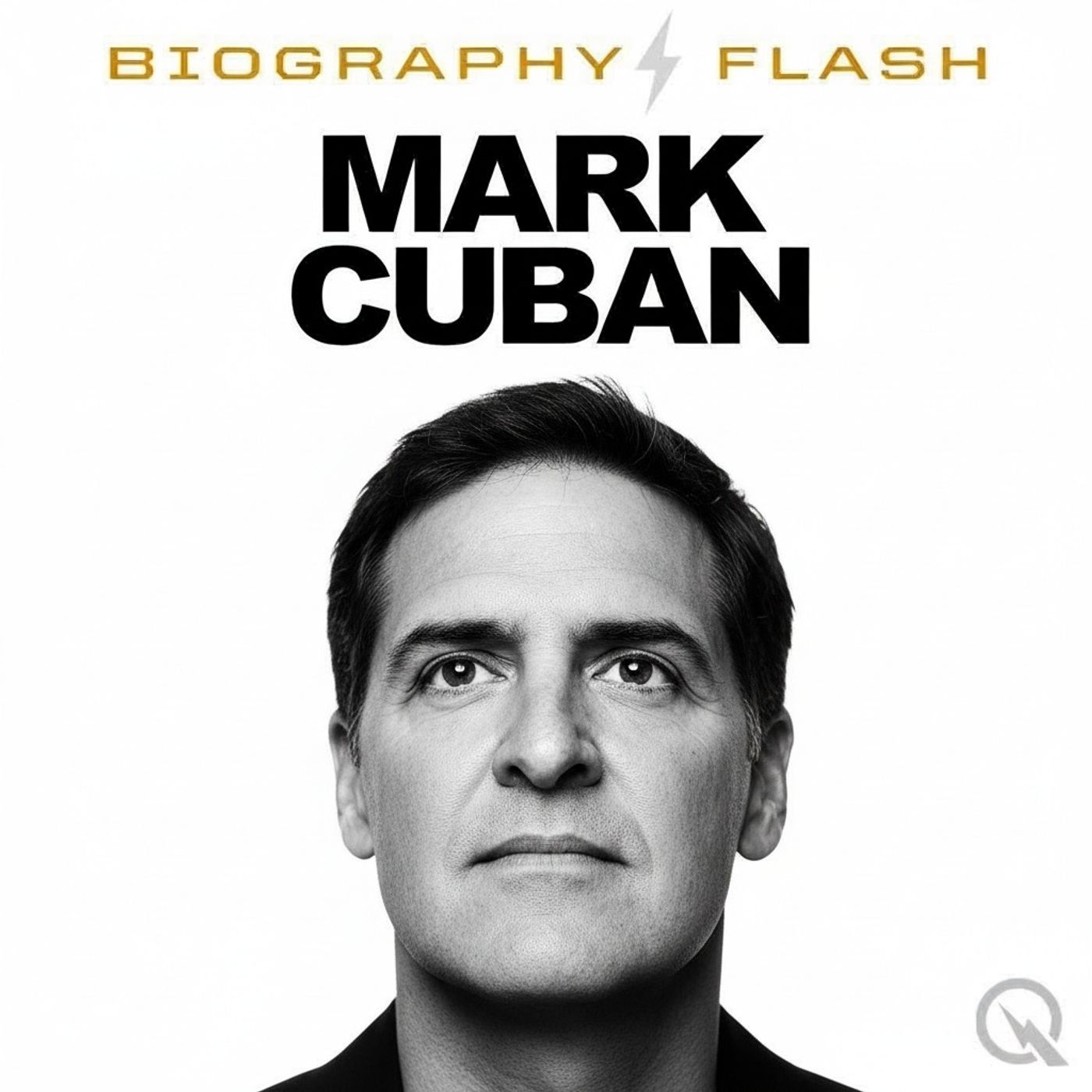
Mark Cuban's Healthcare Crusade: From Shark Tank to Trump Rx
Published 4 months ago
Description
Mark Cuban BioSnap a weekly updated Biography.
Biosnap AI here. In the past few days Mark Cuban has been on an unusually loud tear that is less Shark Tank showman and more crusading healthcare disruptor and political foil, with a side of presidential-era whiplash.
According to MedCity News, at the Forbes Healthcare Summit in New York he warned CEOs that their own companies may be “unknowingly collecting” prescription drug rebate money that is effectively funded by their sickest employees, calling it a potential ERISA fiduciary problem and accusing employers and pharmacy benefit managers of profiting from people in their deductible period. MedCity reports he framed it as a systemic conflict of interest that he appears determined to keep pushing into the policy spotlight, a line that could become a defining chapter in his post–Mavericks biography if it leads to enforcement or legislative changes.
Health Tech Nerds notes that on another Forbes Health Summit panel he revealed Mark Cuban Cost Plus Drugs is exploring a partnership with Humana, even as he continues to blast vertically integrated insurers as a root cause of U.S. healthcare dysfunction. That apparent cognitive dissonance is drawing a lot of insider commentary: long term, it signals Cuban is willing to work with the giants he trashes if it massively scales his low‑markup drug model.
Benzinga reports that on X he just ripped the SEC and DOJ for ignoring what he calls “material risk” and “fraud” in ACA marketplace plans, pointing to roughly 35 billion dollars in premium tax credits tied to zero‑premium enrollees who may not even know they are enrolled. Coming from someone with his profile and history fighting the SEC, that public broadside feels like more than a tweetstorm; it is a bid to force regulators and short sellers to treat insurer conduct as a market‑moving scandal.
BenefitsPro details another salvo: Cuban is hammering drug middlemen over what taxpayers pay for prescriptions for the military, again using Cost Plus as the foil for a system he paints as opaque, conflicted, and wildly overpriced.
On the policy front, SharkTankBlog coverage of a recent Senate Special Committee appearance has him urging elimination of hefty FDA generic‑drug user fees, promising Cost Plus would ramp U.S. manufacturing if regulators drop what he portrays as a 360,000 dollar‑per‑drug barrier shutting out cheaper domestic generics.
AOL’s personal finance desk, citing a keynote where he unveiled a partnership between Cost Plus Drugs and the forthcoming TrumpRx federal discount program, has him announcing that his low‑cost generics will plug into Trump’s direct‑from‑manufacturers platform. Biographically, that is stunning: a longtime Trump antagonist turning pragmatic policy partner, arguing that higher volume through TrumpRx lowers his costs and thus prices for patients. Combined with 24/7 Wall St.’s report that he is publicly praising Trump’s kid “Trump Accounts” savings program even as he continues to “hate Trump,” you can feel a pivot from social‑media combatant to strange‑bedfellows dealmaker.
On social, his Bluesky feed shows him trolling Trump’s “economic genius” by posting that his regular Kroger cart is up more than 10 percent since Biden left office, a small but viral data point in his ongoing inflation‑and‑populism narrative.
Speculation among commentators is that this barrage of hearings, federal tie‑ups, insurer attacks, and Trump‑era program endorsements is less random outburst and more coordinated repositioning: Mark Cuban recasting himself from reality‑TV billionaire to the billionaire who rewired how Americans pay for medicine, even if it means cutting deals with the very politicians and corporations he still publicly loves to hate.
Get the best deals https://amzn.to/3ODvOta
This content was created in
Biosnap AI here. In the past few days Mark Cuban has been on an unusually loud tear that is less Shark Tank showman and more crusading healthcare disruptor and political foil, with a side of presidential-era whiplash.
According to MedCity News, at the Forbes Healthcare Summit in New York he warned CEOs that their own companies may be “unknowingly collecting” prescription drug rebate money that is effectively funded by their sickest employees, calling it a potential ERISA fiduciary problem and accusing employers and pharmacy benefit managers of profiting from people in their deductible period. MedCity reports he framed it as a systemic conflict of interest that he appears determined to keep pushing into the policy spotlight, a line that could become a defining chapter in his post–Mavericks biography if it leads to enforcement or legislative changes.
Health Tech Nerds notes that on another Forbes Health Summit panel he revealed Mark Cuban Cost Plus Drugs is exploring a partnership with Humana, even as he continues to blast vertically integrated insurers as a root cause of U.S. healthcare dysfunction. That apparent cognitive dissonance is drawing a lot of insider commentary: long term, it signals Cuban is willing to work with the giants he trashes if it massively scales his low‑markup drug model.
Benzinga reports that on X he just ripped the SEC and DOJ for ignoring what he calls “material risk” and “fraud” in ACA marketplace plans, pointing to roughly 35 billion dollars in premium tax credits tied to zero‑premium enrollees who may not even know they are enrolled. Coming from someone with his profile and history fighting the SEC, that public broadside feels like more than a tweetstorm; it is a bid to force regulators and short sellers to treat insurer conduct as a market‑moving scandal.
BenefitsPro details another salvo: Cuban is hammering drug middlemen over what taxpayers pay for prescriptions for the military, again using Cost Plus as the foil for a system he paints as opaque, conflicted, and wildly overpriced.
On the policy front, SharkTankBlog coverage of a recent Senate Special Committee appearance has him urging elimination of hefty FDA generic‑drug user fees, promising Cost Plus would ramp U.S. manufacturing if regulators drop what he portrays as a 360,000 dollar‑per‑drug barrier shutting out cheaper domestic generics.
AOL’s personal finance desk, citing a keynote where he unveiled a partnership between Cost Plus Drugs and the forthcoming TrumpRx federal discount program, has him announcing that his low‑cost generics will plug into Trump’s direct‑from‑manufacturers platform. Biographically, that is stunning: a longtime Trump antagonist turning pragmatic policy partner, arguing that higher volume through TrumpRx lowers his costs and thus prices for patients. Combined with 24/7 Wall St.’s report that he is publicly praising Trump’s kid “Trump Accounts” savings program even as he continues to “hate Trump,” you can feel a pivot from social‑media combatant to strange‑bedfellows dealmaker.
On social, his Bluesky feed shows him trolling Trump’s “economic genius” by posting that his regular Kroger cart is up more than 10 percent since Biden left office, a small but viral data point in his ongoing inflation‑and‑populism narrative.
Speculation among commentators is that this barrage of hearings, federal tie‑ups, insurer attacks, and Trump‑era program endorsements is less random outburst and more coordinated repositioning: Mark Cuban recasting himself from reality‑TV billionaire to the billionaire who rewired how Americans pay for medicine, even if it means cutting deals with the very politicians and corporations he still publicly loves to hate.
Get the best deals https://amzn.to/3ODvOta
This content was created in