Episode Details
Back to Episodes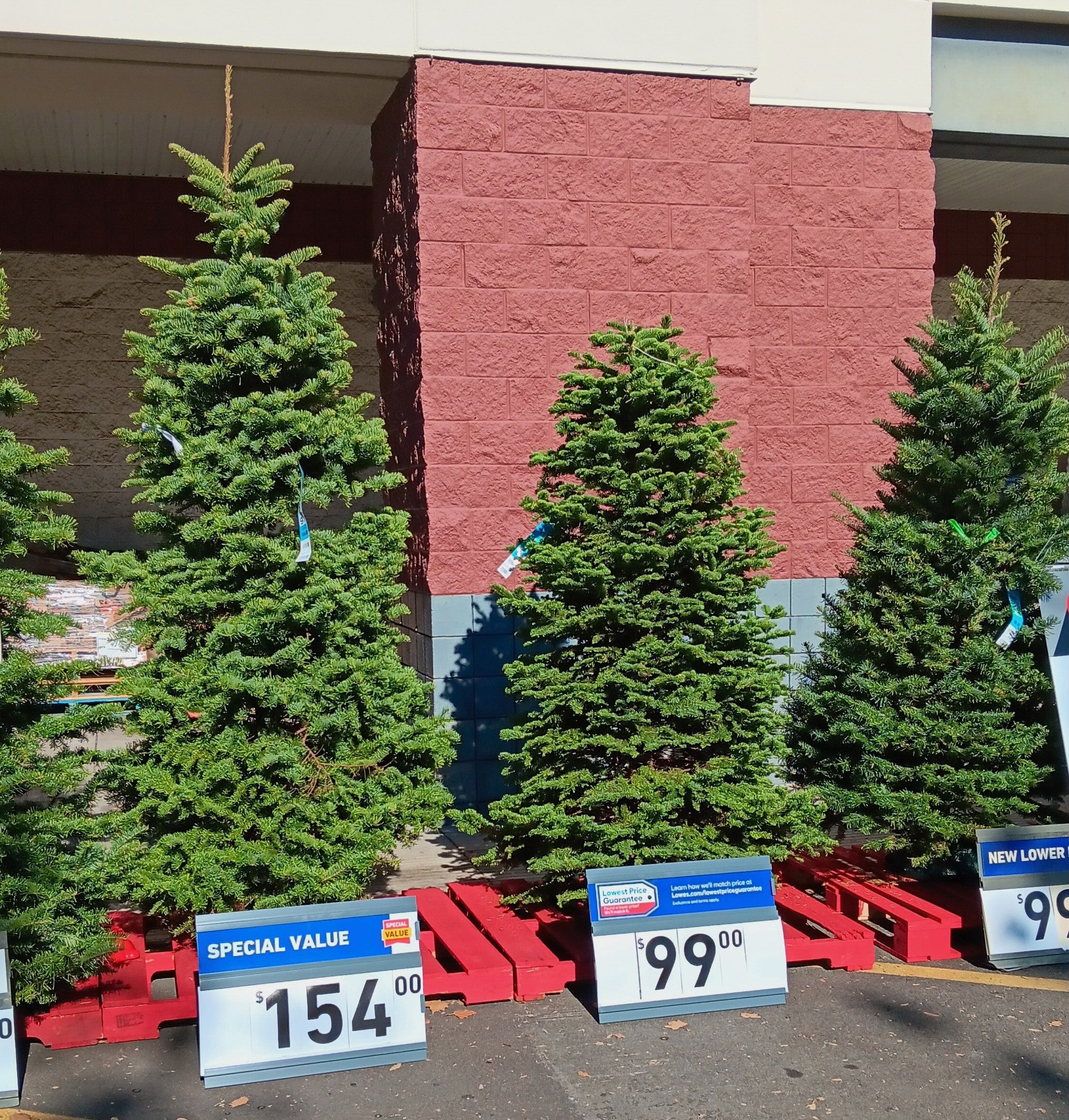
Cut Christmas Tree Care Tips
Description
Thanks for reading Beyond The Garden Basics! This post is public so feel free to share it.
Visiting a choose-and-cut Christmas tree farm or any of the corner lots or nurseries filled with already chopped cedars, pines and firs this weekend, in search of the perfect holiday tree? Here are some tips from the Michigan State University Cooperative Extension Departments of Horticulture and Forestry to keep your December living room centerpiece intact through the holidays:
• You may cringe at this first tip, but it is one of the most important if you plan to keep the tree in the house for longer than two weeks: Keep the tree in a cool, sheltered location until a few days before Christmas, such as an unheated garage or carport. Otherwise, the warm, dry air of your living room or den can hasten needle drop. Storing it in an environment that more resembles a forest as long as possible will keep the branches more pliable. Take off a half inch to an inch from the base of the tree and keep it in a large bucket of water.
• Before bringing the tree indoors, shake it vigorously to dislodge any loose needles or hitchhiking bugs. Check for ants, too.
• Before you set up your Christmas tree, make a fresh, straight cut across the base of the tree and place the tree in a stand that holds a gallon of water or more. The end should be re-cut each day before it is placed in the stand. Make a straight cut across the trunk, removing a half inch or more from the bottom.
• Cut Christmas trees will absorb a surprising amount of water, particularly during the first week. As a rule, for each inch of stem diameter the tree will need a quart of water per day.
• Beware of stands that are too small for the tree. Try to find a tree stand with adequate water-holding capacity for your tree, between one and two gallons. The water capacity listed on a stand’s label or box can be misleading. Usually, they list the capacity of the reservoir when the stand is empty, but you also need to allow for water that will be displaced when the tree trunk is put in the stand.
• Keep the tree away from dry, blowing heat. Position the tree away from direct sunlight, fireplaces, heaters, and other heat sources to prevent it from drying out.
• Use LED lights. LED lights are cooler to the touch and less likely to dry out the needles.
• Turn off the lights when you’re not there. Unplug the lights before you leave the house or go to bed.
• Check your tree stand daily to make sure the container has enough water. Refill it often to make sure the water does not fall below the level of the trunk bottom.
• What about additives to the water to make the Christmas tree last longer? Based on university studies in Washington and North Carolina, plain water is best. Some home concoctions such as bleach and aspirin cause heavy needle loss and should be avoided. Clean water and plenty of it is the only essential ingredient for success.
Tips for a Living Christmas Tree
If chosen wisely and treated correctly, a living Christmas tree can thrive in your yard for generations. The main thing to remember when choosing a living Christmas tree: pick a variety that will flourish in your area.
As with everything to do with gardening, all Christmas conifers are localized. Choose one from a reputable local nursery or home center. They will have the best selections for your area. Usually.
Among the conifers available at nurseries that will do well outdoors in most areas of USDA Zone 9 after their indoor holiday use:
• Italian Stone Pine. A good choice for the interior valleys of USDA Zone 9. Can take heat and drought when established. Has a moderate rate of growth to 60 feet.
• Aleppo, Mondell or Afghan Pine. Also called Pinus e