Episode Details
Back to Episodes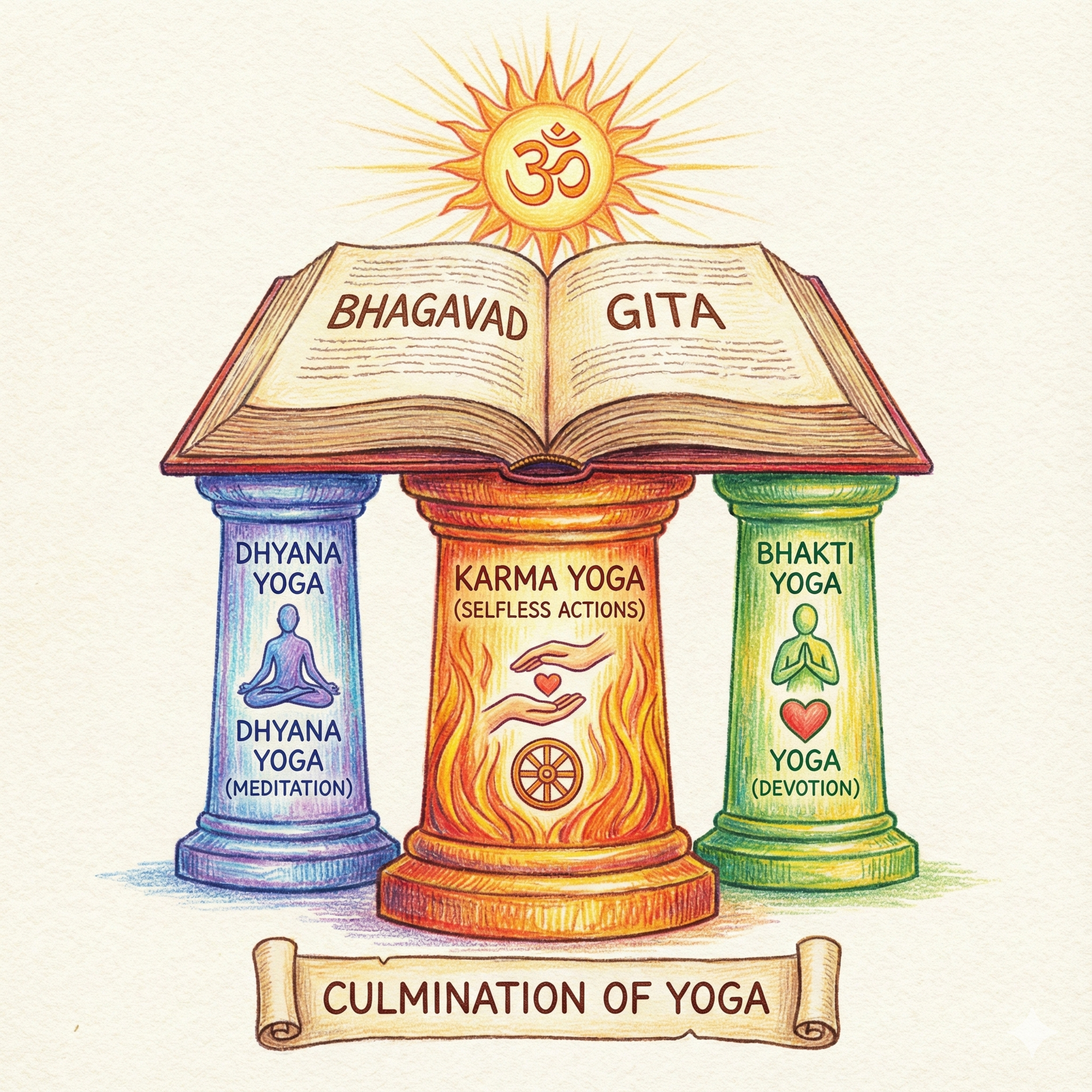
Applied Karm Yoga
Description
The Bhagavad Gita (Song of the Lord) is a monumental philosophical and spiritual text, believed by some to be over 5,000 years old, chronicling the dialogue between Lord Krishna and the warrior-prince Arjuna on the battlefield of Kurukshetra (Dharmakshetra). It offers timeless wisdom on duty (Dharma), action (Karma), and the nature of existence. It is considered the epitome of human wisdom for providing prescriptions for modern life.
This episodeexplores how the core teachings of the Gita provide a systemic guide (synthesizing Karma, Jnana, and Bhakti Yogas) for ethical leadership, entrepreneurial resilience, and scientific ethics.
The revolutionary core of the Gita is Karma Yoga (The Science of Action), which is identified as Dharma-Yoga. Krishna teaches that true renunciation (tyaga) is giving up the results of all activities, not abandoning duty. The key doctrine is Nishkama Karma (desireless action): “You have the right to work, but not to the fruits of work”. This psychological detachment reduces performance anxiety and burnout. Giving up prescribed duties is condemned as action in the mode of ignorance.
The Gita offers practical management advice, recognized as an early form of servant leadership. Entrepreneurship is likened to a marathon, a long and winding journey. Key advice includes:
- Commitment to the Goal: Do not deter from the goal. Focus on the input (strategy, quality).
- Trust Your Destiny (Svadharma): It is better to live your own destiny imperfectly than to live an imitation of somebody else's life with perfection.
- Harness Your Willpower: Build yourself through the power of your will and efforts, as will is the only friend of the self. Self-mastery is key to winning the "battle of business".
- Maintain Equanimity (Samatvam): Stay calm and unwavering, treating success and failure alike, as both are temporary. A person of steady wisdom (Sthitaprajña) is unperturbed by pain and pleasure.
- Move Beyond Greed: Anger, lust (kama), and greed (lobha) are the three gates of hell that destroy the Self. Work should be aimed at the welfare of society.
The Gita's influence extends across global thought:
- American Transcendentalists: Henry David Thoreau bathed his intellect in the "stupendous and cosmogonal philosophy of the Bhagavad-Gita," finding modern literature "puny and trivial" in comparison.
- Modernist Literature: T.S. Eliot used the four Yogas (Dhyana, Karma, Jnana, Bhakti) as the structure for his Four Quartets, echoing Nishkama Karma in his poetry ("The rest is not our business"). Aldous Huxley described the Gita as the "most systematic statement of spiritual evolution" and a summary of the Perennial Philosophy.
- Physics and Ethics: J. Robert Oppenheimer studied Sanskrit to read the Gita. Upon witnessing the first atomic explosion, he recalled Krishna’s cosmic revelation: “Now, I am