Episode Details
Back to Episodes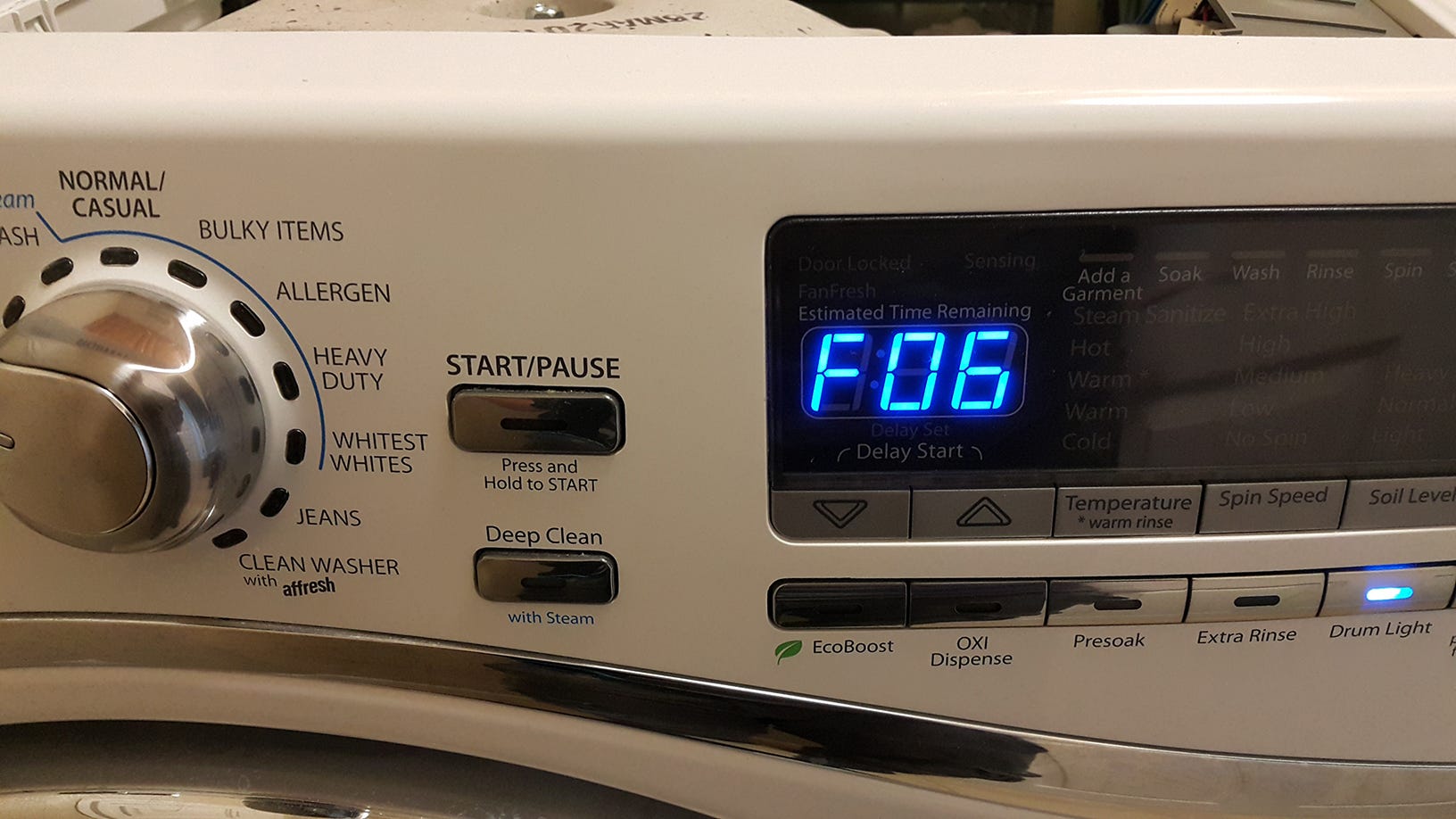
Is it worth fixing?
Description
Welcome to another a partners-only edition of The Payneful Truth. Today’s ruminations concern little subjects like the nature of the gospel, evangelism and the importance of catechism.
Is it worth fixing?
The washing machine was flashing ‘F06’, and as my eyes scanned down the list of error messages in the dog-eared manual, I knew in advance what it was going to say. Not something simple like “F03—“Turn the tap on, you idiot” or “F10—“Clean the filter like you were supposed to do every six months but haven’t done for six years, you idiot”.
Of course it was: “F06—Call our service department, and get ready to bleed cash, you poor sap”.
And so the internal debate begins. Is it worth fixing? Do I want to pour $400 into a 15-year-old washing machine? Or pay $1000 for a new one? $400 would be good value if you got another 10 years out of it. But will we? Is this a good-money-after-bad scenario?
I hate these sorts of dilemmas, but every exercise in repair or renovation raises them.
I’ve been thinking in this vein recently about the revision of Two ways to live (2wtl). The 2wtl outline itself has been around now for around 40 years, with only minor nips and tucks over that time. The training material that utilises it is nearly as old, and had its last major revision about 20 years ago. It’s certainly time for some renovation, but is it worth it? Or was 2wtl great for its time and context, but now just no longer relevant or useful? Would it be better to start again?
This leads to the underlying questions: Why have a gospel outline in the first place? And how would you evaluate what a good one was like?
Thinking back over the many conversations I’ve had about this since my involvement with 2wtl started in the early-80s, I think I’d summarize the rationale and nature of a gospel outline in the following six points (I guess it has to be six).
One
Any outline like 2wtl is predicated on the idea that the gospel is a certain thing and not something else—that it has identifiable content that is capable of being summarized, learned and shared. A gospel is not a philosophy or a theory (although it has philosophical underpinnings and implications); it is not a story (although it has narrative elements, and often sits within a larger historical story); and it is not primarily an answer to a question that we have (although depending on the news it may answer certain questions). A ‘gospel’ is the announcement of grand news. It’s a trumpet blast declaring that something of great import has happened. In the case of the NT gospel, it is an announcement that certain meaningful events have taken place concerning Jesus Christ, leading to a particular state of affairs now being in effect, and a particular future being in store. (In this sense, the NT gospel announcement has the character of a promise—to be heard, believed and acted upon.)
Two
What is the identifiable content of this announcement? It is that the crucified and risen Jesus has been established as the Christ, the Lord of all the world; that God now offers forgiveness of sins by Jesus’ atoning death to all who repent and trust in him; and that in the future he will return to judge the world and save his people. Or something like that. We could argue about the precise way of putting it, how to connect the elements of the announcement together, and what background knowledge might be required to understand the announcement (e.g., knowing what ‘sins’ are, or what a ‘Christ’ is). But the gospel is a thing like this—a declaration of the meaning and implications of certain historical events. It’s not a malleable set of metaphors that answers certain human longings. It’s an announcement about Jesus that calls for a response from us.
Three
How do we know this? How do we discover that the NT gospel is an announcement with this ki