Episode Details
Back to Episodes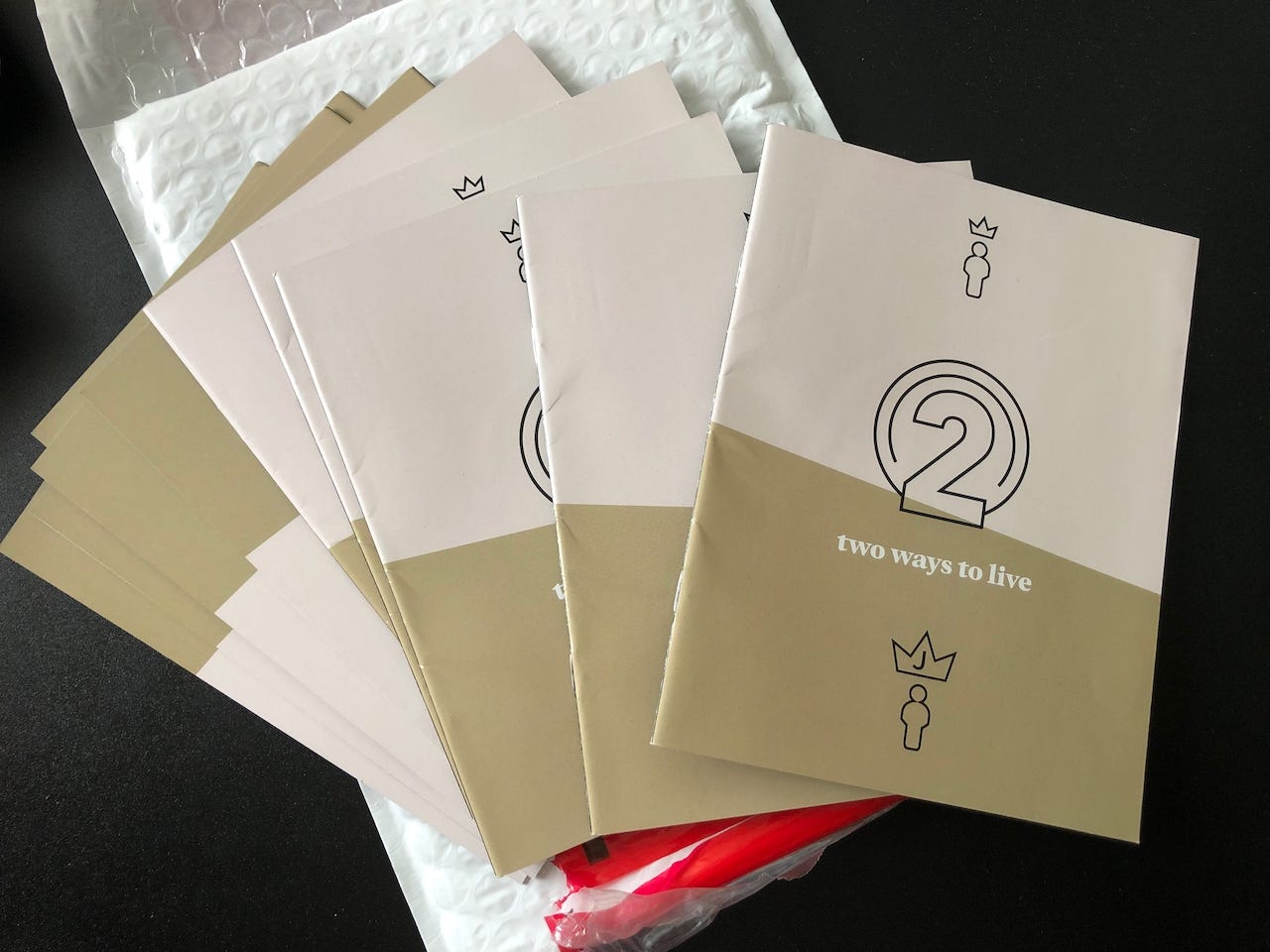
A Swiss Army knife for evangelism
Description
A bit of occasional bored lurking is the most I do on Facebook these days. But my eyes and ears pricked up recently when one of the few organizations I follow (Matthias Media) started teasing the imminent release of the new Two Ways to Live (2WTL) giveaway tract.
People were making various comments on MM’s Facebook post—about how they often add in this or that when they’re using 2WTL, or how they wished the wording was different on this or that point. And I did the almost unthinkable and typed a reply. Here’s (in part) what I said:
2WTL is by no means perfect, but one of the best things about it is that it’s essentially a framework for gospel conversation or presentation, not a prescribed form of words. So if the transition between points 4 and 5 seems naff to you, David, by all means make it better as you use it. Ditto with the place of God's promises to Israel, Justin, if that’s helpful to include for the people you’re talking to.
One of the quirky reasons I’m excited about the release of the new edition of 2WTL is that it gives me an excuse to make this important point all over again. The reason that 2WTL is so invaluable is that it provides something that no other resource currently does: a simple, clear, biblically faithful gospel framework for Christians to use in a multitude of ways. It reaffirms and teaches the one unchanging gospel announcement that we’ve been to proclaim and share; and then equips to talk about that gospel in million different ways. It’s not a form of words to be trotted out on cue. It’s a set of gospel bullet points to learn and take to heart, which we not only know and trust in, but are able to utilize and adapt in a multitude of different conversations and contexts.
The forthcoming new 2WTL tract or ‘booklet edition’ is a good example. It’s just one of those possible uses. It contains the revised bullet-point outline, but its main purpose is to explain the gospel to a non-Christian reader. It’s a giveaway booklet. That’s why the classic 2WTL statements (the bullet points) are not very prominent in this new design. The focus is on the explanatory text that fleshes out the statements and on the graphic elements that illustrate them. (We use the actual 2WTL statements as a little inset summary at the end of each page.)
The new booklet has a number of other design changes that I think really improve its appeal as a give-away resource—a ‘modern classic’ look-and-feel, new versions of the drawings in badge form, a reworking of how text and graphics interact on the page, and a revision of all the explanatory text.
What of the updates to the 2WTL framework itself? Apart from numerous small tweaks to the language here and there, these are the three main changes to the outline itself.
#1. Probably the most significant change is the shifting of the offer of forgiveness of sins from box 4 (the atonement) to box 5 (the resurrection). I think this is a genius move (and I wasn’t the one to think of it!), because it reinforces and strengthens the logic of the gospel.
2WTL really builds towards box 5. That’s where we get to the essence of the gospel proclamation—that the crucified Jesus has risen to be the ruler and judge of the world, and now offers forgiveness of sins and new life to everyone, in advance of his return. That’s as close to a summary of the NT gospel announcement as you can get, and box 5 is where that is proclaimed. If you work backwards from Box 5, you get the logic of boxes 1-4. In other words:
* How can the risen Lord Jesus bring forgiveness of sins and new life? By dying on the cross to take the punishment we deserve (atonement, box 4).
* Why do we deserve punishment and from whom? We’re in line for God’s punishment because of our rebellion against him (judgement, box 3).
* What rebellion? We all r