Episode Details
Back to Episodes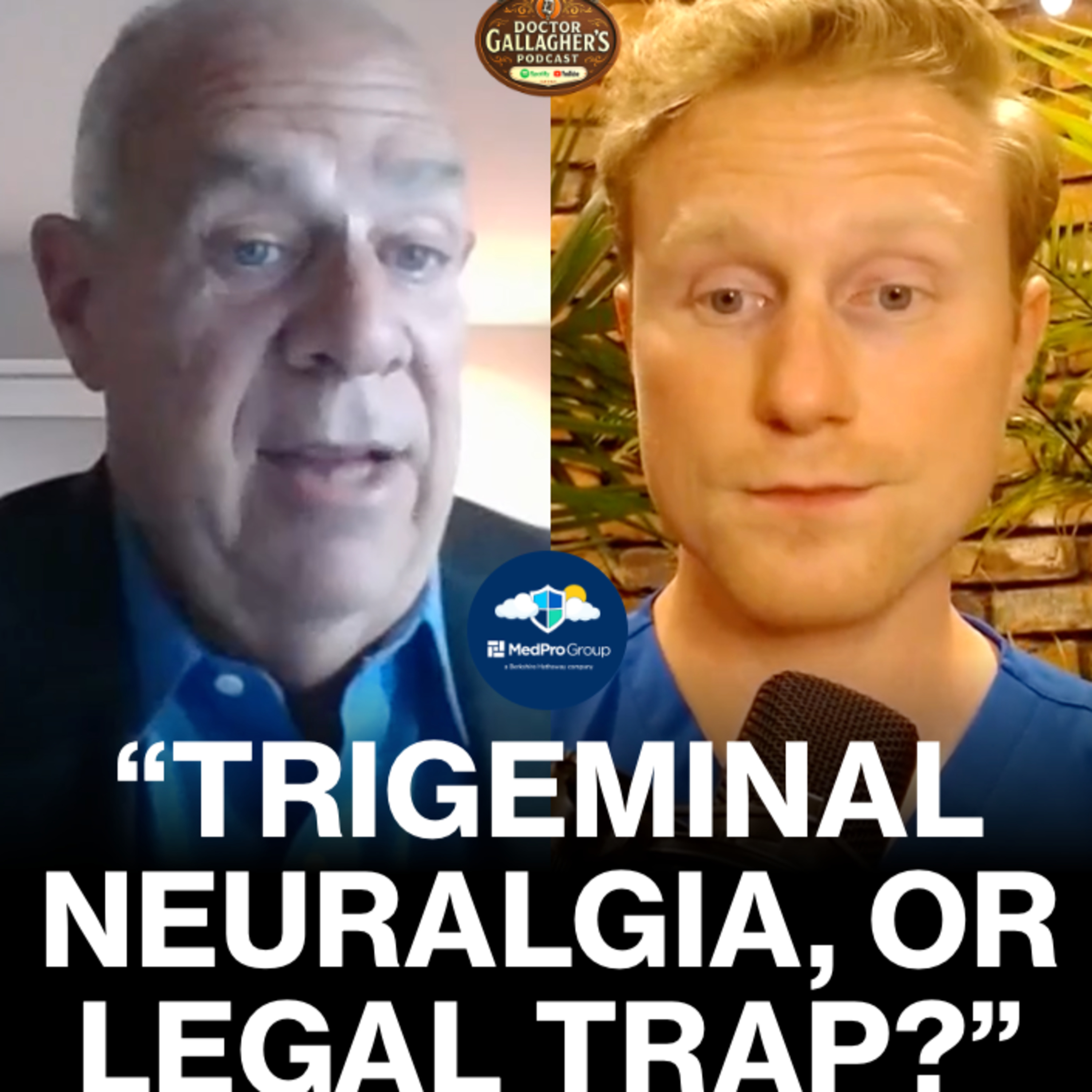
Dental Malpractice Case #5 with Dr. Marc Leffler of MedPro Group - Dose of Dental Podcast #185
Description
Top 5 Topics:
- When Surgeons Get Sued: The Real Story Behind a Lawsuit That Could Happen to Any Dentist
- Trigeminal Neuralgia? Legal Nightmare? When Pain Turns Into a Court Case That Might Not Necessarily Be Trigeminal Neuralgia
- Think Like a Surgeon: Why Board Exams Make You Better (Even If They Don’t Benefit More Tangibly)
- What Every Dentist NEEDS To Know About Documentation — Before It’s Too Late
- Inside the Courtroom: How One Sentence Decided the Fate of Two Dentists
(Dental Cases = Even # Episodes; OMFS Cases = Odd # Episodes)
Quotes & Wisdom:
[03:12] Marc Leffler: “If you’re an oral surgeon, you’re achievement-oriented—and the OMFS Board Certification is the highest you can go in the profession.”
[07:44] Marc Leffler: “Don’t tell the patient, ‘come back in a month if it’s not better.’ You initiate the return visit and follow tightly.”
[10:31] Marc Leffler: “A single legal decision can direct the entire pathway of a case.”
[28:35] Marc Leffler: “Files break. No negligence—files break.”
[29:34] Marc Leffler (on TN causation): “This isn’t caused by a peripheral insult; it’s due to an anatomic relationship between vessel and nerve.”
[36:59] Marc Leffler: “There’s no way to say, ‘you must see a patient X times after procedure Y.’ Make a judgment you can defend.”
[40:54] Marc Leffler: “Once the patient leaves your sphere of influence, you’re subject to whatever another practitioner says—and that becomes the record.”
[44:25] Marc Leffler: “Documentation is critical—paint a contemporaneous picture of what you saw, thought, diagnosed, and recommended.”
[45:07] Marc Leffler: “Addendums are fine if you legitimately left something out—not so fine the day after a lawyer’s letter.”
[42:44] Marc Leffler: “Healthcare is collaborative; litigation is adversarial—and it can get there very quickly.”
[37:56] Marc Leffler: “You can’t guarantee a good result. The best you can do is a prudent approach a reasonably prudent practitioner would take.”
Questions:
[04:31] Can an apicoectomy incision realistically injure the infraorbital nerve and trigger trigeminal neuralgia?
[07:44] From a risk-management standpoint, how tightly should we follow a patient who reports persistent post-op pain?
[03:12] If boards don’t lower malpractice, raise reimbursements, or add other tangible benefits, why pursue certification?
[10:31] How do plaintiff strategy and jury instructions shape outcomes when “trigeminal neuralgia” is alleged?
[35:24] How many follow-up visits are “enough,” and when should we schedule them after apicos, coronectomies, or wisdom teeth?
[36:59] With no rigid standard for follow-up counts, what’s the prudent, defensible judgment a surgeon should make?
[38:50] What documentation habits best protect clinicians if a complication becomes a lawsuit?
[43:09] In high-litigation environments, what can providers do to protect themselves when routine complications (e.g., separated files) occur?
Now available on:
- Dr. Gallagher’s Podcast & YouTube Channel
- Dose of Dental Podcast #185
- Malpractice Case #5
My watch in this episode = Tag Heuer Aquaracer Calibre 16 Chrono
- 10.2025
This episode is a partnership with MedPro Group, and Dr. Marc Leffler, Lead Dental Risk Consultant.
#podcast #dentalpodcast #doctor #dentist #dentistry #oralsurgery #dental #dentalschool #dentalstudent #dentistlife #oralsurgeon #doctorgallagher #medpro