Episode Details
Back to Episodes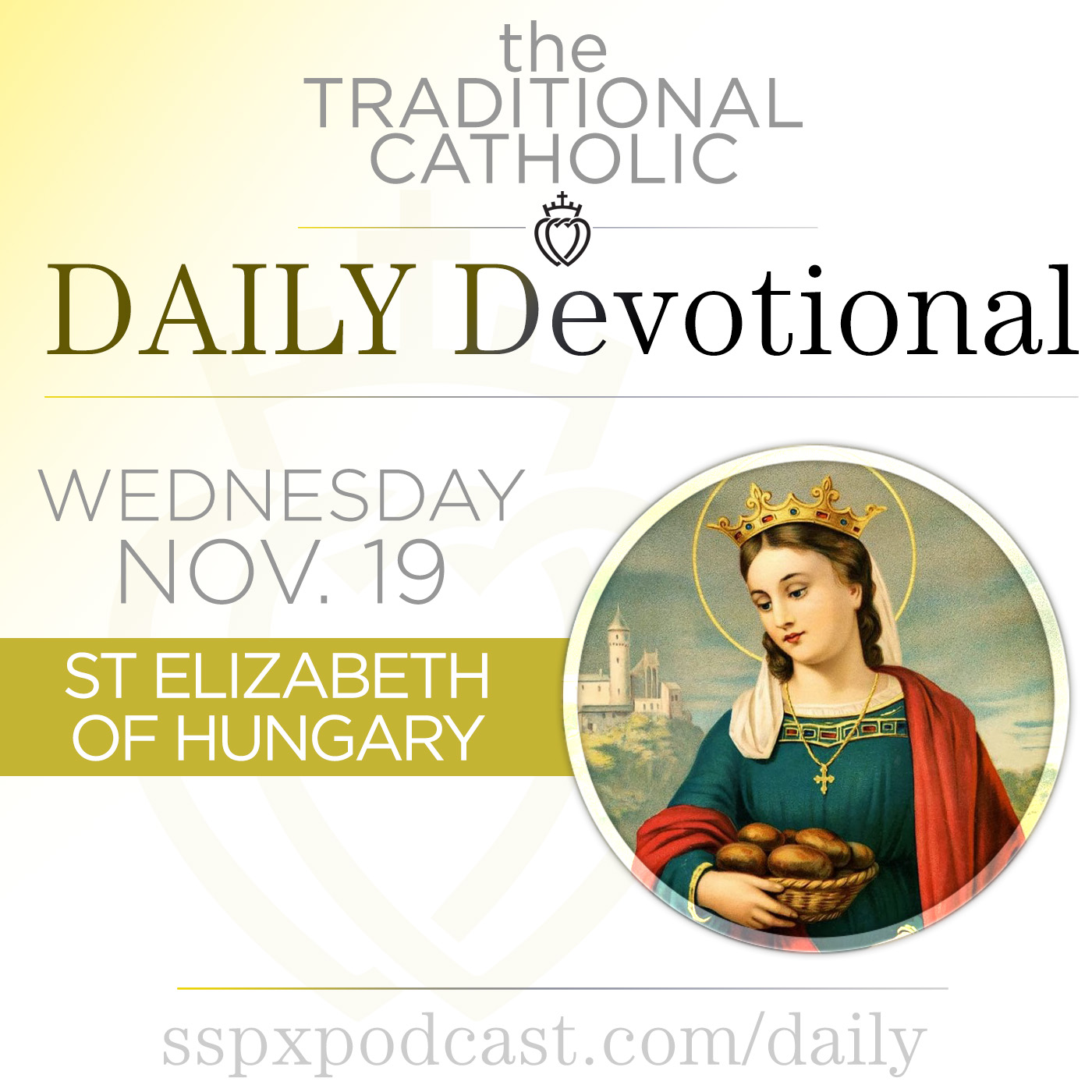
Nov 19 – S Elizabeth of Hungary
Description
It’s the Feast of St. Elizabeth of Hungary, 3rd Class, with the color of White. In this episode: the meditation: “The Conversion of Zaccheus”, today’s news from the Church: “Iraq: Alqosh Mayor Denounces Selective Expulsion of Christians”, a preview of the Sermon: “Who Is the Master of Life and Death?”, and today’s thought from the Archbishop.
Have feedback or questions about the DD or our other shows? podcast@sspx.orgSources Used Today:
- “The Conversion of Zaccheus” – Practical Meditations
- “Iraq: Alqosh Mayor Denounces Selective Expulsion of Christians” (FSSPX.news)
- “Who Is the Master of Life and Death?” (SSPX Sermons)
- The Spiritual Life – Archbishop Lefebvre (Angelus Press)
Saint Elizabeth of Hungary is one of those saints whose life feels almost too bright for the age she lived in. Born in 1207 as a princess of the powerful Árpád dynasty, she grew up in a world of courts, alliances, and political marriages. Yet from childhood she carried a tenderness that set her apart. Servants noticed how she slipped away from banquets to pray, and how she saved scraps from her own plate to give to beggars at the castle gate. She was married young to Ludwig of Thuringia, a nobleman whose goodness matched her own. Their marriage became a partnership of charity that astonished the court. They prayed together, ruled together, and considered the poor their shared responsibility.
Elizabeth’s love for the needy was tireless and imaginative. She built hospitals, visited the sick, fed orphans, and gave away her fine clothing without hesitation. When famine struck, she opened the royal granaries and distributed food freely. Her almsgiving provoked criticism from nobles who thought she was embarrassing the crown. Ludwig defended her every time, saying that what she gave to the poor she was lending to Christ. One well-known story tells of her carrying bread hidden in her cloak to the hungry. When confronted, she opened the cloak and roses tumbled out, a gentle sign that heaven approved what others questioned.
Her holiness was sharpened by sorrow. When Ludwig died of