Episode Details
Back to Episodes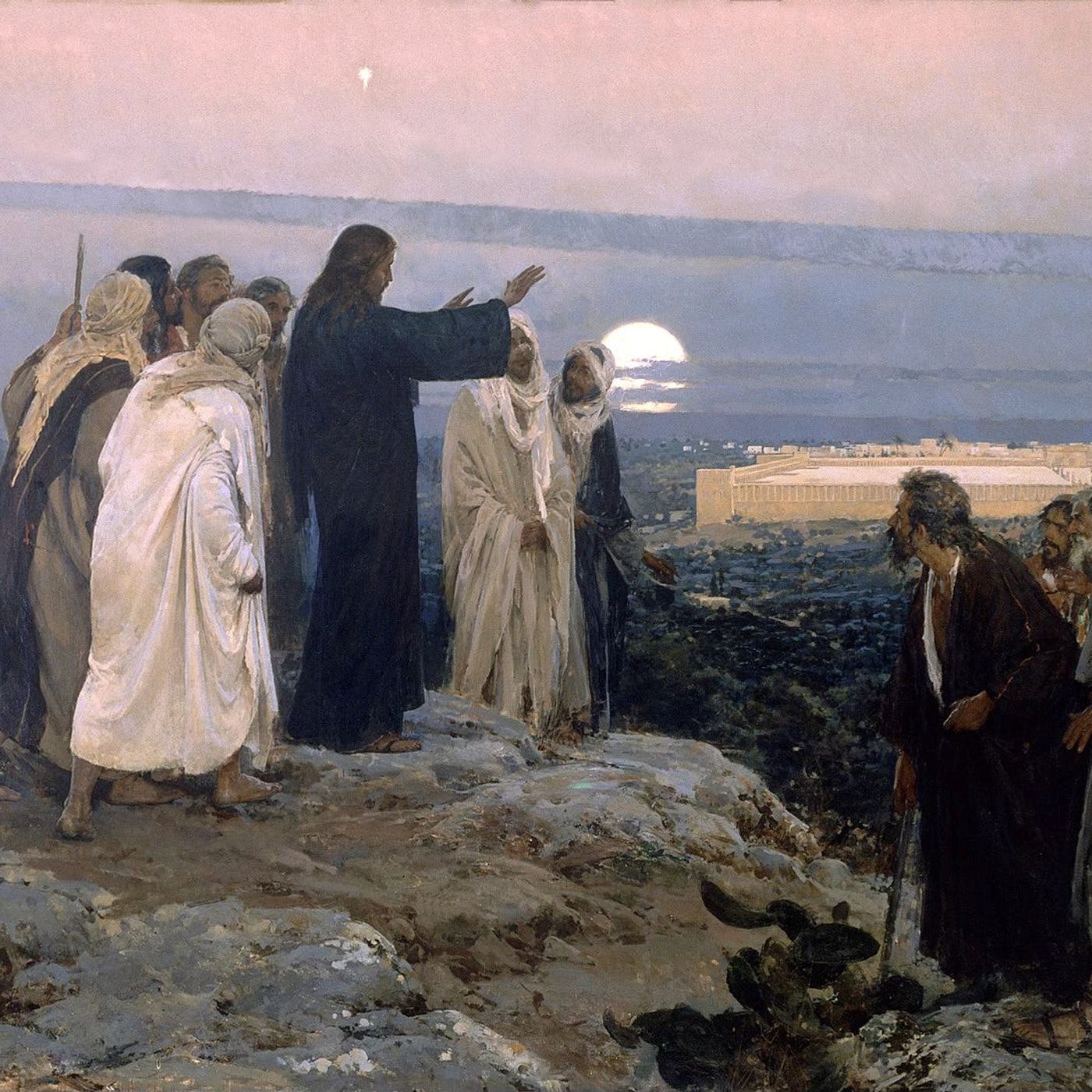
It's not the end of the world...yet
Published 11 months, 2 weeks ago
Description
“Teacher, when will these things be?”At the beginning of our Gospel passage, some people speak to Jesus of the Temple, saying that it is adorned with stones and votive offerings. Jesus replies in an unexpected way: “As for these things that you see, the days will come when there will not be left here one stone upon another that will not be thrown down.”His disciples ask him when these things will be and what signs will accompany such a monumental event. Jesus then begins a discourse in which he warns of false messiahs, international wars, tumults, earthquakes, famines, pestilences, terrors and great signs from heaven. He also predicts the persecution of his followers: arrests, trials, and ostracization from their own families.What is all this about? Most scholars and theologians have agreed that Jesus is doing two things in this discourse. Firstly, he is predicting the destruction of the Second Temple, which occurred in A.D. 70 at the hands of the Roman Empire.But this alone does not account for the imagery of the passage. In the typical style of the Jewish prophets, it seems that Christ was speaking of events both near and far. He was speaking of the destruction of Jerusalem and using that as a symbol of the very end of history. In Christian theology we call this subject “Eschatology” or we speak of it as the “End Times”.Signs of the EndI have already mentioned that Jesus describes a situation of great global instability, talking of natural disasters on an unprecedented scale: famines, pestilences, earthquakes. He speaks of international wars: kingdoms and nations turned against each other. He implies that people will, at this time, be terrified. And he tells us that many will come in his name, saying, “I am he!” and “The time is at hand!”Let’s think about this for a moment. We can observe a clear dynamic in the text.It starts with a crisis – perhaps something unprecedented - which leads people to be afraid. And, being afraid, they look for solutions that promise hope and deliverance. More than that, they look for people who promise these things.These false messiahs of whom Jesus warns are very interesting. Firstly, they are not purely secular but invoke the name of Jesus Christ, claiming to represent him and his values.Secondly, they exalt themselves: “I am he!” they say, and “The time is at hand!” Meaning, of course, that their rise to prominence is the crucial moment of history and that they will bring deliverance.There is also urgency about these statements: “It must be now. You must do what I say immediately and, if not, we will all be doomed because of your lack of compliance.”This is a psycho-spiritual dynamic that, Christ warns us, has the capacity to deceive and lead astray many. He is telling us so that we might be aware of it and so that we might not suffer this fate.But what is the relevance?You may ask, “What is the relevance of these things if we are not living either in AD 70 or in the final moments of history?”I would answer this question in two ways. The pattern Christ describes is for all of history and not just for the very end. We know this because the pattern is observable not just in AD70 but at all times.These discourses are given to us so that we might recognise the signs of the times. As strange as it might sound, we may very well be getting close to the end of history. It will come at some point and so Christ tells us these things so that we might be prepared.To elaborate on this theme, Christ appears to be describing global crises that affect the majority – if not all – of the world’s population. Indeed, this is confirmed when we look at other relevant texts in the Bible. We might look here at Revelation 13, which describes a diabolical beast given authority over every tribe, people, language and nation. “All who dwell on earth will worship it” (Rev. 13:8) we are told. Later in the chapter, a second beast rises out of the earth and is given similar authority. The beast is said to cause all, small an