Episode Details
Back to Episodes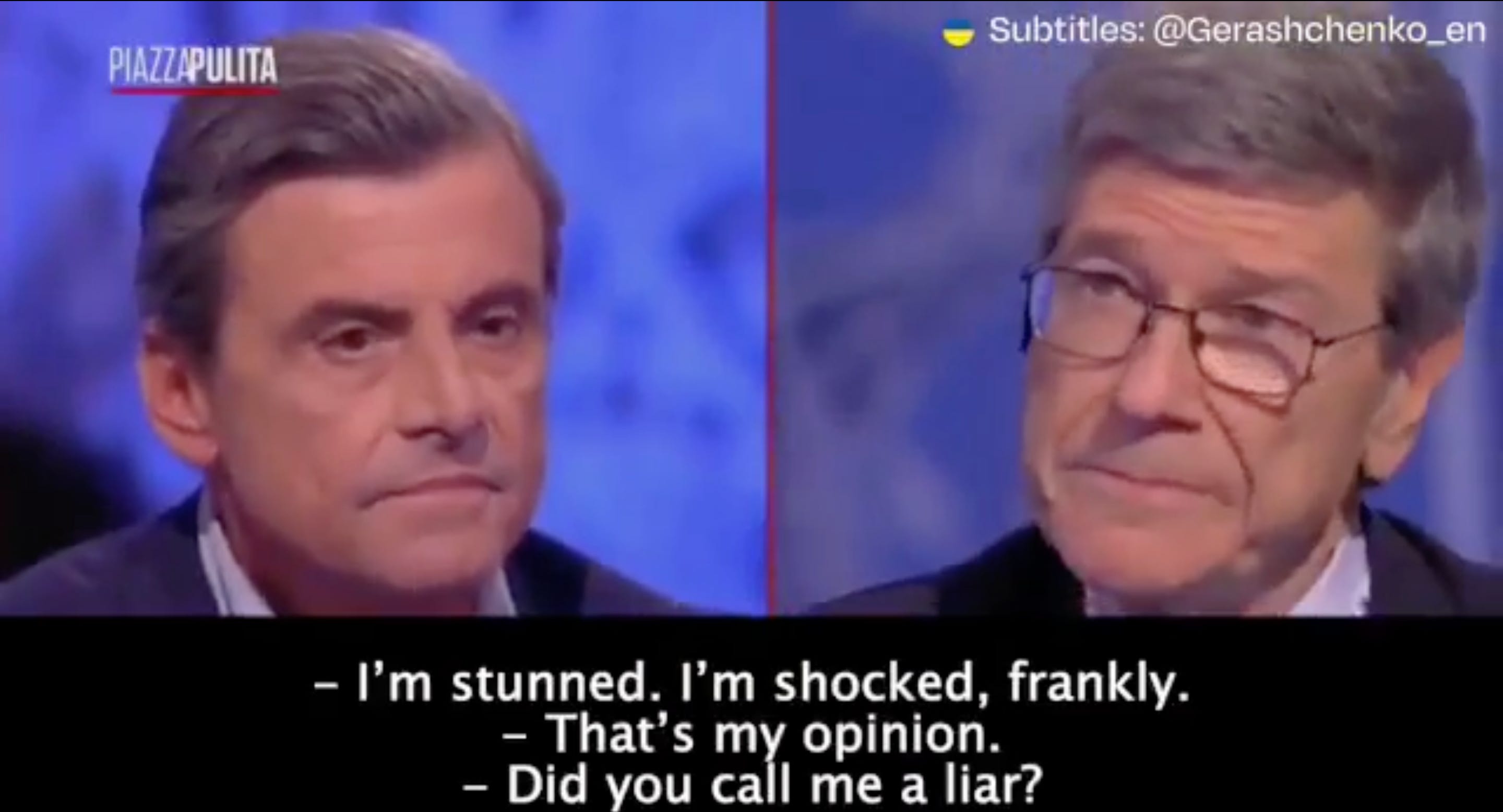
Podcast | Curious Case of Pro-Russia Disinfolklorist Jeffrey Sachs's 'Influence' on Discourse About Ukraine's War for Independence
Description
Jeffrey Sachs was in my mind because he was this kind of devil from the early 1990s, when he was responsible for shock therapy or whatever. But I hadn’t encountered him in reference to Ukraine until I was on holiday on the Turkish Riviera in the summer of 2024. A really close friend of mine — who, like many people, has no sympathy for Ukraine and loads of sympathy for the plight of Palestinians — and I said to him: “Look, you’re really lucky, because I’m one of the few people who has spoken to more local elected officials in Ukraine than almost any Westerner.” I spent four years of my life, every working day, going into the villages and the hromadas — the decentralised former Soviets — and speaking to people. That was my level as a very low-level diplomat and member of the international community. I discovered I could get meetings with these village heads who had been elected under this amazing decentralisation plan which Ukraine introduced on the 1st of April 2014. President Poroshenko did amazing work with it, and so did President Zelensky.
Power was decentralised to these villages, former Soviets which had never had any power. They used to have to go to the district councils to get money to change a light bulb. All the elections were fixed. All these communities were designed around the communal farm. Until relatively recently, many of the people there didn’t have a passport — they couldn’t even leave their villages without permission. Suddenly this new process comes in, and you have these amazing leaders, male and female, in Dnipropetrovsk, Zaporizhzhia and Kirovohrad — that was my area of operation. In Dnipropetrovsk, half of the hromada leaders were women. I went to each of them and asked: what made you do this? It was a voluntary process. They would bring me around these amazing schools — European-standard schools funded by the European Union, the Ukrainian government and USAID.
It’s an amazing story of decentralisation of power, of governance reform, which is virtually impossible in most of our countries because there are so many vested interests. Ireland, for instance, still has the same governance structure it had when it was ruled by England. It’s just impossible to change. So it really impressed me that in Ukraine, in the midst of a war, over the course of five years, they rammed through this really democratic process. This is probably why the left — and there are many people in the English left who full-throatedly support Ukraine and have been over there a lot — anyone who looks into Ukrainian governance will be really impressed by what they do. They keep 50% of their taxes.
I’m saying to my friend: “This is my experience. I can tell you there are no Nazis in Ukraine. I can tell you they will fight to the last person. I can tell you these are the areas that are now occupied, and I met the leaders there. Some of them are dead now. Some of them are in jail. Others are just waiting, biding their time to come back. I think every day of the people I met in schools there, the older people who gave us gifts and bread, who are in these places the Russians have been brutally occupying.”
And then he quotes Jeffrey Sachs to me. I said: “Who is Jeffrey Sachs? I don’t even know if he’s been to Ukraine. And somehow you believe him over me — your friend whom you’ve known for decades.” That has always stuck in my mind. Whenever I hear Jeffrey Sachs, I think about it. I think about what kind of algorithm is serving this stuff up to my friend — that he’s watching Jeffrey Sachs talking about things — and why is he believing Jeffrey Sachs over me, someone who has actually been there and talked to the people?
I used to think, when I set out on this path in 2018 to try and understand Donald’s magic — how did he troll people so successfully? — that it was just a matter of getting the truth in there. I wrote my first things online in 2019. Up to that point, I was completely invisible. But now I realise it