Episode Details
Back to Episodes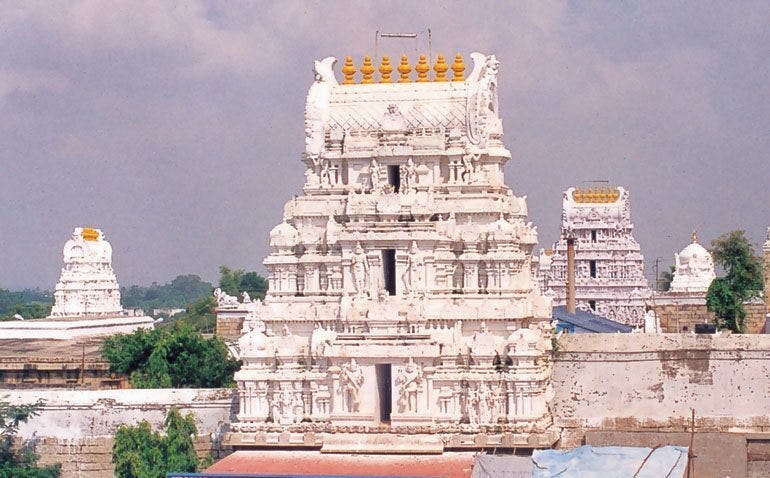
Six Rahu and Ketu Temples in India Every Devotee Must Visit
Description
Walking the cosmic path of karma, illusion, and liberation
In the sacred geometry of Hindu cosmology, Rahu and Ketu are the celestial shadows - invisible yet powerful, mysterious yet transformative. They are not physical planets but the lunar nodes that mark where the Moon’s path crosses the Sun’s path. In Vedic astrology, they symbolize the dualities that drive human life: material desires and spiritual liberation, attachment and detachment, illusion and awakening.
Rahu, the head of the serpent, represents worldly ambition, obsession, and the hunger for experience. Ketu, the tail, embodies spiritual insight, detachment, and transcendence. Together, they form the karmic axis that governs our destiny - teaching lessons that no other planets can.
Across India, there exist a handful of sacred temples dedicated to Rahu and Ketu, where the energies of these shadow planets are believed to manifest strongly. Devotees visit these temples to perform parihara poojas (remedial rituals), seeking relief from karmic afflictions, planetary doshas, and confusion in life. But beyond remedies, these places offer deep spiritual insight - they teach surrender, self-awareness, and acceptance of the mysterious design of destiny.
Below are six such temples every seeker should experience at least once in their lifetime.
1. Sri Kalahasteeswara Temple, Srikalahasti (Andhra Pradesh)
* Also known as: Dakshina Kailasam or the southern abode of Lord Shiva
* Presiding Deity: Lord Shiva as Kalahasteeswara (Vayu Linga – Air Element)
The Sacred Air of Liberation
Located near Tirupati, this majestic temple is often called Dakshina Kailasam - the southern abode of Lord Shiva. The presiding deity, Kalahasteeswara, represents the element of air (Vayu), one of the five elemental Panchabhoota Lingas in India.
According to ancient legend, three creatures - a spider (Sri), a serpent (Kala), and an elephant (Hasti) - worshipped Lord Shiva here with intense devotion. Moved by their sincerity, Shiva merged their names to form Srikalahasti, blessing the site as one of the most potent spiritual centers.
This temple is also renowned as Rahu–Ketu Kshetra, a sacred site where devotees perform Rahu–Ketu dosha nivarana rituals. Thousands visit to overcome challenges related to marriage delays, mental confusion, financial struggles, or inexplicable fears - all believed to arise under Rahu–Ketu influence.
Another celebrated tale is that of Kannappa Nayanar, one of Shiva’s greatest devotees. When he saw blood oozing from the Shivalinga, Kannappa plucked out his own eyes to stop the flow. Before he could sacrifice his second eye, Shiva appeared, granting him moksha and eternal fame.
The temple’s spiritual vibration is profound - chants echo through stone corridors, and oil lamps flicker beneath colossal gopurams. Performing parihara pooja here during Rahu Kalam is said to dissolve deep karmic knots.
Travel Insight: Srikalahasti is just 36 km from Tirupati and accessible by road or train. Wheelchair assistance and special darshan lines are available for elderly devotees. Early mornings offer the calmest atmosphere for meditation.
Why Visit:This temple is considered Rahu–Ketu Kshetra, where dosha nivarana poojas (remedy rituals) are most effective. The priests perform personalized rituals based on birth stars.
Tip: Special darshan and wheelchair assistance are available, making it suitable for elderly devotees or those needing comfort
2. Tirunageswaram Naganathar Temple, near Kumbakonam (Tamil Nadu)
* Also known as: Rahu