Episode Details
Back to Episodes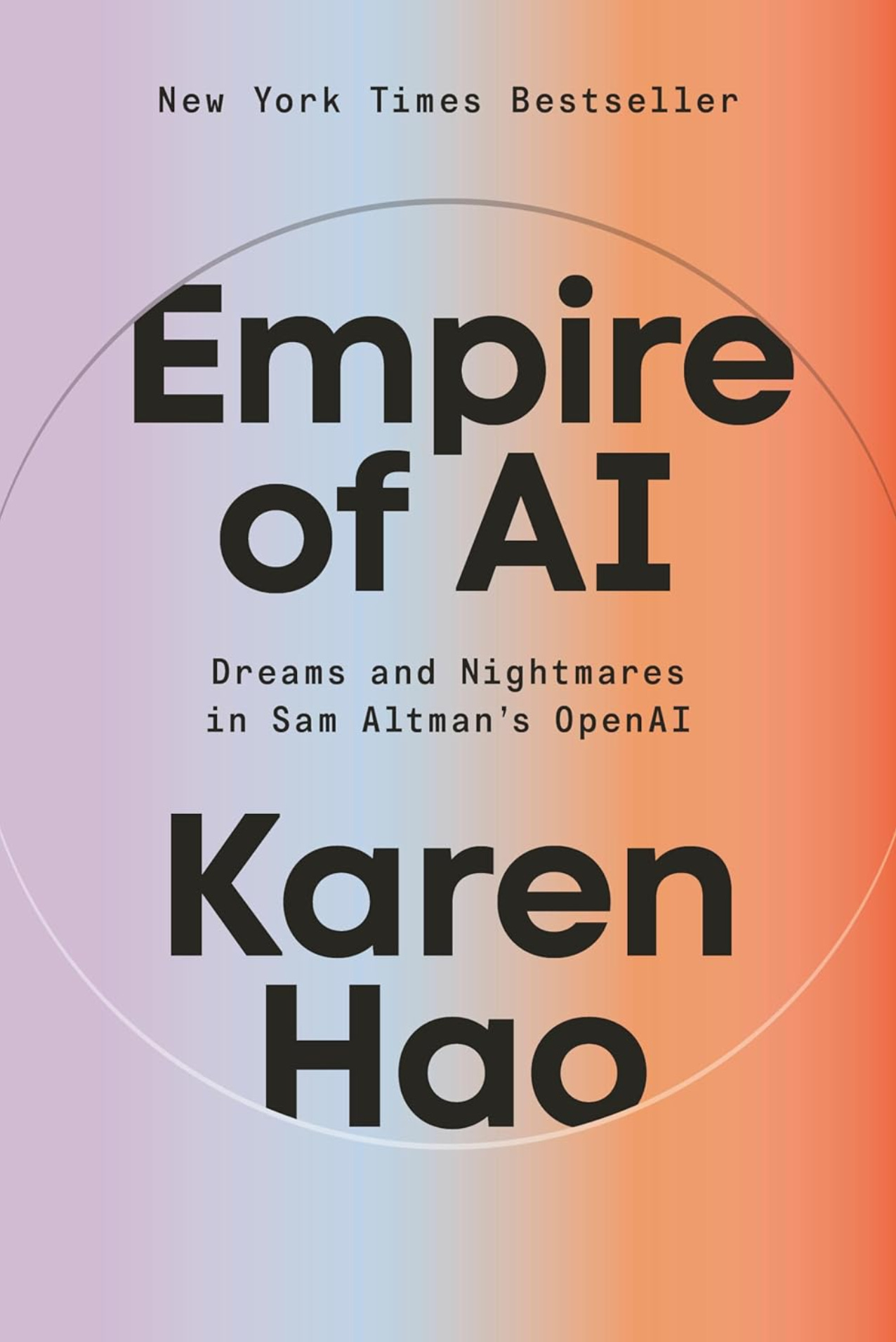
AI makes an explainer about AI | Karen Hao with Hasan Minhaj
Description
(Explainer video credit: Google NotebookLM) ironic huh?
Hat tip to Muthu Raja
I love that Karen focuses on how AI tech bros are using the playbook of empires and Dune…eventually even Paul Atreides begins to believe the planted prophecy that the mother and The Bene Gesserit invented.
Karen Hao’s book is next on my to read list.
The source material interview is excellent. I rarely watch a 1 hour YouTube video, even before the newborn, but I made time and broke it up into three sittings.
My Opinion
A society that struggles to elect effective leaders and where 40 million citizens rely on SNAP for basic nourishment likely lacks the will to proactively address the growing ripples of AI until it is too late.
This man would be proud of Altman.
“Sam, I am your father!”
The AI Empire: A Synthesis of Karen Hao’s Analysis
Executive Summary
This document synthesizes the core arguments presented by author Karen Hao regarding the current state of the Artificial Intelligence industry. The central thesis is that major AI corporations—such as OpenAI, Microsoft, and Google—are operating as modern-day empires. This “Empire of AI” model is characterized by the large-scale extraction of resources like data and intellectual property, the exploitation of a global labor force, and the consolidation of immense economic and political power. These actions are often justified under a “civilizing mission” rhetoric, promising to solve humanity’s greatest problems like climate change and disease.
Hao argues that this trajectory is not inevitable. She advocates for an “AI accountability” approach, calling for democratic control and resistance at various points along the AI supply chain—from data collection and labor practices to the environmental impact of data centers. The document details the hidden costs and “sacrifice zones” of AI development, including the psychological toll on content moderators in the Global South and the environmental degradation of communities hosting massive data centers. Finally, it outlines an alternative path for AI development focused on task-specific, publicly beneficial applications rather than the current pursuit of capital-intensive, all-encompassing “everything machines.”
--------------------------------------------------------------------------------
1. Deconstructing the AI Industry’s Narrative
Karen Hao positions her analysis within an “AI accountability camp,” which seeks to scrutinize the power structures of the industry rather than simply accepting optimistic or skeptical viewpoints. This perspective is rooted in a critical examination of the industry’s foundational myths and marketing language.
The Malleable Definition of AI and AGI
* Origins in Funding: The term “artificial intelligence” was coined in 1956 by Dartmouth assistant professor John McCarthy, who later admitted, “I invented this term because I needed money.” This highlights that the field’s branding was, from its inception, tied to securing financial resources.
* The Flaw of Anthropomorphism: The original goal of recreating “human intelligence” is fundamentally problematic, as there is no scientific consensus on what constitutes human intelligence. This ambiguity allows companies to define success on their own terms, such as beating a human at chess, without addressing the full scope or significance of intelligence.
* AGI as a Strategic Tool: Artificial General Intelligence (AGI) is not a fixed technical concept but a narrative tool that “shapeshifts based on what the companies need it to be.”
* To Consumers: It is marketed as a convenient life-operating system, like in the movie Her.
* To Regulators: It is presented as a mythical technology capable of s