Episode Details
Back to Episodes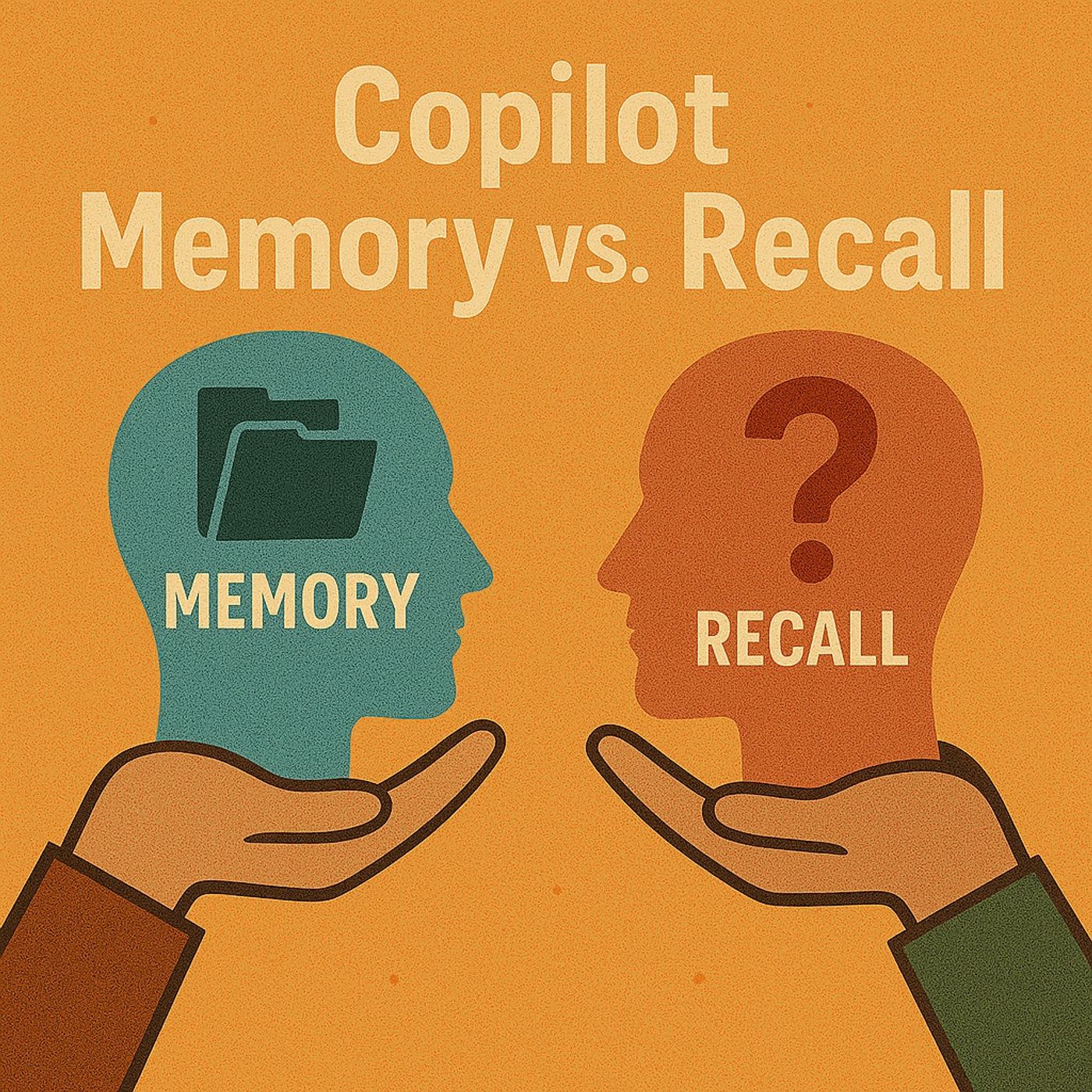
Copilot Memory vs. Recall: Shocking Differences Revealed
Published 4 months, 2 weeks ago
Description
Everyone thinks Copilot Memory is just Microsoft’s sneaky way of spying on you. Wrong. If it were secretly snooping, you wouldn’t see that little “Memory updated” badge every time you give it an instruction. The reality: Memory stores facts only when there’s clear intent—like when you ask it to remember your tone preference or a project label. And yes, you can review or delete those entries at will. The real privacy risk isn’t hidden recording; it’s assuming the tool logs everything automatically. Spoiler: it doesn’t. Subscribe now—this feed hands you Microsoft clarity on schedule, unlike your inbox. And here’s the payoff: we’ll unpack what Memory actually keeps, how you can check it, and how admins can control it. Because before comparing it with Recall’s screenshots, you need to understand what this “memory” even is—and what it isn’t.What Memory Actually Is (and Isn’t)People love to assume Copilot Memory is some all-seeing diary logging every keystroke, private thought, and petty lunch choice. Wrong. That paranoid fantasy belongs in a pulp spy novel, not Microsoft 365. Memory doesn’t run in the background collecting everything; it only persists when you create a clear intent to remember—through an explicit instruction or a clearly signaled preference. Think less surveillance system, more notepad you have to hand to your assistant with the words “write this down.” If you don’t, nothing sticks. So what does “intent to remember” actually look like? Two simple moves. First, you add a memory by spelling it out. “Remember I prefer my summaries under 100 words.” “Remember that I like gardening examples.” “Remember I favor bullet points in my slide decks.” When you do that, Copilot logs it and flashes the little “Memory updated” badge on screen. No guessing, no mind reading. Second, you manage those memories anytime. You can ask it directly: “What do you know about me?” and it will summarize current entries. If you want to delete one thing, you literally tell it: “Forget that I like gardening.” Or, if you tire of the whole concept, you toggle Memory off in your settings. That’s all. Add memories manually. Check them through a single question. Edit or delete with a single instruction. Control rests with you. Compare that with actual background data collection, where you have no idea what’s being siphoned and no clear way to hit the brakes. Now, before the tinfoil hats spin, one clarification: Microsoft deliberately designed limits on what Copilot will remember. It ignores sensitive categories—age, ethnicity, health conditions, political views, sexual orientation. Even if you tried to force-feed it such details, it won’t personalize around them. So no, it’s not quietly sketching your voter profile or medical chart. The system is built to filter out those lanes entirely. Here’s another vital distinction: Memory doesn’t behave like a sponge soaking up every spilled word. Ordinary conversation prompts—“write code for a clustering algorithm”—do not get remembered. But if you say “always assume I prefer Python for analysis,” that’s a declared intent, and it sticks. Memory stores the self-declared, not the incidental. That’s why calling it a “profile” is misleading. Microsoft isn’t building it behind your back; you’re constructing it one brick at a time through what you choose to share. A cleaner analogy than all the spy novels: it’s a digital sticky note you tape where Copilot can see it. Those notes stay pinned across Outlook, Word, Excel, PowerPoint—until you pull them off. Copilot never adds its own hidden notes behind your monitor. It only reads the ones you’ve taped up yourself. And when you add another, it politely announces it with that “Memory updated” badge. That’s not decoration—it’s a required signal that something has changed. And yes, despite these guardrails, people still insist on confusing Memory with some kind of background archive. Probably because in tech, “memory” triggers the same fear circuits as “cookies”—something s