Episode Details
Back to Episodes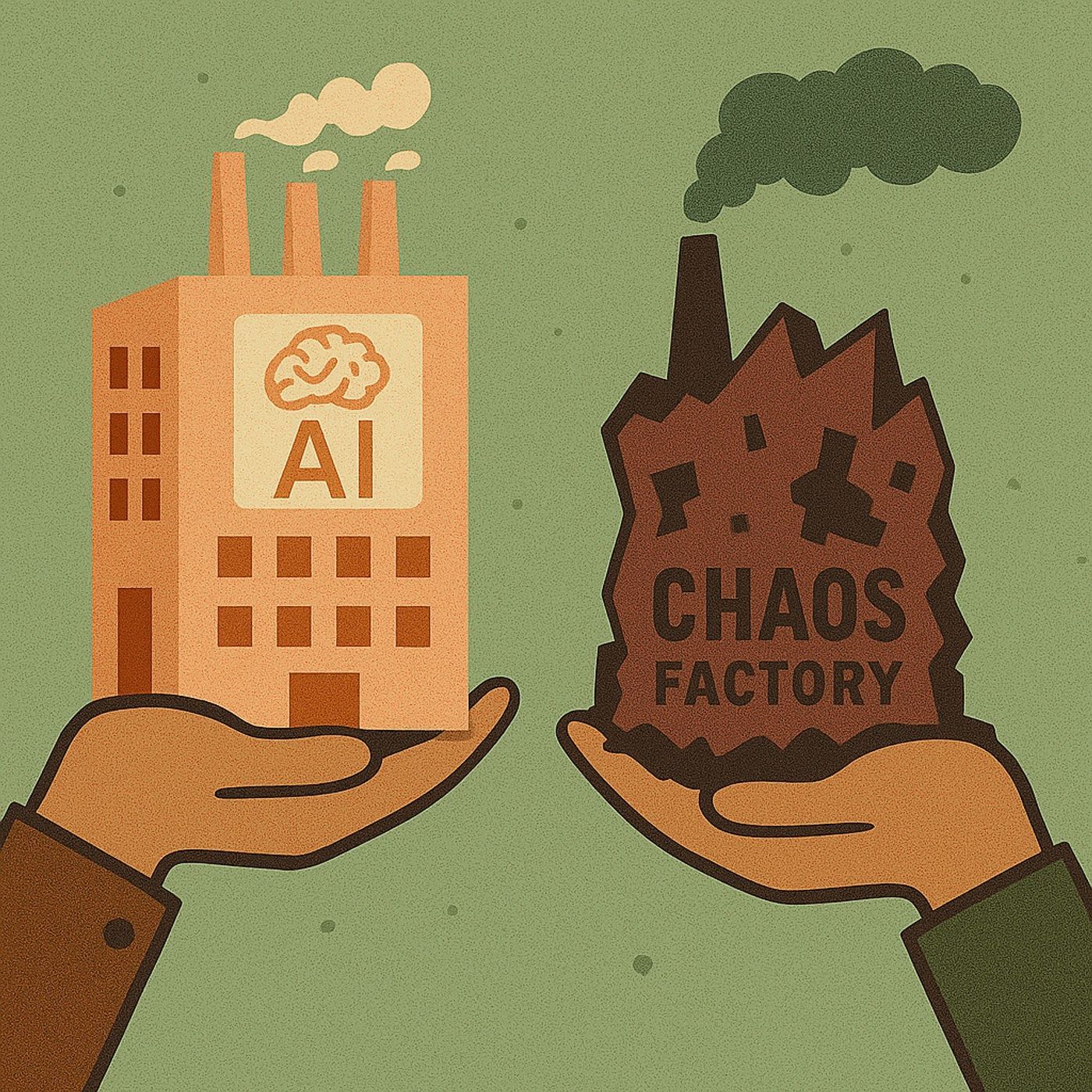
AI factory vs chaos: build a governed Microsoft AI architecture before shadow AI becomes your biggest compliance risk
Season 1
Published 9 months, 3 weeks ago
Description
AI factory vs chaos: in this episode of M365.fm, Mirko Peters explains why most organizations are not running an AI strategy—they are running an AI accident. Copilot here, a custom GPT there, a Power Automate flow wired to an LLM nobody documented, and somewhere in IT a growing list of incidents nobody wants to explain to leadership. He opens with a simple question: if you cannot draw a diagram of how your AI tools connect, who owns them, and what data they touch, you do not have an AI factory—you have organized chaos with a Copilot license.
Mirko starts by defining what an AI factory actually means. Not a buzzword, but a deliberate architecture: governed models, clear data pipelines, monitored outputs, and human oversight built into every layer. He contrasts this with the "shadow AI" pattern most enterprises are actually running—individual teams adopting tools independently, with no shared standards, no central visibility, and no consistent answer to the question "What is this AI actually doing with our data?"
He then maps the chaos taxonomy. There are three failure patterns Mirko sees repeatedly: ungoverned experimentation (everyone builds, nobody documents), platform sprawl (Azure OpenAI here, Copilot Studio there, third-party LLMs everywhere), and compliance blindness (GDPR, EU AI Act, and internal policies applied inconsistently because nobody owns the AI governance function). Each pattern feels manageable in isolation but compounds quickly once auditors, incidents, or leadership scrutiny arrive.
From there, the episode builds the case for the AI factory model. A factory has inputs, processes, quality controls, and outputs—and so should your AI. Mirko explains how Microsoft's stack—Azure OpenAI, Copilot Studio, Fabric, Purview, and Power Platform—can function as an integrated factory floor when deliberately architected, with Purview as the quality inspector, Entra ID as the access controller, and Copilot Studio as the customer-facing assembly line. The difference between chaos and factory is not the tools; it is the intentional wiring between them.
The episode closes with a self-assessment framework. Mirko gives you five questions to test whether you are running a factory or chaos: Can you list every AI tool in production? Do you know what data each one touches? Is there a human review step for high-risk outputs? Are your AI tools covered by your existing DLP and retention policies? And finally—could you explain your AI architecture to a regulator in under ten minutes? If the answers are mostly "no," the factory is not built yet, and the chaos is already compounding.
WHAT YOU WILL LEARN
The difference between an AI factory and AI chaos is not the tools you buy—it is whether you deliberately wire them together with governance, ownership, and oversight. Without that wiring, every new AI capability you add increases the blast radius of the incident you have not had yet.
WHO THIS EPISODE IS FOR
This episode is ideal for CIOs, CTOs, security leads, and Microsoft 365 architects who are responsible for AI strategy but suspect their current reality looks more like a patchwork than a platform. It is especially valuable if you are being asked "What is our AI governance story?" and need a concrete framework to answer that question before the next audit or incident forces one on you.
ABOUT THE HOST
Mirko starts by defining what an AI factory actually means. Not a buzzword, but a deliberate architecture: governed models, clear data pipelines, monitored outputs, and human oversight built into every layer. He contrasts this with the "shadow AI" pattern most enterprises are actually running—individual teams adopting tools independently, with no shared standards, no central visibility, and no consistent answer to the question "What is this AI actually doing with our data?"
He then maps the chaos taxonomy. There are three failure patterns Mirko sees repeatedly: ungoverned experimentation (everyone builds, nobody documents), platform sprawl (Azure OpenAI here, Copilot Studio there, third-party LLMs everywhere), and compliance blindness (GDPR, EU AI Act, and internal policies applied inconsistently because nobody owns the AI governance function). Each pattern feels manageable in isolation but compounds quickly once auditors, incidents, or leadership scrutiny arrive.
From there, the episode builds the case for the AI factory model. A factory has inputs, processes, quality controls, and outputs—and so should your AI. Mirko explains how Microsoft's stack—Azure OpenAI, Copilot Studio, Fabric, Purview, and Power Platform—can function as an integrated factory floor when deliberately architected, with Purview as the quality inspector, Entra ID as the access controller, and Copilot Studio as the customer-facing assembly line. The difference between chaos and factory is not the tools; it is the intentional wiring between them.
The episode closes with a self-assessment framework. Mirko gives you five questions to test whether you are running a factory or chaos: Can you list every AI tool in production? Do you know what data each one touches? Is there a human review step for high-risk outputs? Are your AI tools covered by your existing DLP and retention policies? And finally—could you explain your AI architecture to a regulator in under ten minutes? If the answers are mostly "no," the factory is not built yet, and the chaos is already compounding.
WHAT YOU WILL LEARN
- Why most enterprise AI deployments are shadow IT with better branding.
- - How the AI factory model differs from ad-hoc Copilot and LLM adoption.
- - The three chaos patterns—ungoverned experimentation, platform sprawl, compliance blindness—and how they compound.
- - How Microsoft's stack (Azure OpenAI, Copilot Studio, Fabric, Purview) can work as an integrated factory.
- - A five-question self-assessment to know whether you are running a factory or an expensive accident.
The difference between an AI factory and AI chaos is not the tools you buy—it is whether you deliberately wire them together with governance, ownership, and oversight. Without that wiring, every new AI capability you add increases the blast radius of the incident you have not had yet.
WHO THIS EPISODE IS FOR
This episode is ideal for CIOs, CTOs, security leads, and Microsoft 365 architects who are responsible for AI strategy but suspect their current reality looks more like a patchwork than a platform. It is especially valuable if you are being asked "What is our AI governance story?" and need a concrete framework to answer that question before the next audit or incident forces one on you.
ABOUT THE HOST
Listen Now
Love PodBriefly?
If you like Podbriefly.com, please consider donating to support the ongoing development.
Support Us