Episode Details
Back to Episodes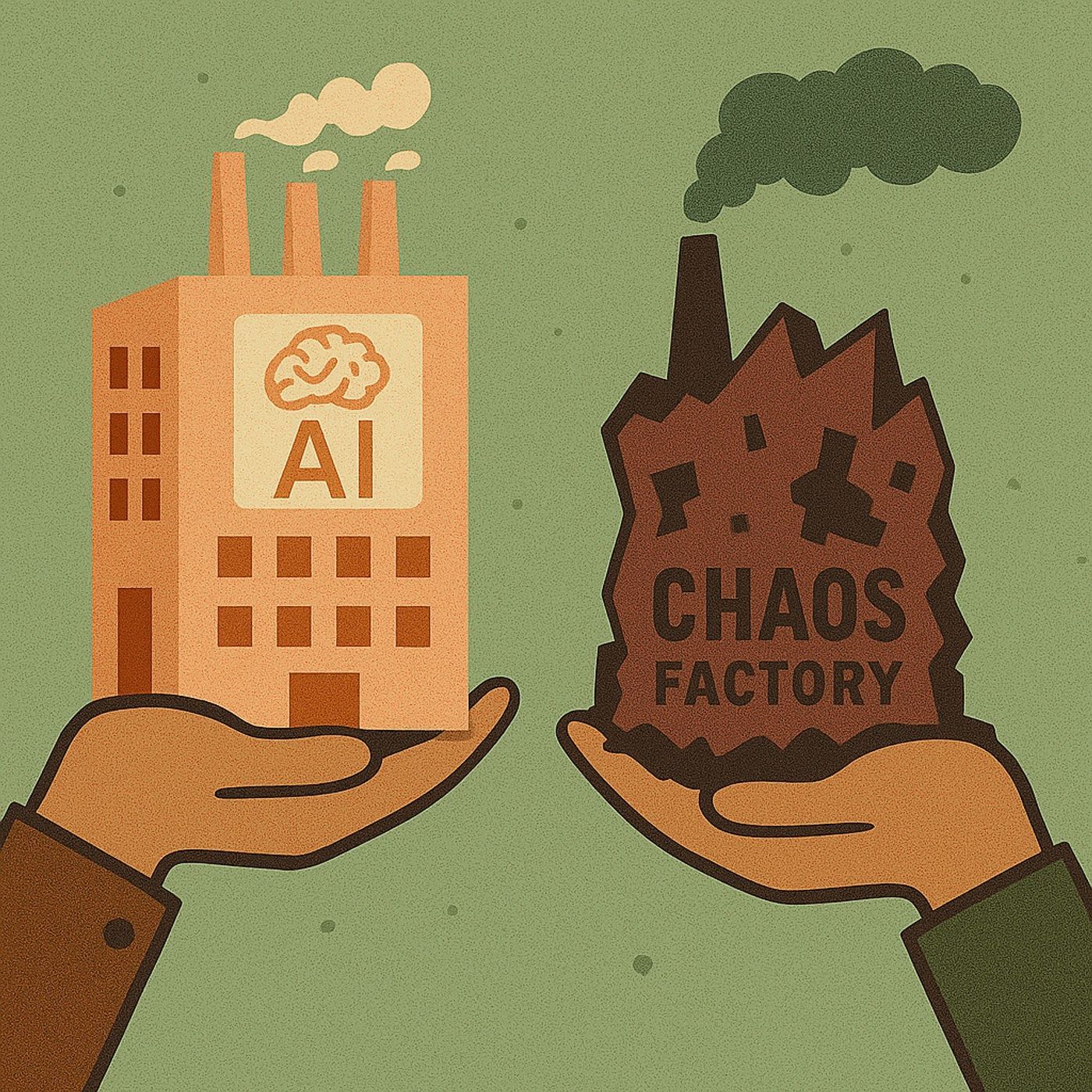
AI Factory vs. Chaos: Which Runs Your Enterprise?
Published 4 months, 2 weeks ago
Description
Ah, here’s the riddle your CIO hasn’t solved. Is AI just another workload to shove onto the server farm, or a fire-breathing creature that insists on its own habitat—GPUs, data lakes, and strict governance temples? Most teams gamble blind, and the result is budgets consumed faster than warp drive burns antimatter. Here’s what you’ll take away today: the five checks that reveal whether an AI project truly needs enterprise scale, and the guardrails that get you there without chaos. So, before we talk factories and starship crews, let’s ask: why isn’t AI just another workload?Why AI Isn’t Just Another WorkloadAI works differently from the neat workloads you’re used to. Traditional apps hum along with stable code, predictable storage needs, and logs that tick by like clockwork. AI, on the other hand, feels alive. It grows and shifts with every new dataset and architecture you feed it. Where ordinary software increments versions, AI mutates—learning, changing, even writhing depending on the resources at hand. So the shift in mindset is clear: treat AI not as a single app, but as an operating ecosystem constantly in flux. Now, in many IT shops, workloads are measured by rack space and power draw. Safe, mechanical terms. But from an AI perspective, the scene transforms. You’re not just spinning up servers—you’re wrangling accelerators like GPUs or TPUs, often with their own programming models. You’re not handling tidy workflows but entire pipelines moving torrents of raw data. And you’re not executing static code so much as running dynamic computational graphs that can change shape mid-flight. Research backs this up: AI workloads often demand specialized accelerators and distinct data-access patterns that don’t resemble what your databases or CPUs were designed for. The lesson—plan for different physics than your usual IT playbook. Think of payroll as the baseline: steady, repeatable, exact. Rows go in, checks come out. Now contrast that with a deep neural net carrying a hundred million parameters. Instead of marching in lockstep, it lurches. Progress surges one moment, stalls the next, and pushes you to redistribute compute like an engineer shuffling power to keep systems alive. Sometimes training converges; often it doesn’t. And until it stabilizes, you’re just pouring in cycles and hoping for coherent output. The takeaway: unlike payroll, AI training brings volatility, and you must resource it accordingly. That volatility is fueled by hunger. AI algorithms react to data like black holes to matter. One day, your dataset fits on a laptop. The next, you’re streaming petabytes from multiple sources, and suddenly compute, storage, and networking all bend toward supporting that demand. Ordinary applications rarely consume in such bursts. Which means your infrastructure must be architected less like a filing cabinet and more like a refinery: continuous pipelines, high bandwidth, and the ability to absorb waves of incoming fuel. And here’s where enterprises often misstep. Leadership assumes AI can live beside email and ERP, treated as another line item. So they deploy it on standard servers, expecting it to fit cleanly. What happens instead? GPU clusters sit idle, waiting for clumsy data pipelines. Deadlines slip. Integration work balloons. Teams find that half their environment needs rewriting just to get basic throughput. The scenario plays out like installing a galaxy-wide comms relay, only to discover your signals aren’t tuned to the right frequency. Credibility suffers. Costs spiral. The organization is left wondering what went wrong. The takeaway is simple: fit AI into legacy boxes, and you create bottlenecks instead of value. Here’s a cleaner way to hold the metaphor: business IT is like running routine flights. Planes have clear schedules, steady fuel use, and tight routes. AI work behaves more like a warp engine trial. Output doesn’t scale linearly, requirements spike without warning, and exotic hardware is needed to survive the