Episode Details
Back to Episodes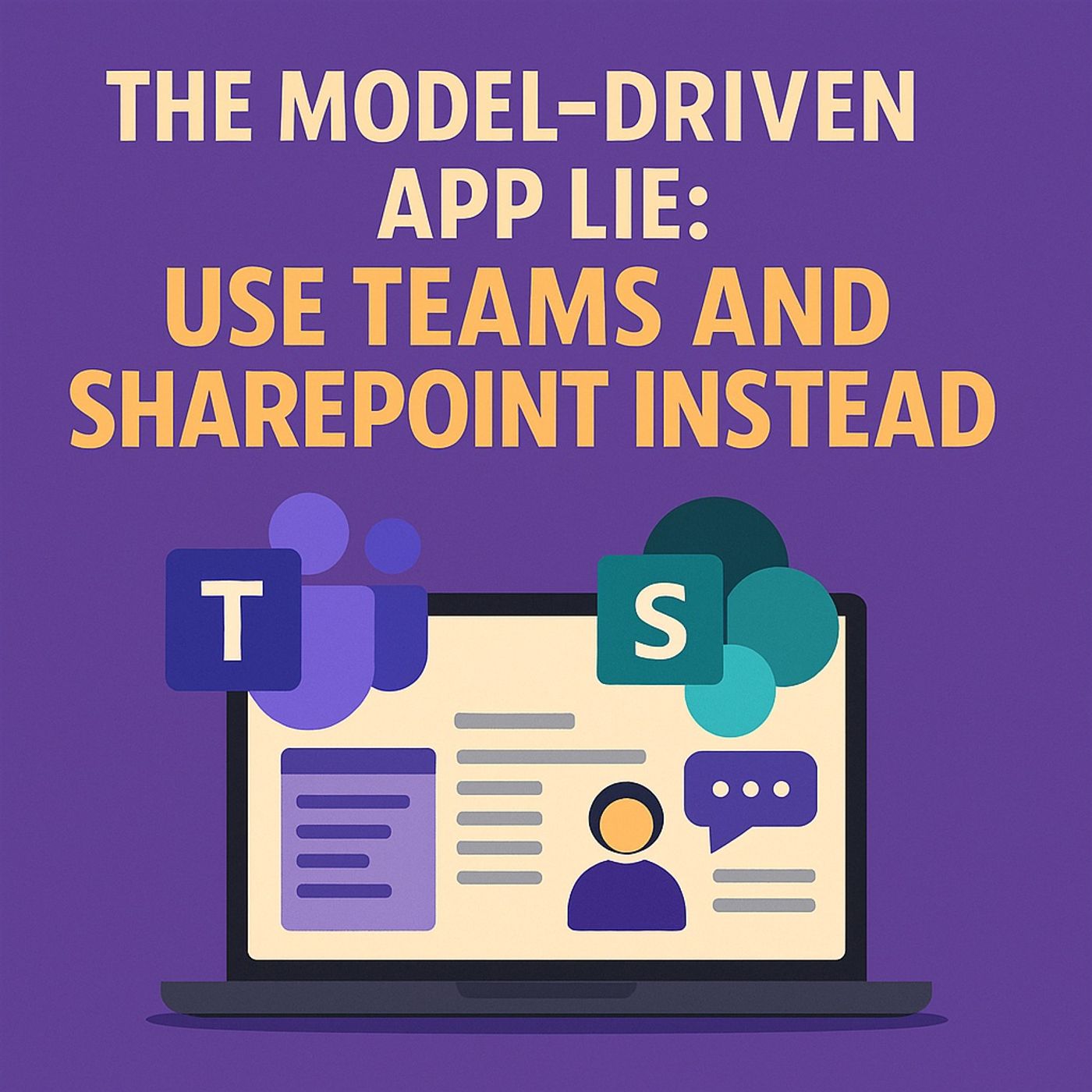
Model‑driven Power Apps vs Teams and SharePoint: when to skip Dataverse and use Fusion Teams instead
Season 1
Published 9 months, 2 weeks ago
Description
Model‑driven Power Apps vs Teams and SharePoint: in this episode of M365.fm, Mirko Peters dismantles the “enterprise‑grade” mystique of model‑driven apps and shows why most teams would be faster, cheaper, and happier building on Teams, SharePoint Lists, and Power Automate instead. He opens with the “model‑driven mirage”: serious words like Dataverse, security roles, and governance‑ready dashboards that sound responsible—but often deliver a rigid, over‑engineered task tracker wrapped in bureaucracy.
Mirko calls out the Dataverse dependency as a structural commitment, not an option. No Dataverse, no model‑driven app—and that means every small change drags along tables, relationships, forms, and baroque security matrices. You’ll hear how simple needs like “add one field” turn into schema updates, permission changes, solution deployments, and governance approvals, while licensing and capacity creep up quietly in the background. Dataverse is powerful, but for many teams it’s an aircraft carrier delivering a single pizza.
He then exposes the complexity tax of model‑driven design. Forms are rigid, UX is utilitarian, and every tweak feels like drilling through concrete. Governance latency turns minor adjustments into multi‑week requests, while sunk‑cost fallacy keeps teams locked into architectures that no longer fit the problem. Real‑world stories—from “simple” request trackers that ballooned into ERP‑level monsters no one used—illustrate how ambition and tooling can outrun actual business needs.
The turning point is the introduction of Fusion Teams. Mirko shows how cross‑functional teams can use Teams as the workspace, SharePoint Lists as the data backbone, and Power Automate as the automation layer to ship real value in days instead of quarters. Status tracking, approvals, notifications, and reporting live where users already are, with governance that matches everyday collaboration instead of full‑blown ERP. The result is automation that behaves like good wallpaper: always there, rarely noticed, only missed when it stops working.
Throughout the episode, you’ll get a practical framework for deciding when model‑driven apps and Dataverse are truly justified—multi‑environment, regulated, high‑scale scenarios—and when you should explicitly ban them from a use case and default to Teams, SharePoint, and flows. Mirko gives you language for leadership and COE conversations so you can stop equating “more architecture” with “more maturity” and start optimizing for outcomes instead of infrastructure vanity.
WHAT YOU WILL LEARN
Mirko calls out the Dataverse dependency as a structural commitment, not an option. No Dataverse, no model‑driven app—and that means every small change drags along tables, relationships, forms, and baroque security matrices. You’ll hear how simple needs like “add one field” turn into schema updates, permission changes, solution deployments, and governance approvals, while licensing and capacity creep up quietly in the background. Dataverse is powerful, but for many teams it’s an aircraft carrier delivering a single pizza.
He then exposes the complexity tax of model‑driven design. Forms are rigid, UX is utilitarian, and every tweak feels like drilling through concrete. Governance latency turns minor adjustments into multi‑week requests, while sunk‑cost fallacy keeps teams locked into architectures that no longer fit the problem. Real‑world stories—from “simple” request trackers that ballooned into ERP‑level monsters no one used—illustrate how ambition and tooling can outrun actual business needs.
The turning point is the introduction of Fusion Teams. Mirko shows how cross‑functional teams can use Teams as the workspace, SharePoint Lists as the data backbone, and Power Automate as the automation layer to ship real value in days instead of quarters. Status tracking, approvals, notifications, and reporting live where users already are, with governance that matches everyday collaboration instead of full‑blown ERP. The result is automation that behaves like good wallpaper: always there, rarely noticed, only missed when it stops working.
Throughout the episode, you’ll get a practical framework for deciding when model‑driven apps and Dataverse are truly justified—multi‑environment, regulated, high‑scale scenarios—and when you should explicitly ban them from a use case and default to Teams, SharePoint, and flows. Mirko gives you language for leadership and COE conversations so you can stop equating “more architecture” with “more maturity” and start optimizing for outcomes instead of infrastructure vanity.
WHAT YOU WILL LEARN
- Why model‑driven apps and Dataverse often over‑engineer simple business workflows.
- How the Dataverse dependency, security roles, and licensing create a hidden complexitytax.
- How Fusion Teams use Teams, SharePoint Lists, and Power Automate to ship value fast where users already work.
- When model‑driven apps are genuinely needed—and when they should be deliberately avoided.
- How to explain to leaders that “enterprise‑grade” is not a synonym for “use Dataverse for everything.”
Listen Now
Love PodBriefly?
If you like Podbriefly.com, please consider donating to support the ongoing development.
Support Us