Episode Details
Back to Episodes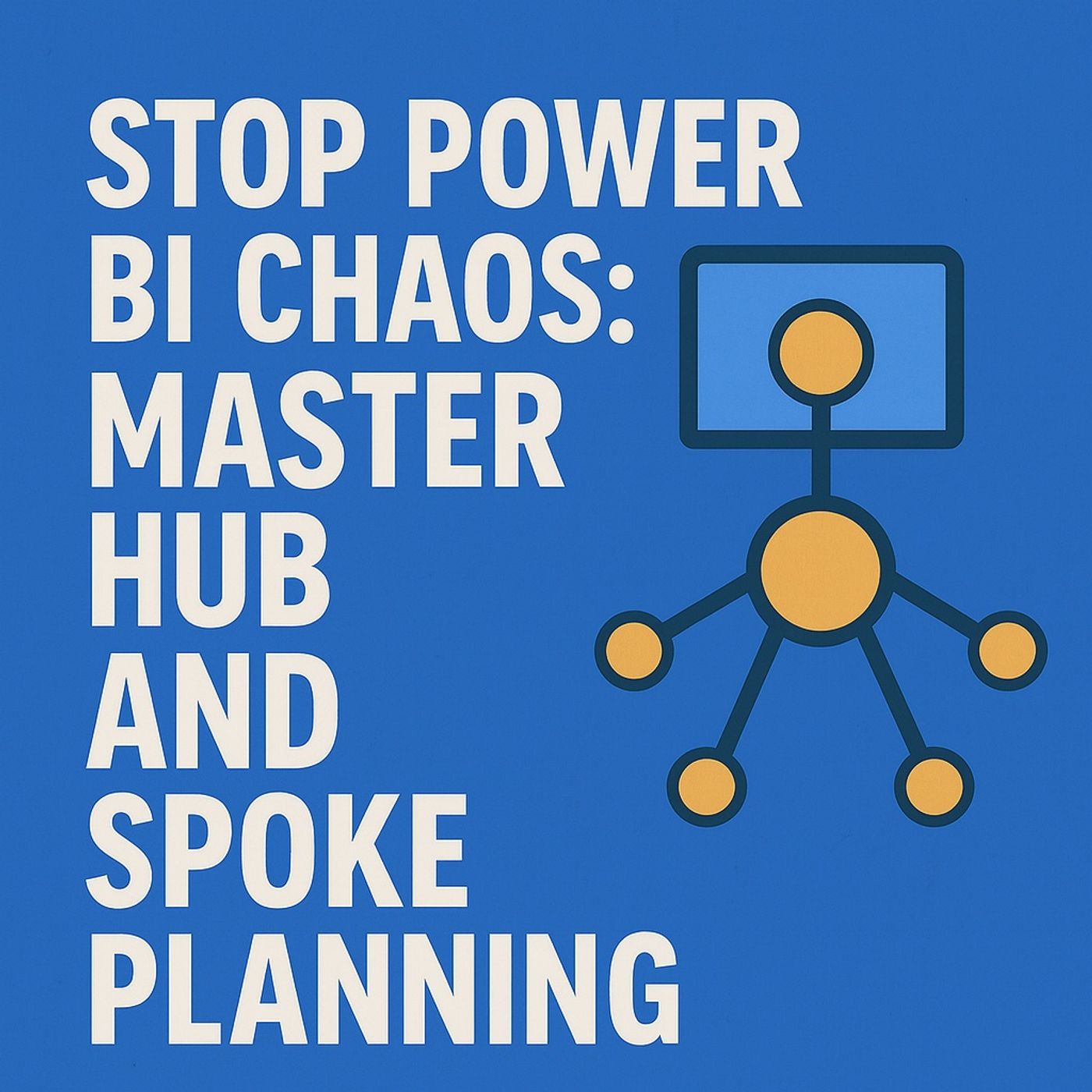
Stop Power BI chaos: plan your hub and spoke before reports explode
Season 1
Published 9 months, 1 week ago
Description
Power BI hub and spoke planning: this episode of M365.fm explains why most self‑service Power BI environments devolve into chaos and how a Hub and Spoke architecture restores one version of truth without killing agility. Mirko Peters starts with the “Wild West” problem—every department builds its own “Sales Dashboard,” each with different definitions of revenue, refresh times, and filters—so executives see five numbers for the same KPI and stop trusting analytics altogether.
He then introduces Hub and Spoke as the only sustainable model for serious Power BI: the Hub hosts certified semantic models, shared datasets, and standardized measures, while departmental Spokes consume from the hub for local dashboards and experimentation. You’ll learn how this separation lets IT own stability and data quality, while business teams still move fast on top of curated, governed data. Mirko shows how to define domain ownership (Finance, Sales, HR), assign business and technical owners to each dataset, and make the Hub the single answer to “where is the official revenue metric?”.
The episode dives deep into shared datasets, certification, and lineage as the backbone of the hub. Mirko explains how to document each dataset with sources, refresh frequency, and dependent reports so you replace guesswork with transparent lineage. He covers when to mark a dataset as Promoted versus Certified and why certification should be a formal contract: if logic changes, it gets reviewed, logged, and communicated instead of silently rewritten before a board meeting. You’ll also hear how to use lineage view to see exactly which reports break if a source table or measure is retired.
Finally, Mirko walks through practical governance mechanics that make Hub and Spoke work in real life. He discusses using Dev/Test/Prod workspaces for Power BI, treating PBIP files as code with versioning, planning refresh windows to avoid capacity overload, and defining clear rules for “My Workspace” and departmental workspaces so they don’t become unmonitored report dumps. By the end, you’ll have a blueprint for turning a sprawling, duplicated report landscape into a structured environment where self‑service is powered by a controlled, well‑documented hub.
WHAT YOU WILL LEARN
Power BI doesn’t create chaos—unplanned self‑service does. Once you introduce a Hub and Spoke architecture with shared, certified datasets and clear ownership, you keep creativity in the spokes while the hub quietly enforces consistency, performance, and trust across every report.
WHO THIS EPISODE IS FOR
This episode is ideal for Power BI admins, BI leads, data architects, and analytics‑savvy business owners who are watching report duplication and metric conflicts spiral out of control. It is especially valuable if you are about to scale self‑service Power BI and want a concrete, hub‑centric plan before governance debt and dashboard sprawl make your environment unmanageable.
ABOUT THE HOST
Mirko Peters is a Microsoft 365 and data platform consultant focused on building governed, scalable analytics environments with Power BI, Microsoft 365, and the Power Platform. Through M365.fm, he shares planning frameworks, governance patterns, and real‑world stories that help organizations turn self‑service BI from a reporting free‑for‑all into a discip
He then introduces Hub and Spoke as the only sustainable model for serious Power BI: the Hub hosts certified semantic models, shared datasets, and standardized measures, while departmental Spokes consume from the hub for local dashboards and experimentation. You’ll learn how this separation lets IT own stability and data quality, while business teams still move fast on top of curated, governed data. Mirko shows how to define domain ownership (Finance, Sales, HR), assign business and technical owners to each dataset, and make the Hub the single answer to “where is the official revenue metric?”.
The episode dives deep into shared datasets, certification, and lineage as the backbone of the hub. Mirko explains how to document each dataset with sources, refresh frequency, and dependent reports so you replace guesswork with transparent lineage. He covers when to mark a dataset as Promoted versus Certified and why certification should be a formal contract: if logic changes, it gets reviewed, logged, and communicated instead of silently rewritten before a board meeting. You’ll also hear how to use lineage view to see exactly which reports break if a source table or measure is retired.
Finally, Mirko walks through practical governance mechanics that make Hub and Spoke work in real life. He discusses using Dev/Test/Prod workspaces for Power BI, treating PBIP files as code with versioning, planning refresh windows to avoid capacity overload, and defining clear rules for “My Workspace” and departmental workspaces so they don’t become unmonitored report dumps. By the end, you’ll have a blueprint for turning a sprawling, duplicated report landscape into a structured environment where self‑service is powered by a controlled, well‑documented hub.
WHAT YOU WILL LEARN
- Why unmanaged self‑service Power BI creates duplicated dashboards and conflicting KPIs.
- How Hub (shared, certified datasets) and Spokes (departmental workspaces) work together in a healthy model.
- How to use ownership, certification, and lineage to make one dataset the single source of truth for core metrics.
- How Dev/Test/Prod workspaces, PBIP versioning, and refresh planning keep Power BI stable at scale.
- How to talk about governance as “intellectual hygiene” instead of red tape so business teams actually buy in.
Power BI doesn’t create chaos—unplanned self‑service does. Once you introduce a Hub and Spoke architecture with shared, certified datasets and clear ownership, you keep creativity in the spokes while the hub quietly enforces consistency, performance, and trust across every report.
WHO THIS EPISODE IS FOR
This episode is ideal for Power BI admins, BI leads, data architects, and analytics‑savvy business owners who are watching report duplication and metric conflicts spiral out of control. It is especially valuable if you are about to scale self‑service Power BI and want a concrete, hub‑centric plan before governance debt and dashboard sprawl make your environment unmanageable.
ABOUT THE HOST
Mirko Peters is a Microsoft 365 and data platform consultant focused on building governed, scalable analytics environments with Power BI, Microsoft 365, and the Power Platform. Through M365.fm, he shares planning frameworks, governance patterns, and real‑world stories that help organizations turn self‑service BI from a reporting free‑for‑all into a discip