Episode Details
Back to Episodes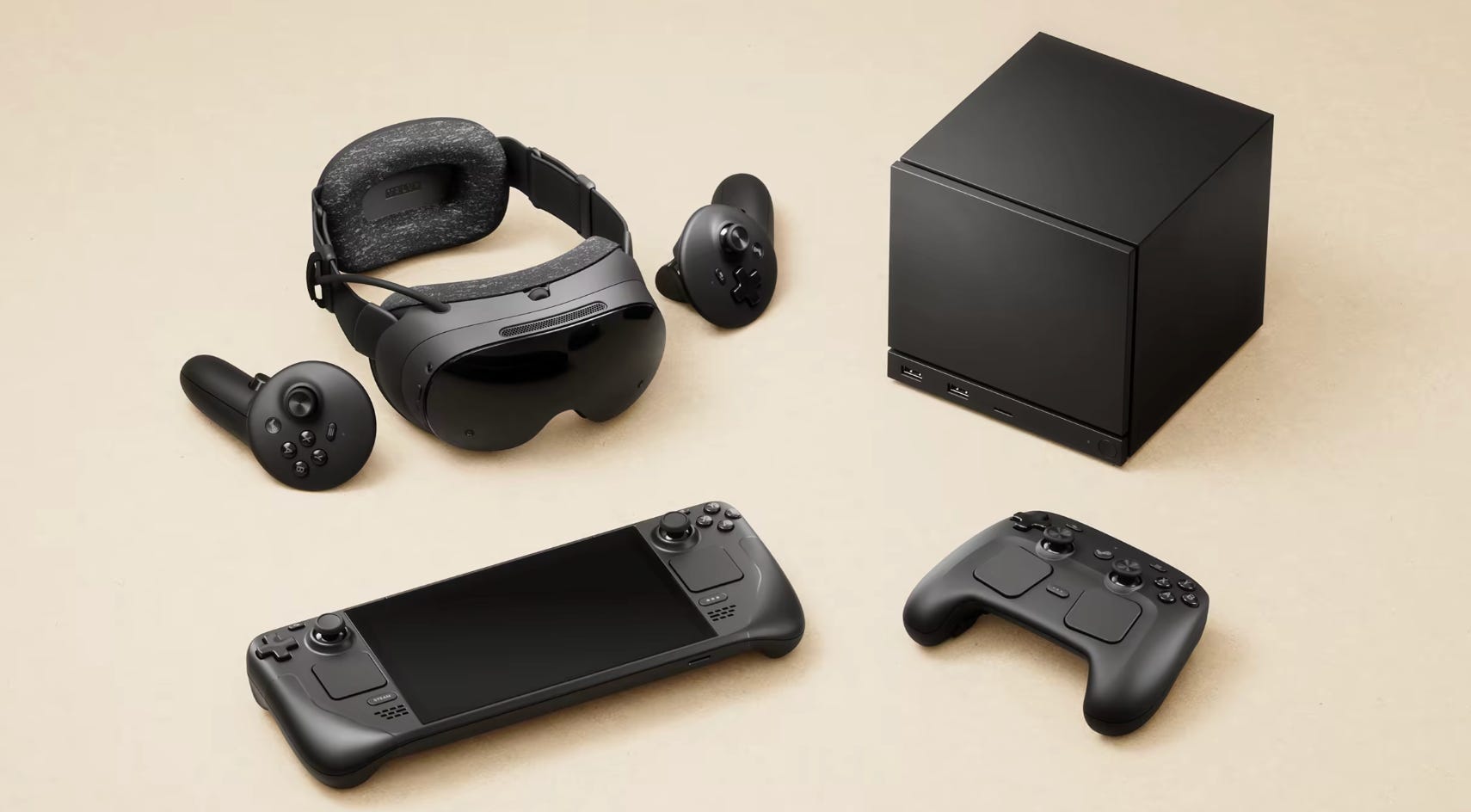
What’s going to stop the Steam Machine failing again?
Description
Hello and welcome to this week’s News edition of The Game Business.
On the Show today, we are joined by Shams Jorjani, the CEO of Helldivers 2 developer Arrowhead. Shams and I chat about the Helldivers 2 launch on Xbox, before diving into some big stories, including the delay to GTA 6, the layoffs at Square Enix, the NetEase-backed studio closures, and the debate triggered by a Eurogamer review, which marked down Arc Raiders for its use of AI voice generation.
Then we tackle the big breaking story, the return of the Steam Machine (plus Valve’s new VR headset), and what it might mean for the console space.
Meanwhile, in today’s articles (below), you can read about Sham’s experience of launching Helldivers 2 on Xbox, plus my own take on the Steam Machine, and what it might mean for the market.
Enjoy!
Valve’s Steam Machine is a threat to PlayStation and Xbox
I can’t believe it’s been ten years since the last time since we all got over-excited about Valve entering the console space.
The 2015 Steam Machines (and Steam Link) were Valve’s attempts at taking PC gaming into the living room. It failed. We estimate somewhere between 300,000 – 400,000 Steam Machine units were sold worldwide in three years.
Consoles are designed to be simple. When you buy a game, you know it will work and it has been optimised for the machine you own. There’s not a plethora of different configurations to worry about. The 2015-era Steam Machines didn’t deliver on this. They neither had the flexibility of a PC, or the simplicity of a console.
Yesterday, the Steam Machine made a comeback in the form of a cube-shaped device that has six times the horsepower of the Steam Deck. It comes with a new Steam controller, and will be available next year. It currently doesn’t have a price.
So, why will this time be any different?
Well, ten years is a lifetime in gaming terms, and Valve has taken some lessons from its previous attempts. The original Steam Machines were all made by partner manufacturers and there were multiple devices to choose from. This time, it’s just the single proposition and it’s been built internally by Valve. It’s a far clearer and cleaner offering that ties into the modest success it’s had with the Steam Deck handheld.
More significantly, PC gaming has exploded in the ten years since the original Steam Machines. Analyst Matthew Ball points out that Steam players own $90 billion worth of games (or entitlements) today, while in 2015 it was a tenth of that. Traditional console games are also common on Steam now, and even first-party Xbox and PlayStation software is available on the platform.
Put simply, the execution appears to be better, and PC gaming is dominant today. Nevertheless, I can’t help but see this Steam Machine as an enthusiast product that appeals to a small, albeit lucrative, group of players.
The Game Business is reader-supported. To receive new posts and support my work, consider becoming a free or paid subscriber.
From my view, there are two main potential audiences for the Steam Machine.
The first are existing PC/Steam users that want an effective way to take their PC gaming into the living room. It’s a similar audience to what the Steam Deck has been targeting, which are gamers looking for a way to continue playing Steam away from the desktop.
This is a pretty high-end customer; someone who can justify buying a second gaming PC for use in a different scenario. As a point of comparison, Steam Deck has sold between four and five million units, according to various analysts. It’s a small audience but a significant one, because these players are often the most engaged users and therefore the highest spenders.
The second potential audience for the Steam Machine are co