Episode Details
Back to Episodes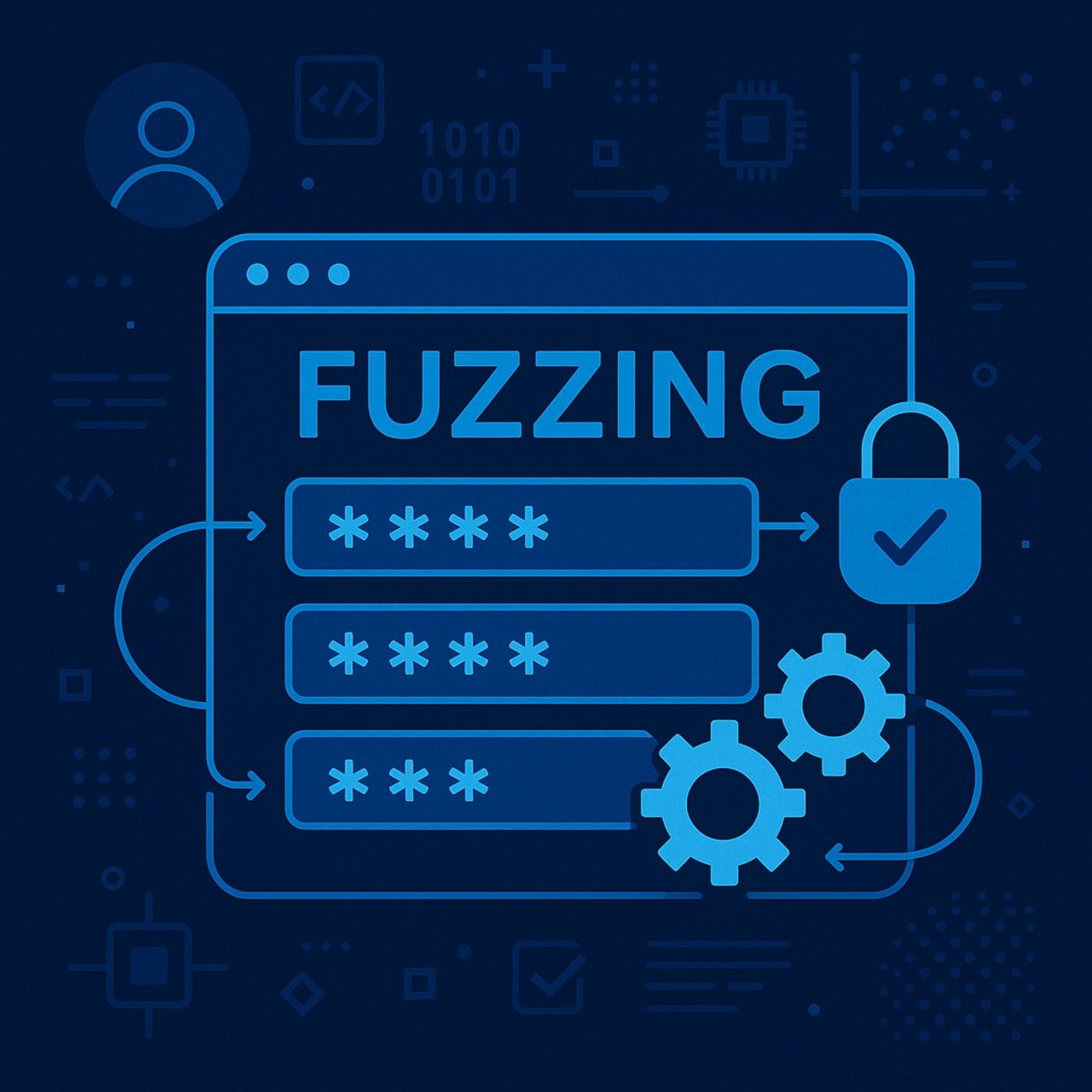
Course 3 - Mastering Nuclei for Bug Bounty | Episode 6: Nuclei Fuzzing Techniques: Cluster Bomb, Pitchfork, and Battering Ram
Published 9 months, 2 weeks ago
Description
In this lesson, you’ll learn about:
You can listen and download our episodes for free on more than 10 different platforms:
https://linktr.ee/cybercode_academy
- Fuzzing with Nuclei — purpose: using custom YAML templates to brute-force or enumerate inputs (usernames, passwords, endpoints, parameters) to find misconfigurations, default creds, or hidden functionality.
- Template components for fuzzing: define raw request, payloads (wordlists), payload positions, attack type, and matchers (e.g., word: success + status: 200) that mark a successful hit.
- Cluster‑Bomb (combinatorial) fuzzing:
- Mechanism: one position is fixed while another iterates through its entire list; repeats for each fixed value (good for username × password lists).
- Use case: test many passwords per given username.
- Template note: set attack: clusterbomb, map Parameter A → usernames.txt, Parameter B → passwords.txt.
- Pitchfork (parallel) fuzzing:
- Mechanism: iterate multiple lists in lock‑step (1st of list A with 1st of list B, 2nd with 2nd, …).
- Use case: paired credential lists or aligned parameter sets.
- Template note: set attack: pitchfork and ensure lists are same length or intended pairing.
- Battering‑Ram (single payload) fuzzing:
- Mechanism: use a single wordlist for all fuzz positions or a single targeted parameter.
- Use case: known username + fuzz many passwords, or reuse same payload across several params.
- Template note: set attack: batteringram with one payload source.
- Success detection: combine response checks (e.g., word: "success") with status codes (status: 200) or other fingerprints to reduce false positives. Use extractors to capture useful response data.
- Practical workflow: validate template YAML, test against staging or safe targets, proxy via Burp for live inspection, run with -debug/-v to see requests/responses.
- Operational safety & ethics: never run aggressive fuzzing against production/unauthorized targets; throttle requests (rate-limit), respect scope, and document findings (time, payload, matched response) for reproducible PoCs.
- Tips to improve success rate: tune content-type and headers, handle cookies/session reuse if needed, rotate/parallelize carefully (bulk-size / concurrency), and pre‑filter targets to avoid wasting wordlist attempts on unreachable endpoints.
You can listen and download our episodes for free on more than 10 different platforms:
https://linktr.ee/cybercode_academy