Episode Details
Back to Episodes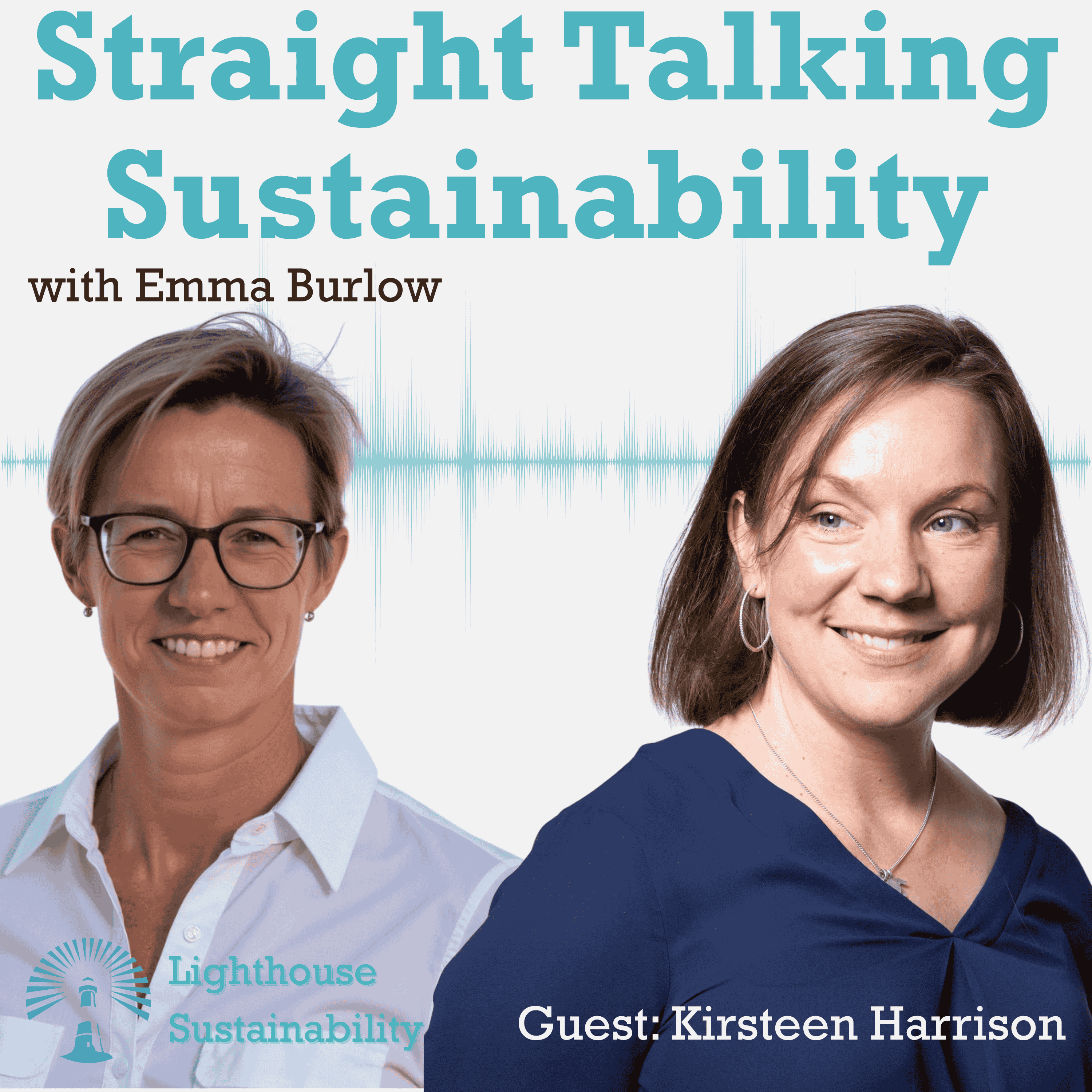
Carbon Reporting for the Missing Middle: How Medium-Sized Companies Can Navigate Supply Chain Pressure Without Breaking the Bank
Description
In this practical and reassuring episode of Straight Talking Sustainability, host Emma Burlow reconnects with long-time colleague Kirsteen Harrison from Not Sustainable to tackle the carbon reporting challenges facing what they call "the missing middle" (companies with 250 to 1,000 employees).
These businesses face intense supply chain pressure to report emissions but often lack the dedicated sustainability teams and resources of larger corporations, creating a perfect storm of fear, confusion, and questionnaire paralysis.
Kirsteen brings over 20 years of experience working with SMEs and medium-sized businesses on waste, energy, compliance, and carbon reporting. She reveals a troubling pattern: companies receiving generic carbon reporting requests from larger clients that ask the wrong questions, demand inappropriate data, or require commitments to frameworks (like the Science Based Targets initiative) that were not designed for their size or sector.
The result is fear-driven inaction, with some companies ignoring requests for years until contracts face risk.
The conversation exposes uncomfortable truths about carbon reporting as potentially a "dark art" where data manipulation remains possible despite verification standards like ISO 14064. Kirsteen challenges the assumption that companies always need perfectly accurate data, arguing that the purpose of reporting determines the required precision.
For hotspot analysis and strategy development, understanding key levers matters more than decimal-point accuracy. For legal disclosures and verified reports, precision becomes critical. Yet many companies waste years and thousands of pounds chasing accuracy they do not actually need.
Emma shares a revealing case study of a call centre company that ignored carbon reporting requests for three years because the FD could not see the relevance (they operated in leased offices with minimal reportable emissions beyond business travel and employee commuting).
This illustrates how supply chain questionnaires often fail to account for business model variations, creating disproportionate burdens on companies with naturally low operational emissions.
Kirsteen offers a radically different approach: instead of panicking or ignoring requests, engage directly with the client, asking for the data. Her experience shows that sustainability managers at large corporations are desperate for supplier engagement and will welcome conversations about reasonable timelines, appropriate metrics, and phased implementation plans.
One client she worked with turned a compliance headache into a strategic partnership by proactively sharing their supplier engagement strategy and requesting feedback from their multinational client.
The episode tackles practical barriers, including spend-based conversion factors (a particular dark art within carbon accounting), the challenge of standardised reporting platforms like CDP and EcoVadis (comprehensive but resource-intensive for smaller companies), and the maturity journey from discomfort and fear through compliance to proud leadership.
Kirsteen emphasises that we are building an entire carbon accounting and sustainability disclosure system in years rather than the decades or centuries it took to develop financial and legal systems, so imperfections and gaps are inevitable.
Toward the end, Kirsteen highlights an invaluable new resource from the We Mean Business Coalition: a report cherry-picking best practice examples from 70 sustainability reports by companies under 1,000 employees.
This goldmine shows how smaller businesses can innovatively report what is relevant to them without being constrained by frameworks designed for multinationals, using their agility and flexibility as competitive advantages.
In this carbon reporting and supply chain sustainability episode, you'll discover: