Episode Details
Back to Episodes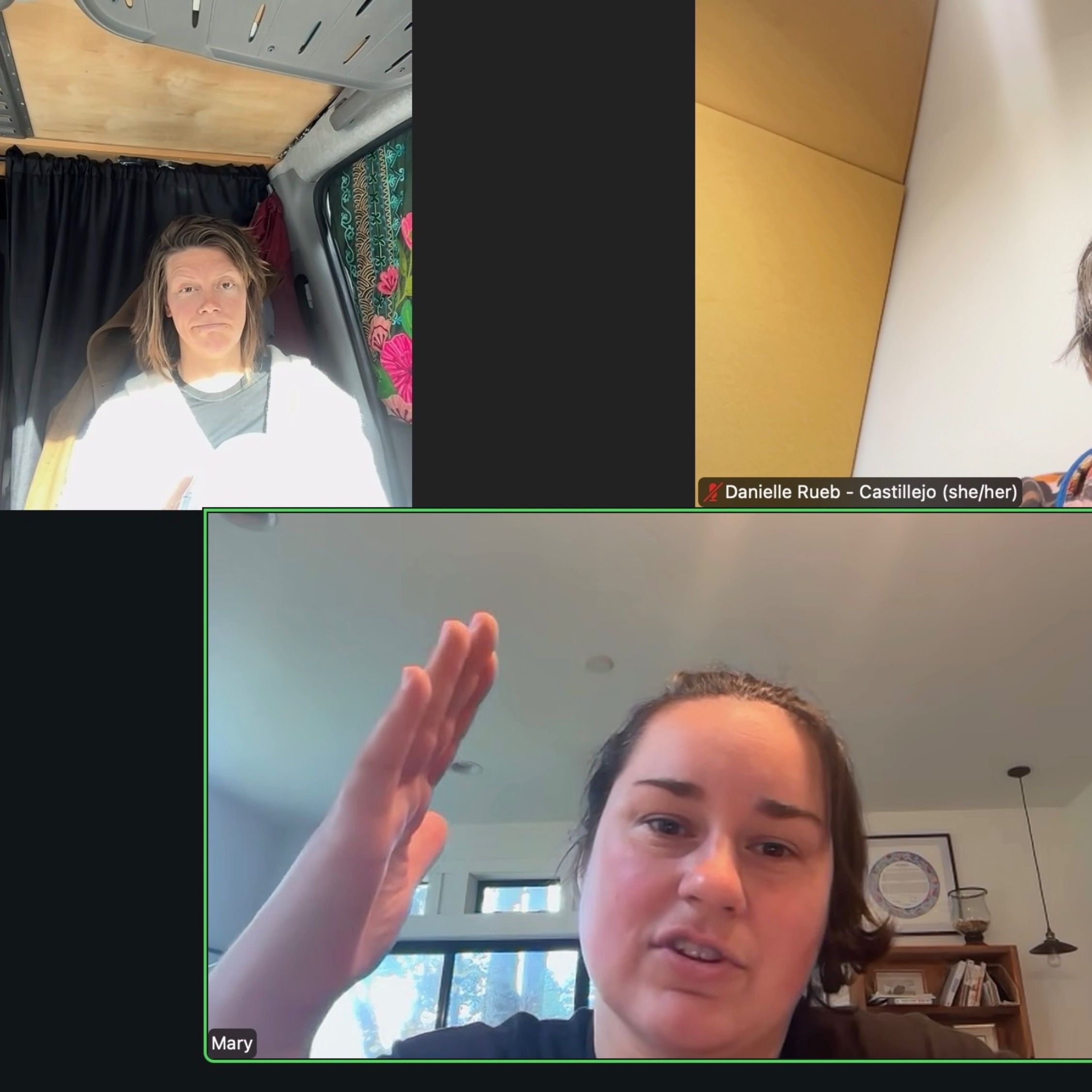
Season 6, Episode 12: Jenny McGrath and Organizer Mary Lovell Reality and Organizing in this moment
Description
Mary Lovell is a queer grassroots organizer, visual artist, and activist who has been fighting oil and gas infrastructure and for social justice for their adult life - living up in the Kitsap Penninsula they are working on their first book and love working with people to build power in their communities
Welcome to the Arise podcast. This is episode 12, conversations on Reality. And today we're touching on organizing and what does it mean to organize? How do we organize? And we talk to a seasoned organizer, Mary Lavelle. And so Mary is a queer, grassroots organizer, visual artist and activist who has been fighting oil and gas infrastructure and fighting for social justice in their adult life. Living in the Kitsap Peninsula. They're working on their first book and love working with people to build power in their communities. Join us. I hope you stay curious and we continue the dialogue.
Danielle (00:02):
Okay, Mary, it's so great to have you today. Just want to hear a little bit about who you are, where you come from, how did you land? I know I met you in Kitsap County. Are you originally from here? Yeah. Just take it
Mary (00:15):
Away. Yeah. So my name is Mary Lovel. I use she or they pronouns and I live in Washington State in Kitsap County. And then I have been organizing, I met Danielle through organizing, but I've spent most of my life organizing against oil and gas pipelines. I grew up in Washington state and then I moved up to Canada where there was a major oil pipeline crossing through where I was living. And so that got me engaged in social justice movements. That's the Transmountain pipeline, which it was eventually built, but we delayed it by a decade through a ton of different organizing, combination of lawsuits and direct action and all sorts of different tactics. And so I got to try and learn a lot of different things through that. And then now I'm living in Washington state and do a lot of different social justice bits and bobs of organizing, but mostly I'm focused on stopping. There's a major gas build out in Texas and Louisiana, and so I've been working with communities down there on pressuring financiers behind those oil and gas pipelines and major gas export. But all that to say, it's also like everyone is getting attacked on all sides. So I see it as a very intersectional fight of so many communities are being impacted by ice and the rise of the police state becoming even more prolific and surveillance becoming more prolific and all the things. So I see it as one little niche in a much larger fight. Yeah,
Yeah, totally. I think when I moved up to Canada, I was just finished high school, was moving up for college, had been going to some of the anti-war marches that were happening at the time, but was very much along for the ride, was like, oh, I'll go to big stuff. But it was more like if there was a student walkout or someone else was organizing people. And then when I moved up to Canada, I just saw the history of the nation state there in a totally different way. I started learning about colonialism and understanding that the land that I had moved to was unseated Tu Squamish and Musqueam land, and started learning also about how resource extraction and indigenous rights went hand in hand. I think in general, in the Pacific Northwest and Coast Salish territories, the presence of indigenous communities is really a lot more visible than other parts of North America because of the timelines of colonization.
Love PodBriefly?
If you like Podbriefly.com, please consider donating to support the ongoing development.
Support Us