Episode Details
Back to Episodes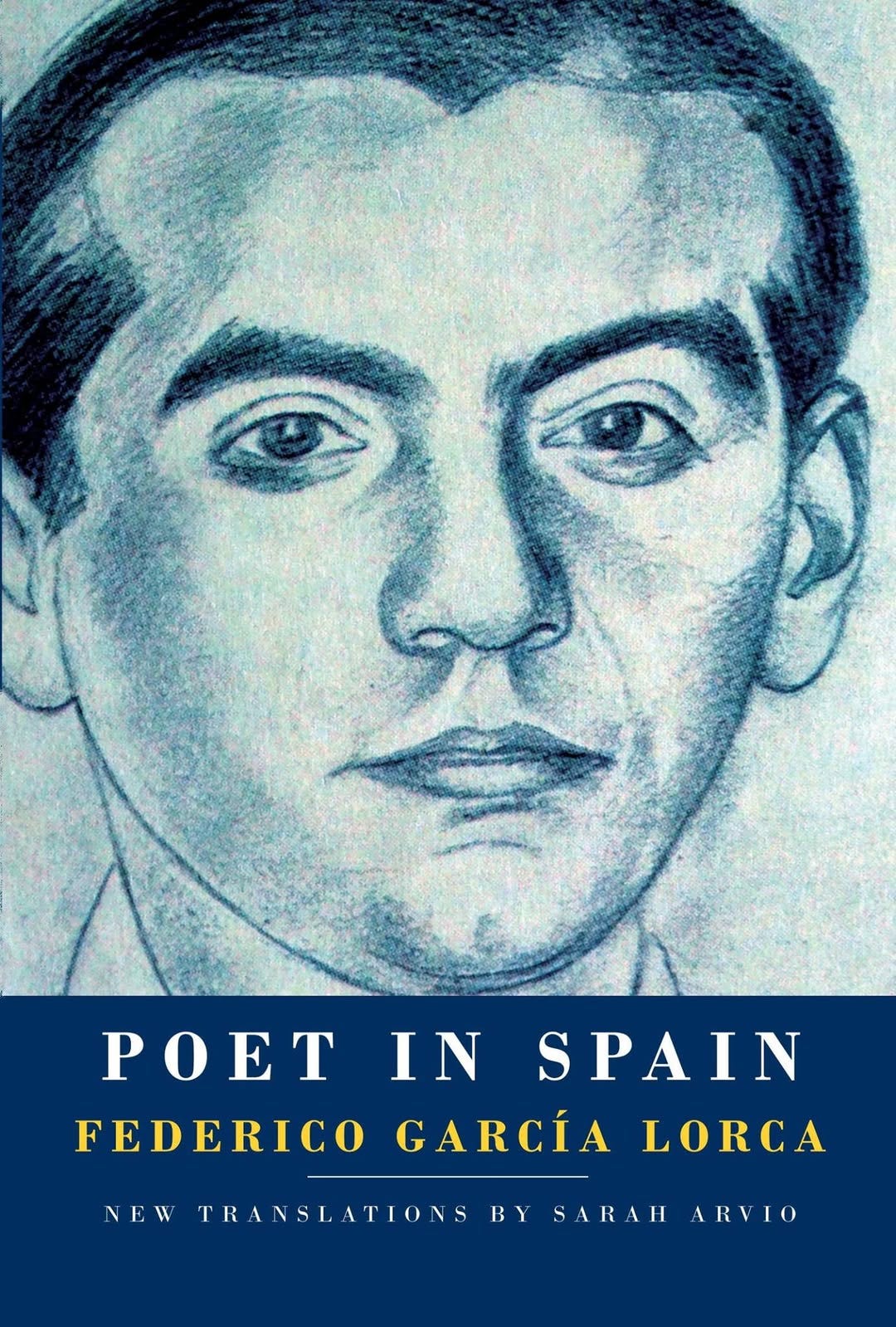
Half rant, half rendition
Description
What can I write about Lorca? He was not just a poet; he was also a dedicated pianist. Manuel de Falla was his mentor, and he learned from him about the profound songs known as Cante Jondo. Therefore, reading Lorca is an experience that evokes a deep sense of Duende, an ethereal quality that transcends mere poetry. Many scholars believe that translating Lorca into American English is an impossible task.
However, if you dare to attempt it, I highly recommend reading this translation by Sarah Arvio while having a glass of red wine and some delicious Serrano ham. And perhaps, for a moment, you can channel the spirit of that young boy who found inspiration in music and transformed it into poetry.
This voice crafter you are hearing will provide you with a full-blown rendition, taking advantage of my privileged condition as a transnational author. See, the translator thought Lorca never used commas or periods or full stops, but he certainly did. Like Emily Dickinson used dashes, including long ones, to create pauses, separate ideas, and add ambiguity to her poetry, a feature often lost in standardized printed versions but present in her manuscripts.
I hope you find a suitable time to listen, not because you need to open the doors of perception with red wine and Serrano ham – and prosciutto does not count, because it is sweeter and more tender with a buttery texture, while Serrano ham is from Spain, is saltier and more intensely flavored, and has a firmer texture.
The reason for such preliminaries is because of the magnitude of Lorca as a poet. And the tragic fate he found in the first days of the Spanish Civil War, assassinated in cold blood at the wee hours by a bunch of fascists in an unmarked place between the infinite olive trees of Granada, where since then nobody could find his lovely bones.
Like the bones of 140,000 Spaniards still lost in ditches, fifty years later to this day of the passing of General Franco, who died peacefully in his bed after ruling for 39 years, while the cowards did nothing else than lie through their teeth about a resistance that only existed in their wildest dreams.
Not for nothing, it is rightly said that real heroes cannot tell war stories because they die pretty soon for their exceptional acts of valor. And stolen valor is the sign of any coward that hopes you are too lazy to connect the dots and ask them why they kept their heads in the sand.
Get ready and comfy to meet the beautiful mind of Federico García Lorca, a man of the short-lived Spanish Republic, and how he pictured his own demise.
Dreamwalking Ballad
Green I want you green.
Green wind. Green branches.
Boat on the sea and
horse on the mountain.
Shadow on her waist,
she dreams at her railing,
green flesh, green hair,
eyes of cold silver.
Green I want you green.
Under the gypsy moon,
things are seeing her
but she can’t see them.
*
Green I want you green.
The great stars of frost,
come with fish of shadow
paving the path to dawn.
The fig tree rasps the wind
with its rough branches,
and the wildcat mountain
bares its sour agaves.
Who will come—from where—?
At her railing she gazes
green flesh, green hair,
dream of the bitter sea.
*
Compadre! Can I swap
my horse for your house?
My saddle for your mirror
-my knife for your blanket–?
Compadre! I come bleeding
from the Cabra passes.
If I could, young friend,
the deal would be done.
But I’m no longer me
nor is my house my own.
Compadre! Let me die
decent in my bed.
A steel bed, if you please,
laid with Dutch linen.
Don’t you see the slash<