Episode Details
Back to Episodes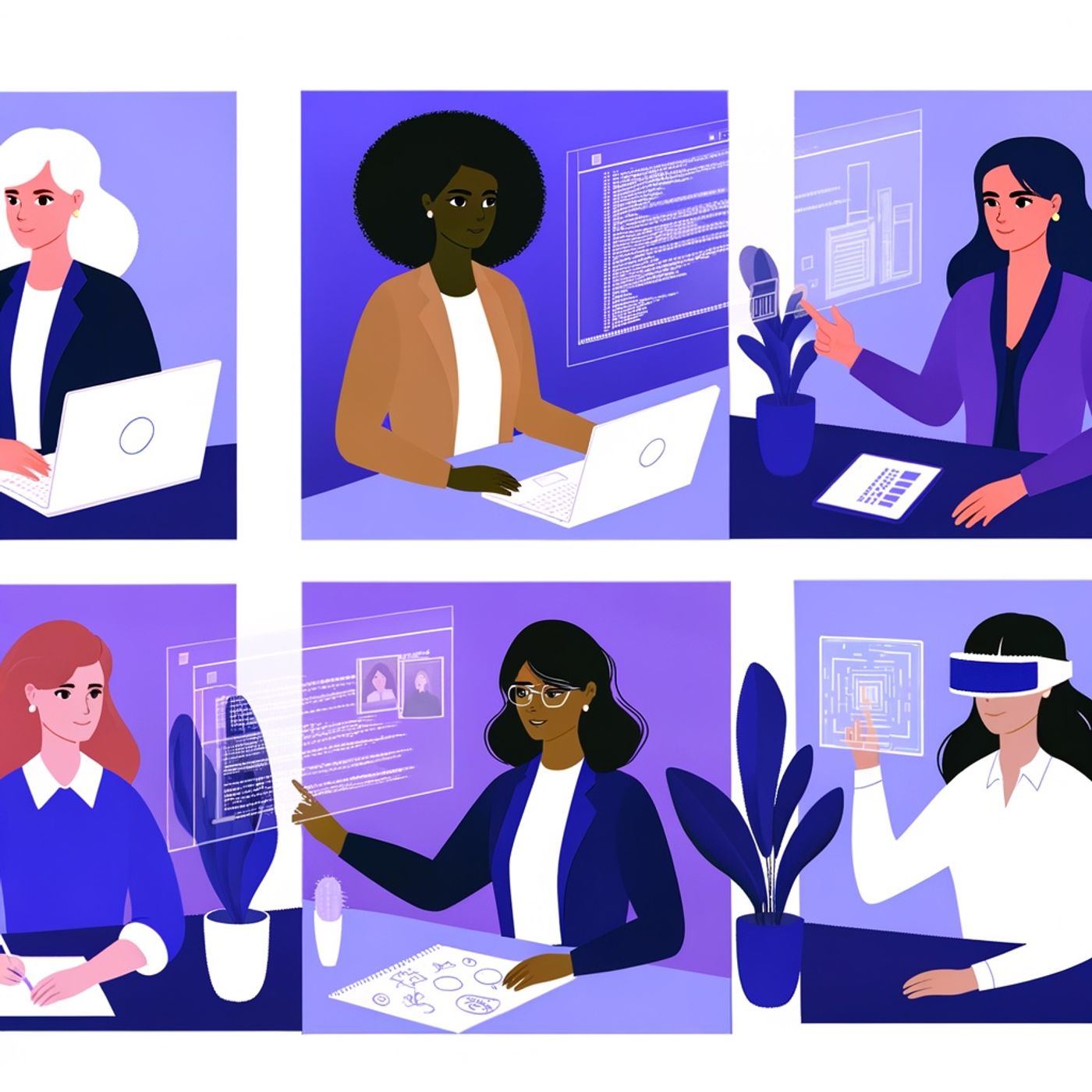
Trailblazing Tech: Women Redefining the Industry Landscape
Published 4 months, 2 weeks ago
Description
This is your Women in Business podcast.
Welcome to Women in Business. Today, we’re diving into how women are navigating the tech industry through the rapidly-shifting economic landscape. As the percentage of women working in tech continues to rise, there are still major hurdles—and some inspiring progress—to unpack.
Let’s get right to the reality. According to recent reports, women make up about 27 to 35 percent of the tech workforce globally, which is a far cry from gender parity. In the United States, women hold about 27 percent of tech roles, while in regions like Europe and Asia-Pacific it’s closer to 22 percent. However, there is momentum. For example, McKinsey & Company estimates that closing the gender gap in technology could add up to 12 trillion dollars to the global economy within just a few years. That kind of impact is transformational, not just for women working in this sector, but for everyone.
Five years ago, female representation among global tech leaders was stuck at eight percent. Now, it has climbed to around 14 percent. While that's still low, seeing this number nearly double shows progress is possible. Role models like Reshma Saujani, founder of Girls Who Code, have changed the narrative and inspired a new generation of ambitious women to claim their space in the industry.
Despite these advances, career progression can hit a wall for many women, especially mid-career. The so-called Missing Middle, identified in the Women in Digital Annual Report 2025, describes how women’s upward mobility slows around caregiving years, often due to workplace structures that aren’t designed for flexible or family-friendly arrangements. This isn't reflective of a lack of ambition—rather, it's the system that needs to adapt. Forward-thinking organizations, especially those offering remote and flexible work, have started to make a dent in this drop-off, but widespread change is still needed.
Another major talking point is the impact of economic fluctuations. Recent waves of tech-sector layoffs have disproportionately affected women, stalling some of the recruitment and retention gains made during the pandemic shift to remote work. Still, many women are pivoting: they’re leading startups, embracing consulting, and forging networks to weather volatility—demonstrating resilience even under pressure. Cities like Columbia, South Carolina, and Little Rock, Arkansas are emerging as unexpected hubs, offering vibrant ecosystems for women in tech careers, not just relying on the old guard of Silicon Valley.
Skill development, particularly in areas like artificial intelligence, is rapidly becoming a keystone for women aiming to future-proof their careers. As AI becomes embedded in more workplaces, women who upskill—acquiring data science and machine learning expertise—are better positioned for leadership roles. Surveys by Skillsoft show that women who use AI at work frequently report higher productivity and greater job satisfaction, reinforcing that technical literacy is power.
As we look toward the future, it’s clear that closing the gender gap in tech is a multi-front mission—requiring better policies, more funding for female founders, and inclusive leadership. But most of all, it is about women supporting each other and claiming their place at the table. Whether you’re a coder, data scientist, or founder, your voice is essential to this transformation.
Thank you for tuning in to Women in Business. If you found today’s discussion valuable, don’t forget to subscribe for more conversations at the intersection of women, business, and innovation. This has been a quiet please production, for more check out quiet please dot ai.
For more http://www.quietplease.ai
Get the best deals https://amzn.to/3ODvOta
This c
Welcome to Women in Business. Today, we’re diving into how women are navigating the tech industry through the rapidly-shifting economic landscape. As the percentage of women working in tech continues to rise, there are still major hurdles—and some inspiring progress—to unpack.
Let’s get right to the reality. According to recent reports, women make up about 27 to 35 percent of the tech workforce globally, which is a far cry from gender parity. In the United States, women hold about 27 percent of tech roles, while in regions like Europe and Asia-Pacific it’s closer to 22 percent. However, there is momentum. For example, McKinsey & Company estimates that closing the gender gap in technology could add up to 12 trillion dollars to the global economy within just a few years. That kind of impact is transformational, not just for women working in this sector, but for everyone.
Five years ago, female representation among global tech leaders was stuck at eight percent. Now, it has climbed to around 14 percent. While that's still low, seeing this number nearly double shows progress is possible. Role models like Reshma Saujani, founder of Girls Who Code, have changed the narrative and inspired a new generation of ambitious women to claim their space in the industry.
Despite these advances, career progression can hit a wall for many women, especially mid-career. The so-called Missing Middle, identified in the Women in Digital Annual Report 2025, describes how women’s upward mobility slows around caregiving years, often due to workplace structures that aren’t designed for flexible or family-friendly arrangements. This isn't reflective of a lack of ambition—rather, it's the system that needs to adapt. Forward-thinking organizations, especially those offering remote and flexible work, have started to make a dent in this drop-off, but widespread change is still needed.
Another major talking point is the impact of economic fluctuations. Recent waves of tech-sector layoffs have disproportionately affected women, stalling some of the recruitment and retention gains made during the pandemic shift to remote work. Still, many women are pivoting: they’re leading startups, embracing consulting, and forging networks to weather volatility—demonstrating resilience even under pressure. Cities like Columbia, South Carolina, and Little Rock, Arkansas are emerging as unexpected hubs, offering vibrant ecosystems for women in tech careers, not just relying on the old guard of Silicon Valley.
Skill development, particularly in areas like artificial intelligence, is rapidly becoming a keystone for women aiming to future-proof their careers. As AI becomes embedded in more workplaces, women who upskill—acquiring data science and machine learning expertise—are better positioned for leadership roles. Surveys by Skillsoft show that women who use AI at work frequently report higher productivity and greater job satisfaction, reinforcing that technical literacy is power.
As we look toward the future, it’s clear that closing the gender gap in tech is a multi-front mission—requiring better policies, more funding for female founders, and inclusive leadership. But most of all, it is about women supporting each other and claiming their place at the table. Whether you’re a coder, data scientist, or founder, your voice is essential to this transformation.
Thank you for tuning in to Women in Business. If you found today’s discussion valuable, don’t forget to subscribe for more conversations at the intersection of women, business, and innovation. This has been a quiet please production, for more check out quiet please dot ai.
For more http://www.quietplease.ai
Get the best deals https://amzn.to/3ODvOta
This c