Episode Details
Back to Episodes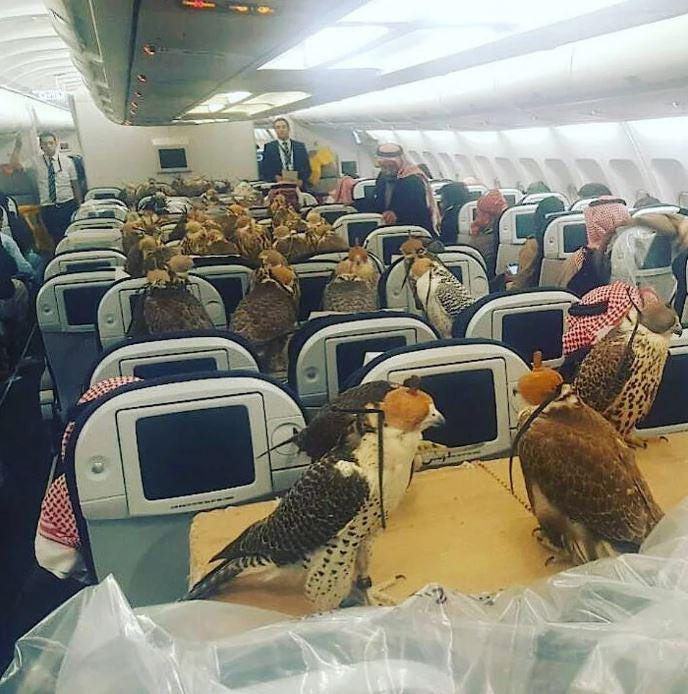
Gulf States Reveal How Post-Scarcity Luxury Melts Your Brain
Description
What happens when a country tries to create a real-life utopia with unlimited money? In this episode, Simone and Malcolm Collins dive deep into the Gulf States—Qatar, UAE, and Kuwait—to explore what happens when citizens receive massive government support: free healthcare, education, luxury housing, and guaranteed jobs. Is this the ultimate universal basic income experiment? Does a post-scarcity society actually make people happier, healthier, or more innovative? Or are there hidden downsides to a life without struggle? Join us as we break down the data, share personal stories, and compare these “natural experiments” to UBI trials in the West. We cover everything from happiness rankings and birth rates to innovation and cultural exports—plus a few wild anecdotes about falcons on airplanes and luxury villas. If you’re curious about the future of work, AI, and what it really means to thrive, this episode is for you.
Simone outlined this episode, so here’s her messy outline should you want some links and/or notes! The transcript can be found after it. :)
Based Camp - How Subsidized Life in Middle East Makes People Qatarded
Is buying a plane seat for your falcon a sign that you’re happy and productive?
The Gist
* We covered how cash handouts fail, both in recent tests and with programs like those for Native American tribes in the USA
* But what about the cush benefits given in gulf states like Qatar, the UAE, and Kuwait?
Lifestyle Support
Qatar
* Qatari citizens do not receive a universal basic income (UBI) in the sense of an automatic regular cash allowance for every citizen, regardless of need or employment status. Instead, the Qatari government provides extensive social benefits and subsidies that significantly improve the living standards of its citizens.
* These include
* free healthcare,
* free education (including abroad for some),
* heavily subsidized or free electricity, water, and other utilities,
* generous pensions,
* financial support for newlyweds (+ in-kind benefits: (e.g., free villas upon marriage for some))
* The villas provided to newly married Qatari couples are modern, spacious, family-oriented homes that reflect both contemporary architectural design and high standards of comfort. These villas are located within planned communities featuring amenities for families, often with green spaces, play areas, and convenient access to schools and shops.
* Key Villa Features
* Size & Layout: Most government-issued villas offer multiple bedrooms (typically 3-5), separate living and dining rooms, a kitchen, and several bathrooms to accommodate growing families.
* Design: They are built with a focus on privacy, convenience, and modern lifestyles—often with attached gardens, private parking, and sometimes maid’s quarters.
* Exterior: Architecture tends to be sleek and contemporary but still references Qatari cultural aesthetics through decorative facades, arches, and use of local materials.
* Community Amenities: Villas are part of larger residential developments designed for family living, with communal parks, playgrounds, mosques, and easy access to retail, education, and health services.
* Comfort: Air conditioning, energy-efficient systems, and modern appliances come standard, and interiors are finished to a high quality compared to typical middle-class homes in other regions.
* These government-developed communities, such as “Bliss Villas” in Huzoom and Abu Sidra, are described as designed for comfort, joy, and modern living for Qatari families. The scale of quality and amenities reflects Qatar’s commitment to supporting young families and national population growth as part of broader social benefit reforms.
Love PodBriefly?
If you like Podbriefly.com, please consider donating to support the ongoing development.
Support Us