Episode Details
Back to Episodes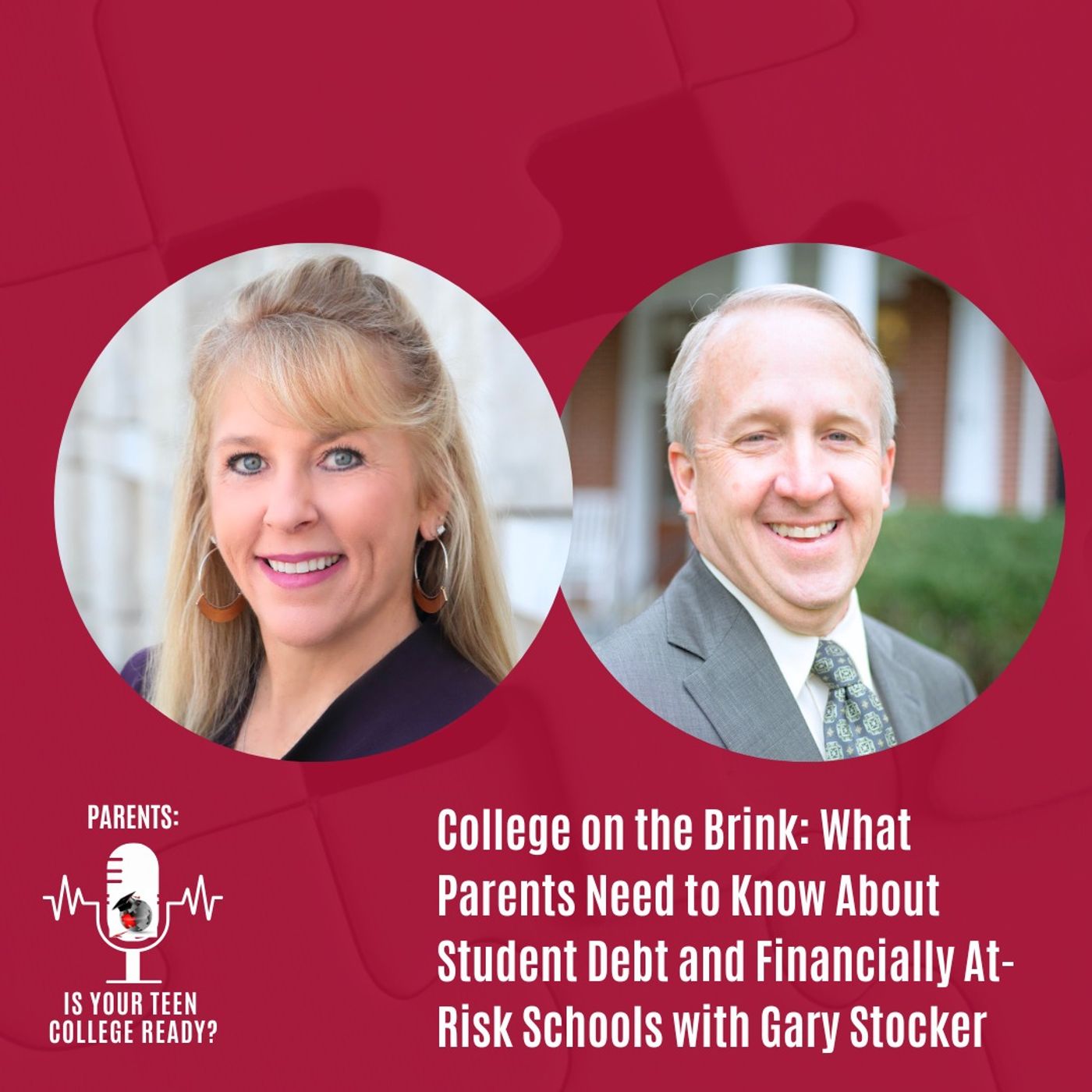
College on the Brink: What Parents Need to Know About Student Debt and Financially At-Risk Schools
Description
In this insightful discussion, Shellee Howard interviews Gary Stocker, an expert on college financial health and viability, to shed light on the often-overlooked financial challenges facing many colleges today. Gary, originally trained as a medical laboratory scientist, transitioned into higher education administration and research, focusing on the financial stability of colleges, especially smaller private institutions. He reveals alarming trends, such as the closure of private colleges at an unprecedented rate, with one closing per week in early 2024. Despite the public perception of wealthy, stable institutions, many colleges, particularly small, rural, and non-urban private colleges, are struggling financially, often keeping these struggles hidden from prospective students and parents.
Gary explains how colleges mask the reality of their financial trouble by offering significant tuition discounts, which are often misrepresented as scholarships, to attract students. He warns parents to be cautious and to prioritize evaluating a college’s financial health before considering other factors like campus beauty or program offerings. Gary introduces tools he developed at College Viability, including a free report platform (mycollegeviability.com) that allows families to assess the financial health of over 1,400 private colleges and a college majors completion app that tracks graduation numbers in specific majors to help identify programs at risk of closure.
He highlights the risks students face if a college closes mid-education, emphasizing the importance of teach-out agreements that transfer students to other institutions, though these partner colleges may themselves be financially unstable. Gary also discusses the differences between public and private institutions, noting that while public colleges have similar low graduation rates, they rarely close due to government funding. He underscores the importance of transparency and independent analysis for families navigating college choices in a financially volatile higher education landscape.
Highlights
- Over 50% of private colleges graduate less than half their students on time, signaling systemic issues in higher education.
- Small, rural private colleges are most at risk of financial instability and closure, often without public warning.
- Tuition "scholarships" are frequently just discounts, not additional funds, misleading families about the true cost.
- Parents should make financial health the first criterion when evaluating colleges, not just campus appeal or programs.
- Teach-out agreements help students finish degrees if their college closes, but quality and stability of partner schools vary.
- Gary’s tools (mycollegeviability.com and the majors completion app) provide critical data for assessing college viability and program strength.
- Public colleges rarely close due to state funding but share similar challenges with graduation rates and funding cuts.
Key Insights
- Financial Health is the New Priority in College Selection: Gary stresses that parents and students must prioritize the financial stability of colleges over traditional factors like campus tours or program variety. This shift in focus is crucial because financially unstable colleges may cut programs, reduce quality, or close outright, disrupting students' education and costing families time and money.
- Rapid Rise in College Closures Indicates a Crisis: The fact that one private college closed every week in the first half of 2024 (though the rate has slowed) reveals a deep financial crisis in higher education, particularly among smaller and private institutions. This trend underscores the urgent need for transparency and proactive financial assessment tools for families.
- Tuition Discounts Mask True Costs