Episode Details
Back to Episodes
Freelancing for Small Businesses: Real World Budget Constraints and High Stakes
Description
Welcome to Episode 27 of the Boagworld Show, where we dive into a side of web work that doesn't get nearly enough attention. This month, we're exploring life as a freelancer working with small businesses. We're joined by Paul Edwards, a fellow member of the Agency Academy who has spent two decades serving clients that don't have massive budgets or sprawling marketing teams. If you've ever wondered how best practice advice translates to the real world of limited resources and high stakes, this conversation is for you.
App of the Week: Baymard UX-Ray
Before we get into our main conversation, we need to talk about an extraordinary tool that just launched. Baymard UX-Ray is built on the Baymard Institute's 150,000 hours of ecommerce research. If you're not familiar with Baymard, they've been conducting rigorous usability research for years, building an enormous repository of what actually works in ecommerce design.
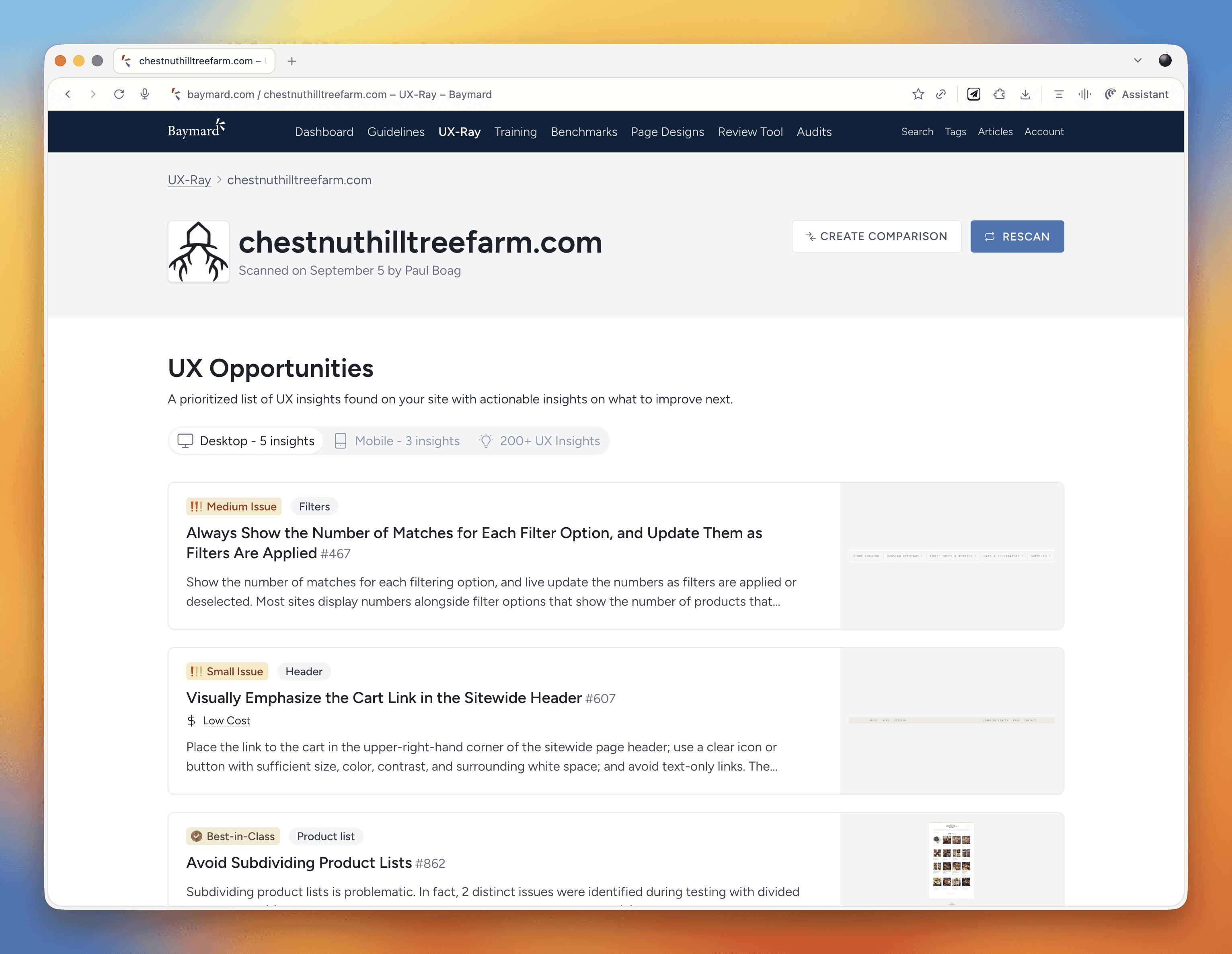
What makes UX-Ray remarkable is how it applies all that research. You can input your own site or a competitor's URL, and the tool scans it against Baymard's research database. It then provides specific recommendations for improvement, each one linked back to detailed guides explaining the research behind the suggestion.
Now, we'll be honest. Tools like this can feel a bit depressing when you first encounter them. Another thing that AI can do that used to be our job, right? But the reality is more nuanced. You still need expertise to ask the right questions, to know when to ignore advice that doesn't fit your situation, and to implement recommendations effectively. What UX-Ray really does is democratize access to quality research, allowing smaller teams and solo practitioners to benefit from insights that would otherwise require a massive research budget.
For anyone working in ecommerce, particularly if you're trying to compete with larger players, this tool is worth exploring.
Life as a Freelancer Serving Small Businesses
Our main conversation this month centers on something we don't discuss enough in the UX and web design community. Most of the advice you read online, most of the case studies and best practice articles, come from people working with large organizations. We're guilty of this too. Between the two of us, we've worked with clients like Doctors Without Borders, GlaxoSmithKline, and major universities. That shapes our perspective in ways we don't always recognize.
Paul Edwards brings a different lens. He's spent 20 years as a freelancer, and while he's worked with organizations of varying sizes, the common thread through his client list isn't scale. It's circumstance. His clients typically have small or nonexistent marketing teams. They're often time-poor and lack technical expertise. Most importantly, they have skin in the game in a way that corporate clients rarely do.
The Origin Story
Paul's freelance journey started dramatically. On November 5, 2005, he had a tantrum at his job as a commercial manager for a civil engineering company and quit on the spot. No savings, no business plan, no real idea what he was doing. He just knew he'd been teaching himself web design with Dreamweaver and Fireworks, and he thought maybe he could make a go of it.
What followed was the classic freelancer trajectory. He worked his friends and family network, which led him into academia and international development work. He found himself building sites for projects funded by the Bill and Melinda Gates Foundation, DFID, and the World Bank. These weren't necessarily well-funded projects despite the prestigious funders, but they gave him experience working with agencies across Europe and projects in Africa focu