Episode Details
Back to Episodes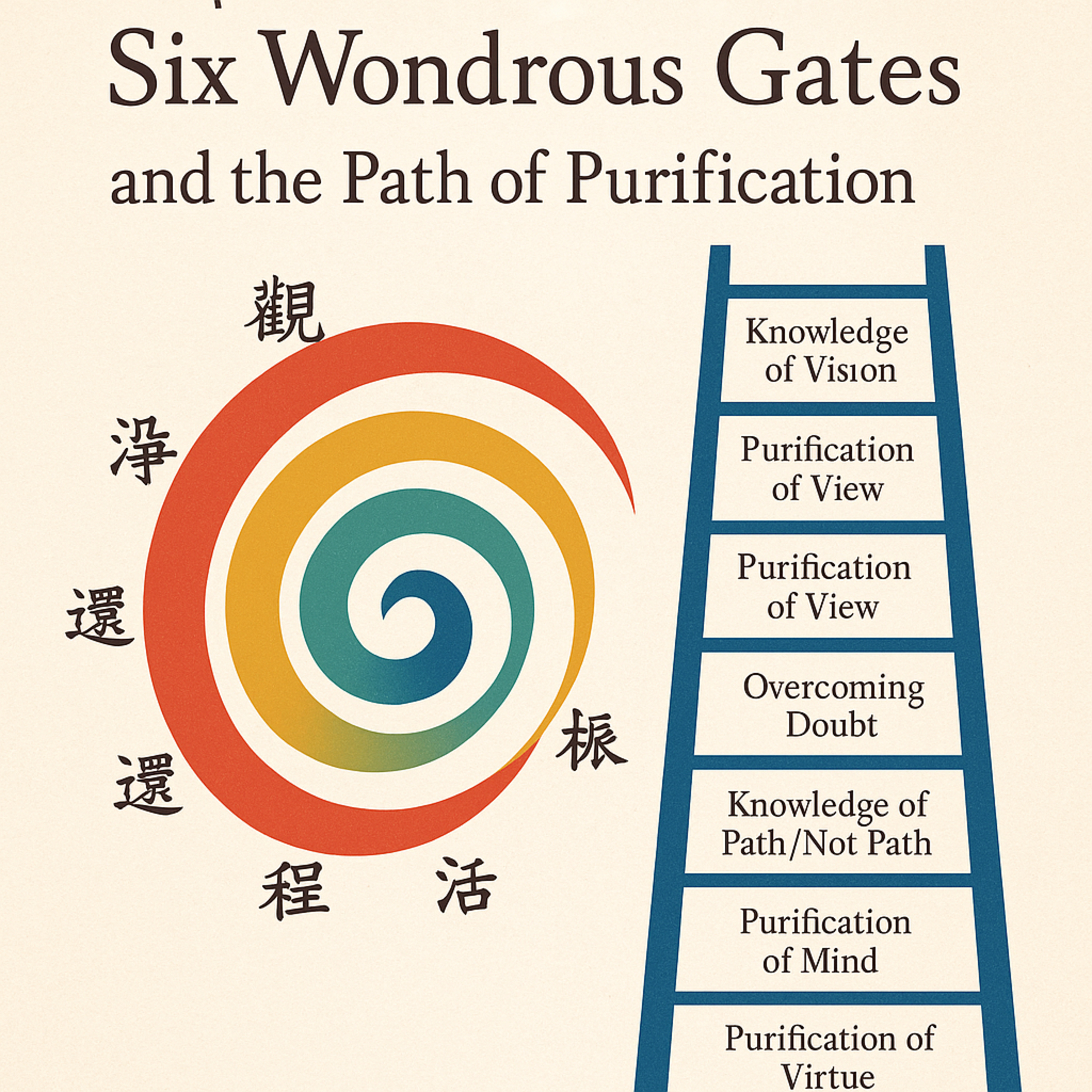
Mahayana and Theravāda: Two Maps of Buddhist Awakening
Description
In this episode of the Deep Dive we present a comparative analysis between two foundational Buddhist meditation systems: Zhiyi's Six Wondrous Gates from the Chinese Tiantai school and Buddhaghosa's Seven Purifications detailed in the Theravāda Visuddhimagga. The essay outlines how both sixth and fifth-century masters mapped the path to awakening, beginning with stabilization through breath; however, they employed fundamentally different approaches. Zhiyi's method is characterized as a holistic, cyclical, and integrative Mahāyāna path focused on revealing the mind's innate purity (Suchness), while Buddhaghosa's is described as a sequential, analytic, and purgative Theravāda ladder aimed at the precise elimination of defilements to achieve cessation (Nibbāna). Ultimately, the comparison highlights a shared architectural movement from ethics to wisdom, even as the two traditions diverge significantly in their underlying metaphysics and pedagogical structures.