Episode Details
Back to Episodes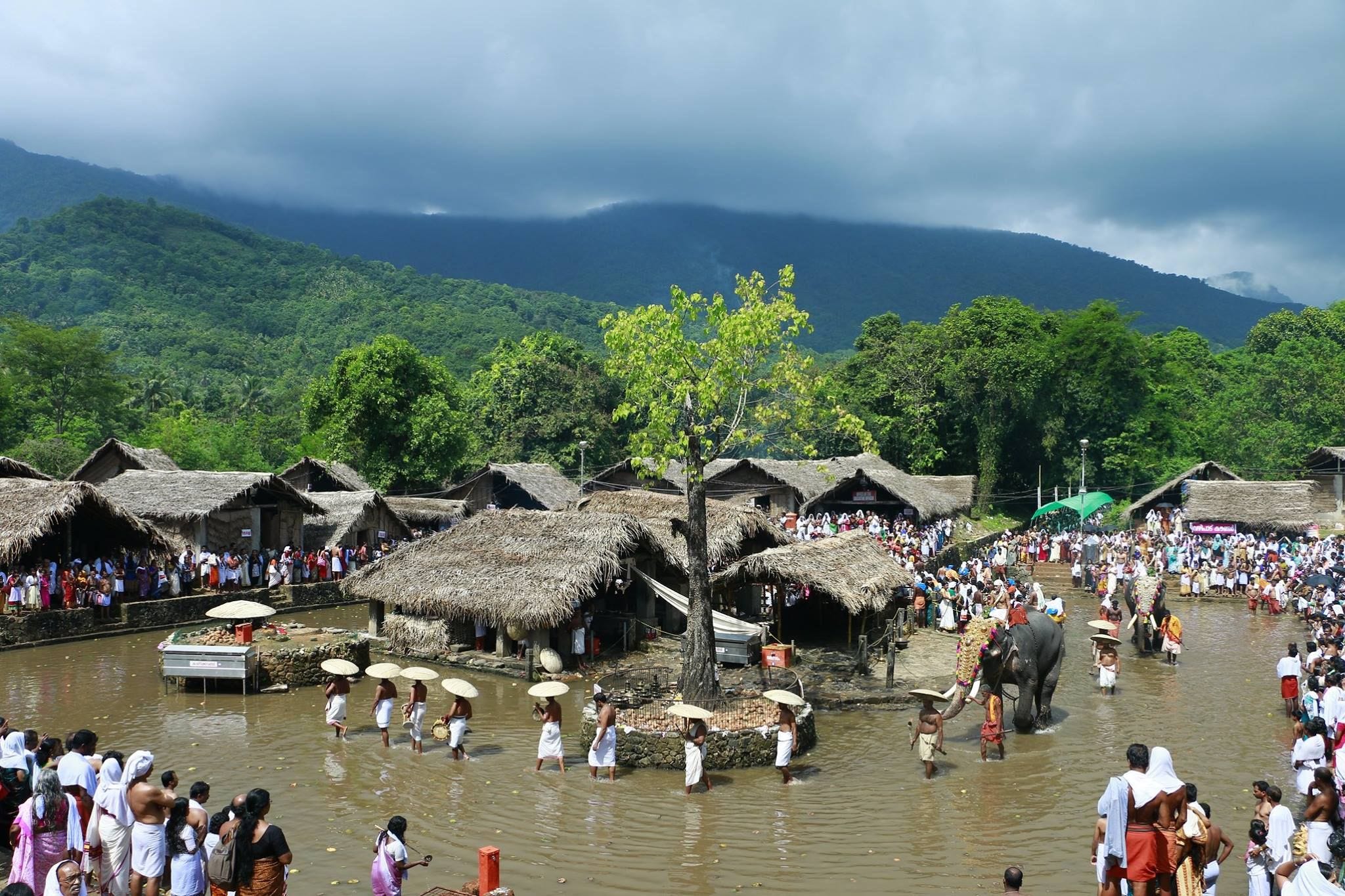
Kottiyoor - The Sacred Forest Where Shakti Was Born
Description
The Hidden Cradle of the Divine Feminine
There are places in India where mythology doesn’t just live in stories - it breathes through the soil, whispers through the trees, and moves with the rhythm of the rivers. One such place is Kottiyoor, a small forest village tucked away in the lush highlands of Kerala’s Kannur district, bordered by the sacred Bavali River. To the uninitiated, it might appear as a remote shrine hidden in the folds of the Western Ghats. But to those who know its secret, Kottiyoor is nothing less than the spiritual birthplace of Shakti herself.
Long before stone temples rose across the land, before idols were carved or rituals codified, faith in Kottiyoor was shaped by nature itself. The air hums with devotion, the ground feels ancient, and the river carries echoes of an age when gods and mortals walked together. Locally called Vadakeswaram Temple, Kottiyoor is believed to be the very site of Daksha’s Yagna, the cosmic event that triggered one of Hindu mythology’s most powerful and sorrowful episodes - the self-immolation of Sati Devi and the subsequent creation of the 51 Shakti Peethas that sanctify the Indian subcontinent today.
This is not just a temple. It is a living memory of divine sorrow and transformation, of how destruction became creation, and how loss gave birth to the eternal presence of the Goddess. Every stone, every stream, every ritual in Kottiyoor is a continuation of that mythic moment - not preserved in scriptures, but lived through generations of worshippers, forest-dwellers, and spiritual seekers.
What makes Kottiyoor extraordinary is not its architecture, for there are no walls, no towers, and no golden domes. Instead, there is open sky, sacred earth, and an ancient rock where Sati is believed to have ended her life in protest. The shrine here is temporary, rebuilt each year for only 27 days, during which the forest transforms into a living Yagna ground. Priests, devotees, and tribal communities come together to reenact the cosmic event that forever changed the course of divine history.
In this timeless forest, ritual and myth are indistinguishable. The boundaries between history and faith fade away. Kottiyoor is not just a destination for pilgrims - it is an experience of spiritual rebirth, an immersion into the origins of devotion itself. It stands as a reminder that the essence of the sacred does not lie in monuments, but in moments - moments where the mortal meets the eternal, and where divinity reveals itself not in grandeur, but in simplicity.
The Mythic Origin: Daksha’s Yagna and the Birth of Shakti
The story begins with Daksha Prajapati, father of Sati and one of the sons of Brahma.Despite being Shiva’s father-in-law, Daksha harbored deep resentment toward him - considering Shiva an ascetic unworthy of his daughter.
When Daksha organized a grand Yagna (sacrificial ritual), he deliberately excluded Shiva and Sati from the invitation. Sati, unable to bear this insult, went uninvited - hoping to reconcile. But Daksha’s mockery and blasphemy against Shiva enraged her. In divine grief and protest, she self-immolated in the sacred fire.
Shiva, upon hearing of her death, was consumed by sorrow and fury.He carried Sati’s lifeless body across the cosmos, performing the Tandava of Destruction. To stop the devastation, Lord Vishnu released his Sudarshana Chakra, cutting her body into 51 pieces, which fell across the Indian subcontinent - each place becoming a Shakti Peetha, sanctified by her divine presence.
And the very spot where it all began - the original fire, the original sacrifice - was Kottiyoor.
History and Legacy of Kottiyoor
The origins of Kottiyoor dissolve into the mists of antiquity, lying at the intersection of
Listen Now
Love PodBriefly?
If you like Podbriefly.com, please consider donating to support the ongoing development.
Support Us