Episode Details
Back to Episodes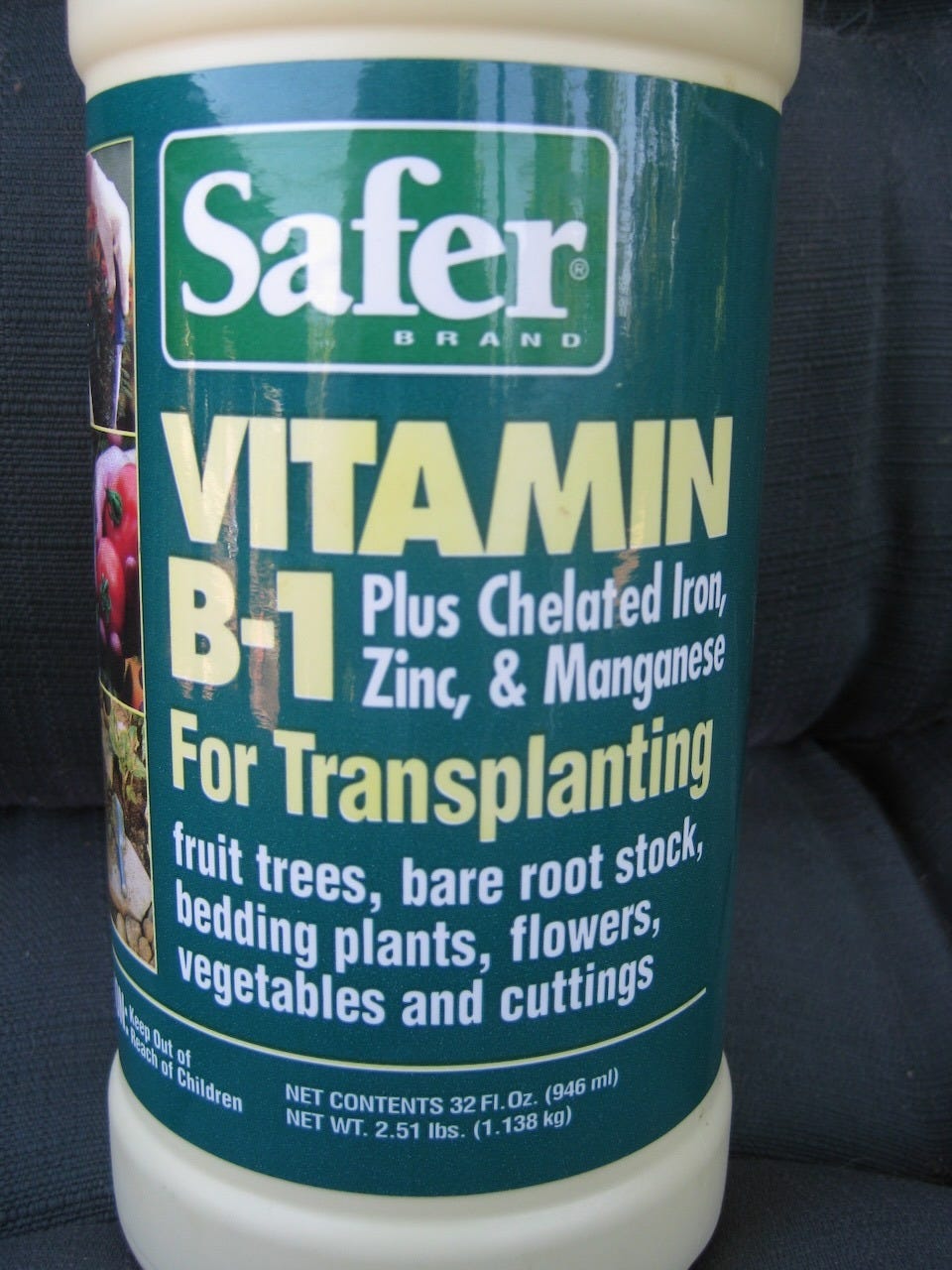
Can Vitamin B1 Help New Garden Transplants?
Description
Beyond The Garden Basics with Farmer Fred is a reader-supported publication. To receive the complete posts, have access to over 200 previous editions, and help keep the good gardening information coming your way, please become a paid subscriber.
Early fall is for planting, as we are fond of saying. The days are cooler, and the soil is still warm. Those are ideal conditions for a healthy start of new cool season annuals, perennials, trees, and shrubs.
If you’re at the nursery this weekend checking out the latest in plants for your yard, you might just take a stroll down the garden chemical aisle. You may notice, on the shelf, a product of dubious value: Vitamin B-1. A typical label on such a bottle will tout its benefits for transplanting fruit trees, bare rootstock, flowers, vegetables and cuttings.
Gardeners, their parents and their grandparents have heard this refrain at nurseries for decades: “Get a bottle of B-1, it will help reduce transplant shock for that new plant you are buying.”The truth, though, is the same as it has been for nearly 90 years: it isn’t the Vitamin B-1 (thiamine hydrochloride) in the bottle that reduces transplant shock.
First a definition of “transplant shock” from Purdue University:
“Transplant shock is a term that refers to a number of stresses occurring in recently transplanted trees and shrubs. It involves failure of the plant to root well, consequently the plant becomes poorly established in the landscape. New transplants do not have extensive root systems, and they are frequently stressed by lack of sufficient water. Plants suffering from water stress may be more susceptible to injury from other causes such as the weather, insects, or disease. When several stresses are being experienced, the plant may no longer be able to function properly.”
And right there you have the answer to effectively reduce transplant shock: water correctly.
Thiamine exists in nature, produced for plants via leaves and sunlight. Plants, as well as soil microbes, create their own Vitamin B1. Thiamine is a cofactor (molecule that binds to an enzyme to help/allow it to function) important in the construction and break down of carbohydrates for growth or energy storage/release.
In the 1930’s, thiamine was shown to increase root development in plant tissue cultures - in the lab - especially in the dark. But those results couldn’t be replicated consistently in the field.
Research at the University of California has shown that the addition of Vitamin B-1 to a plant doesn’t make any difference at all.
Garden author Robert Kourik reported on his website: “The sun set on this persistent myth many years ago. Sunset Magazine reported in 1984 of studies which disproved the value of a vitamin B1 drench at transplant. Yet this horticultural “snake oil” still clutters many retail nursery shelves.
What does work in that bottle prominently labeled “B-1”: the other ingredients - usually micronutrients or auxins - might make a difference in roots and growth of new plants.
Back in the 1940’s, naturally occurring plant growth regulators, known as auxins, were isolated and tested. Auxins were found to stimulate cell elongation in roots and stem tissue. Bingo!
Around that time, a commercial product, Transplantone, was developed that contained auxins and thiamine. Later research showed that it was certain auxins, not the thiamine, that encouraged roots.
But the die was cast: gardeners got into the habit of getting vitamins for their