Episode Details
Back to Episodes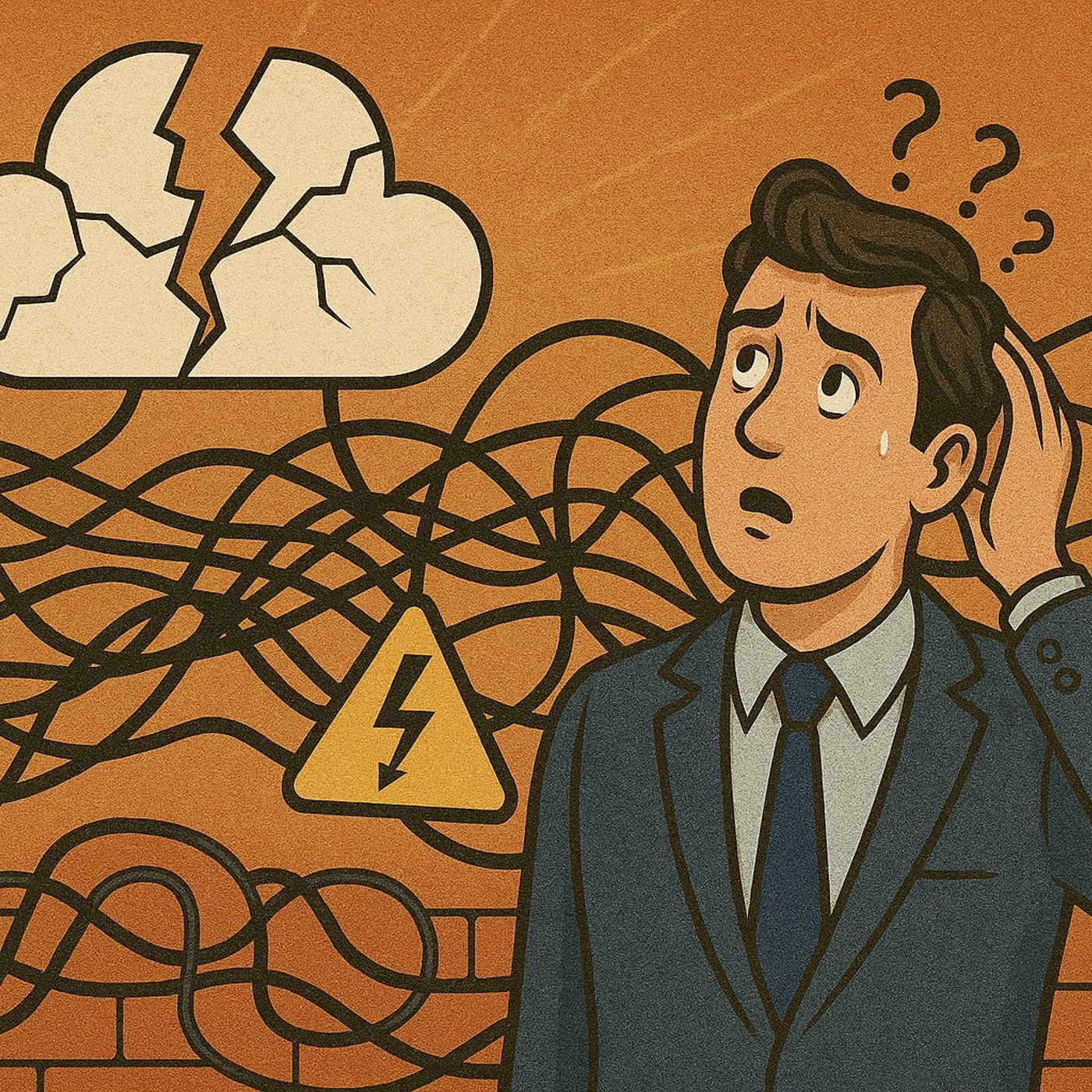
The Cloud Promise Is Broken: Why Migrations Never End, Dashboards Don’t Change Anything & How To Fix Azure Responsibility Gaps
Season 1
Published 10 months, 3 weeks ago
Description
You were promised speed, savings and security in one move to the cloud—and got half‑finished migrations, surprise bills and endless “stabilization” instead. In this episode, I explain why cloud migrations never really end, how the data you collect turns into busywork instead of decisions, and where responsibility for fixing things quietly evaporates between teams. You’ll get concrete targets you can set this quarter so Azure stops feeling like a moving target and starts behaving like a platform you can actually steer.
WHY CLOUD MIGRATIONS NEVER REALLY END
Most teams treat “we’re in Azure now” as a finish line, but the platform keeps changing under your feet. Services evolve, pricing shifts, security baselines update and suddenly yesterday’s “done” architecture looks outdated or too expensive. We walk through the pattern: migration projects celebrate landing workloads, then drift into constant reconfigurations, cost firefighting and compliance fixes because the cloud behaves like a living ecosystem—not a static destination. The key shift is moving from “Are we done?” to “How fast can we adjust?” and measuring resilience instead of pretending you’ll ever reach a final state.
THE DATA TRAP: DASHBOARDS WITHOUT DECISIONS
Collecting metrics is easy; acting on them is where most organizations fail. Dashboards show utilization, latency, cost and security alerts, but too often they’re produced, emailed and forgotten—creating the illusion of control without any actual changes in the environment. I break down why reports become background noise, how that lulls leadership into thinking risks are handled, and how to flip one metric this month into a real intervention (for example, shutting down underused VMs at night and tracking the savings). Monitoring only creates value when someone has both the mandate and the habit to turn numbers into adjustments.
THE RESPONSIBILITY MIRAGE
On paper, ownership looks clear: security owns security, finance owns cost, ops owns uptime. In reality, the teams who see the problems often don’t control the budgets, permissions or tools needed to fix them—so issues get logged, escalated and slowly forgotten. We explore this “responsibility mirage” with examples like security teams who can see missing encryption but can’t enable the feature, or FinOps teams who spot waste but can’t change application design. You’ll learn how to redraw the responsibility map so every key signal (cost, risk, performance) has a clearly named owner with authority to change configurations, not just write slide decks.
WHAT YOU’LL LEARN
WHY CLOUD MIGRATIONS NEVER REALLY END
Most teams treat “we’re in Azure now” as a finish line, but the platform keeps changing under your feet. Services evolve, pricing shifts, security baselines update and suddenly yesterday’s “done” architecture looks outdated or too expensive. We walk through the pattern: migration projects celebrate landing workloads, then drift into constant reconfigurations, cost firefighting and compliance fixes because the cloud behaves like a living ecosystem—not a static destination. The key shift is moving from “Are we done?” to “How fast can we adjust?” and measuring resilience instead of pretending you’ll ever reach a final state.
THE DATA TRAP: DASHBOARDS WITHOUT DECISIONS
Collecting metrics is easy; acting on them is where most organizations fail. Dashboards show utilization, latency, cost and security alerts, but too often they’re produced, emailed and forgotten—creating the illusion of control without any actual changes in the environment. I break down why reports become background noise, how that lulls leadership into thinking risks are handled, and how to flip one metric this month into a real intervention (for example, shutting down underused VMs at night and tracking the savings). Monitoring only creates value when someone has both the mandate and the habit to turn numbers into adjustments.
THE RESPONSIBILITY MIRAGE
On paper, ownership looks clear: security owns security, finance owns cost, ops owns uptime. In reality, the teams who see the problems often don’t control the budgets, permissions or tools needed to fix them—so issues get logged, escalated and slowly forgotten. We explore this “responsibility mirage” with examples like security teams who can see missing encryption but can’t enable the feature, or FinOps teams who spot waste but can’t change application design. You’ll learn how to redraw the responsibility map so every key signal (cost, risk, performance) has a clearly named owner with authority to change configurations, not just write slide decks.
WHAT YOU’LL LEARN
- Why the idea of a “finished” cloud migration creates false expectations and constant firefighting.
- How to turn at least one existing Azure metric into a concrete, measurable change this quarter.
Listen Now
Love PodBriefly?
If you like Podbriefly.com, please consider donating to support the ongoing development.
Support Us