Episode Details
Back to Episodes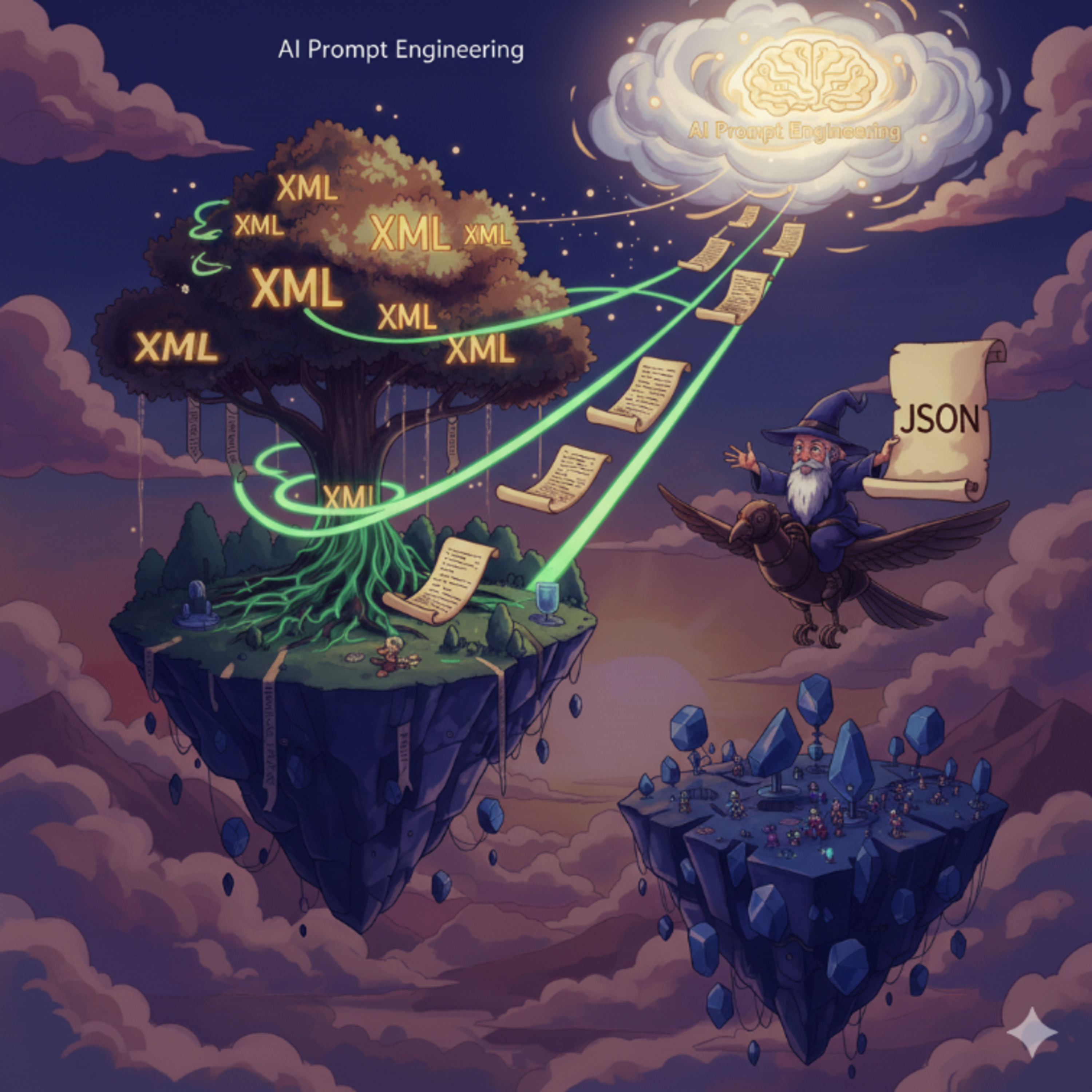
Just when I thought XML was dead , thanks to JSON; it found a new life : AI Prompt Engineering
Description
https://g.co/gemini/share/fcde9cae858f
The digital landscape is built upon the exchange of data, a process facilitated by standardized formats that allow disparate systems to communicate. For decades, two formats have been preeminent in this role: the Extensible Markup Language (XML) and JavaScript Object Notation (JSON). While often presented as interchangeable rivals, their core differences are not merely syntactic but philosophical, stemming from distinct origins and design goals. XML was conceived as a language for creating structured, self-describing documents, while JSON was born from the practical need to serialize programming objects for transmission. This foundational divergence dictates their respective strengths, weaknesses, and ultimate suitability for different technological paradigms. A meticulous deconstruction of their technical characteristics reveals the fundamental trade-offs between robustness and efficiency that have shaped the modern web.