Episode Details
Back to Episodes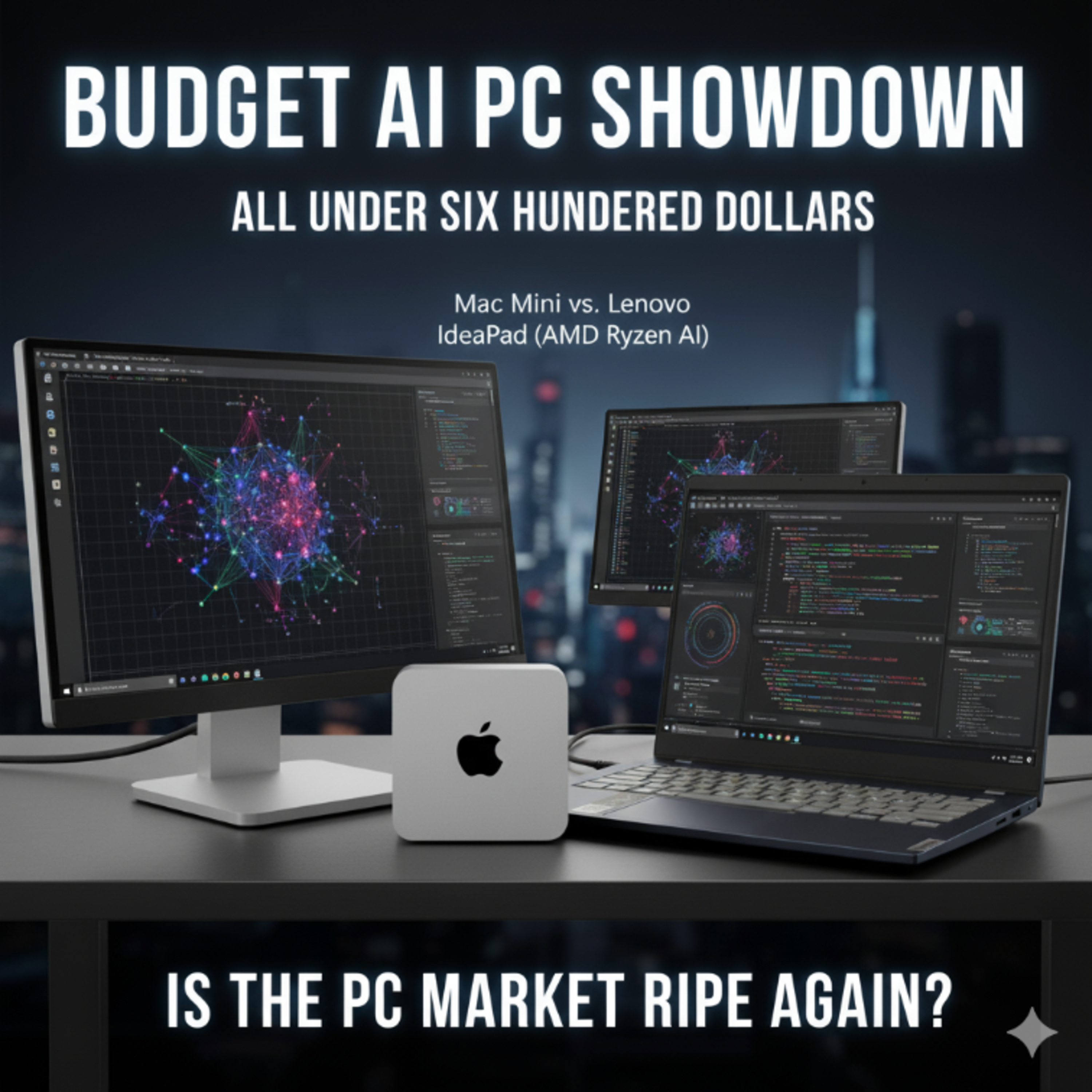
Budget AI showdown - Under $600 - Lenovo vs Mac Mini
Description
https://g.co/gemini/share/57813ab696d9
The personal computing landscape is at an inflection point, defined by the rise of on-device artificial intelligence and a renewed battle for performance-per-watt supremacy. At the heart of this shift, two compelling new platforms have emerged at a remarkably accessible price point of approximately $599, presenting consumers with a stark choice. This report analyzes the decision between Apple's M4-powered Mac Mini and a new generation of Lenovo IdeaPad and Yoga laptops equipped with AMD's Ryzen AI 7 350 processor. This is not merely a comparison of hardware specifications; it is an examination of two fundamentally different computing philosophies.
On one side stands the Apple Mac Mini, a minimalist desktop core representing the pinnacle of vertical integration. It offers formidable performance from its M4 System on a Chip (SoC) within a mature, secure, and highly efficient ecosystem. It is a product that assumes the user brings their own peripherals, focusing its entire value on the computational engine. On the other side is the Lenovo laptop, a flagship for the new "Copilot+ PC" era. It embodies an all-inclusive, feature-rich philosophy, delivering a complete, versatile package with a premium OLED touch display, keyboard, and digital pen, all built upon the flexible and ubiquitous Windows 11 platform.
The findings of this analysis are clear. For the user starting from a blank slate, the Lenovo package offers an overwhelmingly superior out-of-the-box value proposition, bundling hundreds of dollars worth of high-quality, integrated components for a single, low price. The Mac Mini, however, presents a potent and economically sound argument for specific users: those who already own a suite of high-quality peripherals and seek a powerful, efficient core upgrade, or those whose workflows are deeply entrenched in the unique efficiencies of the macOS ecosystem. Ultimately, the most sensible purchase hinges not on a simple performance metric, but on a careful evaluation of a user's existing hardware, intended applications, and their preference for a curated, integrated experience versus an open, versatile one.