Episode Details
Back to Episodes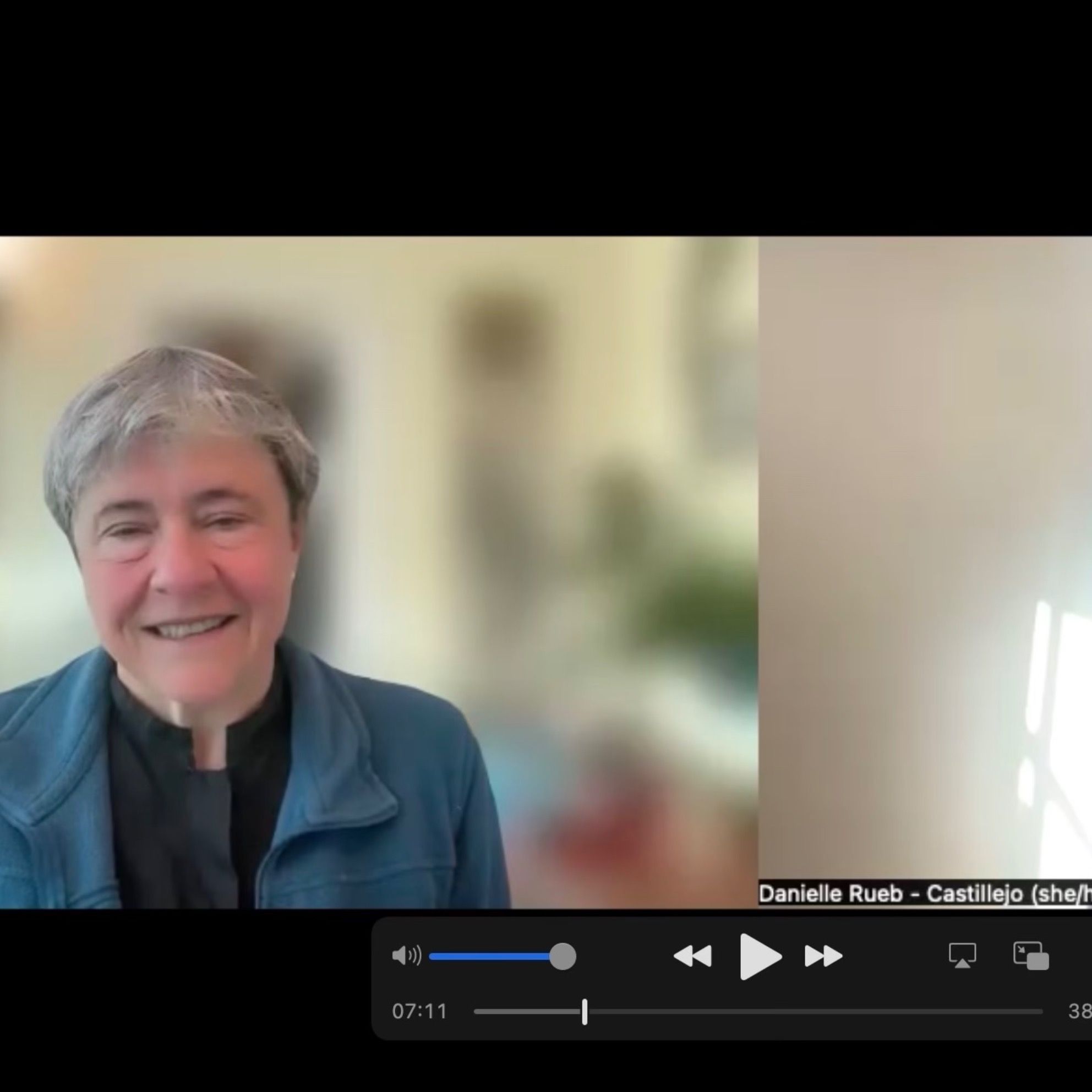
Season 6, Episode 6: Community Advocate Sarah Van Gelder speaks about Reality and Politics
Description
Danielle (00:20):
Welcome to the Arise podcast, conversations about reality and talking a lot about what that means in the context of church, faith, race, justice, religion, all the things. Today, I'm so honored to have Sarah Van Gelder, a community leader, an example of working and continuing to work on building solidarity and networks and communication skills and settling into her lane. I hope you enjoy this conversation. Hey, Sarah, it's so good to be with you. And these are just casual conversations, and I do actual minimal editing, but they do get a pretty good reach, so that's exciting. I would love to hear you introduce yourself. How do you introduce yourself these days? Tell me a little bit about who you are. Okay.
Sarah (01:14):
My name is Sarah Van Gelder and I live in Bremer and Washington. I just retired after working for the Suquamish Tribe for six years, so I'm still in the process of figuring out what it means to be retired, doing a lot of writing, a certain amount of activism, and of course, just trying to figure out day to day, how to deal with the latest, outrageous coming from the administration. But that's the most recent thing. I think what I'm most known for is the founding yes magazine and being the editor for many years. So I still think a lot about how do we understand that we're in an era that's essentially collapsing and something new may be emerging to take its place? How do we understand what this moment is and really give energy to the emergence of something new? So those are sort of the foundational questions that I think about.
Danielle (02:20):
Okay. Those are big questions. I hadn't actually imagined that something new is going to emerge, but I do agree there is something that's collapsing, that's disintegrating. As you know, I reached out about how are we thinking about what is reality and what is not? And you can kind of see throughout the political spectrum or community, depending on who you're with and at what time people are viewing the world through a specific lens. And of course, we always are. We have our own lens, and some people allow other inputs into that lens. Some people are very specific, what they allow, what they don't allow. And so what do we call as reality when it comes to reality and politics or reality and faith or gender, sexuality? It's feeling more and more separate. And so that's kind of why I reached out to you. I know you're a thinker. I know you're a writer, and so I was wondering, as you think about those topics, what do you think even just about what I've said or where does your mind go?
Sarah (03:32):
Yeah. Well, at first when you said that was the topic, I was a little intimidated by it because it sounded a little abstract. But then I started thinking about how it is so hard right now to know what's real, partly because there's this very conscious effort to distort reality and get people to accept lies. And I think actually part of totalitarian work is to get people to just in the Orwellian book 1984, the character had to agree that two plus two equals five. And only when he had fully embraced that idea could he be considered really part of society.
Love PodBriefly?
If you like Podbriefly.com, please consider donating to support the ongoing development.
Support Us