Episode Details
Back to Episodes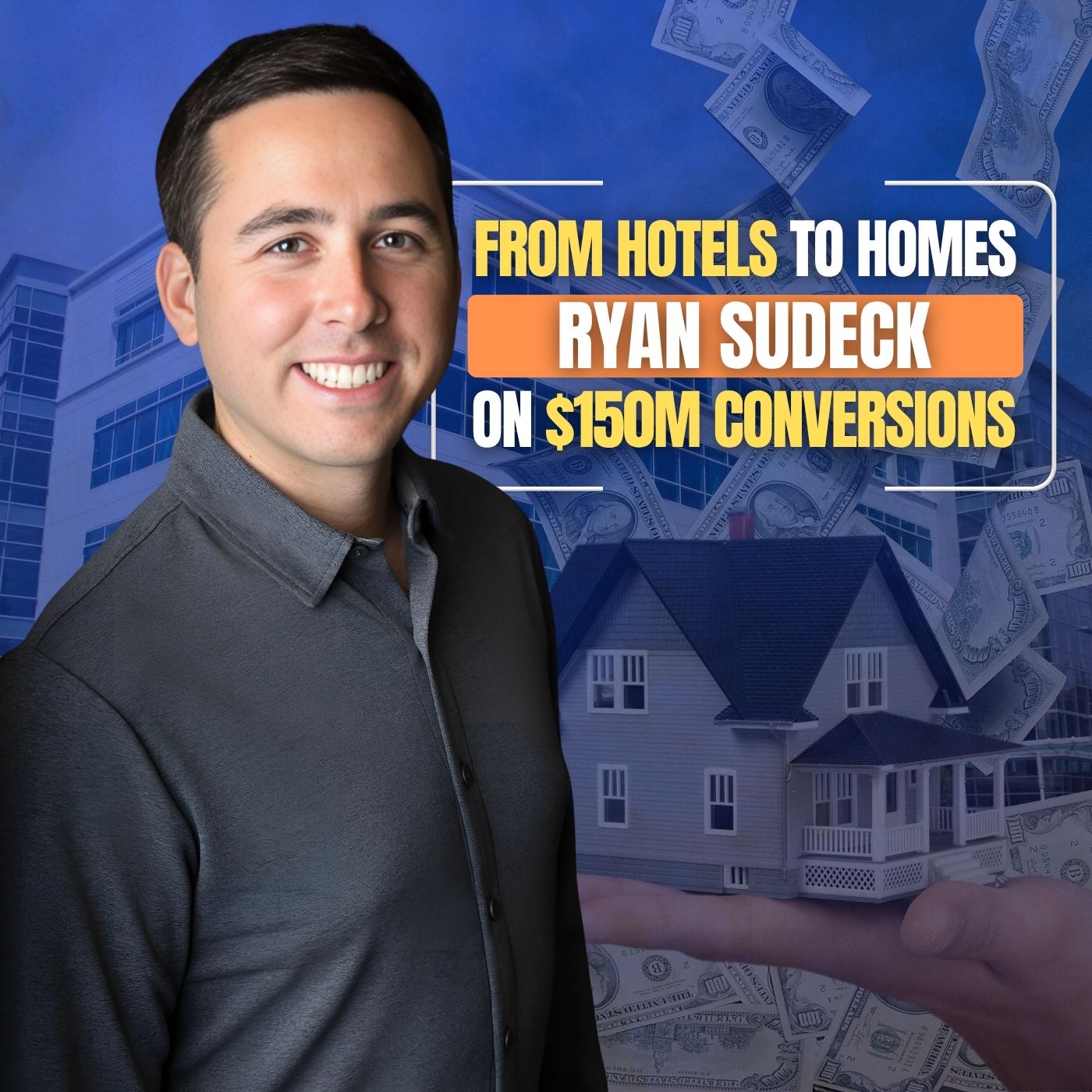
How to Convert Hotels into Apartments (Safely & Profitably)
Description
Derek sits down with Ryan Sudek, CEO of Sage Investment Group, to unpack a repeatable system for converting underperforming hotels/motels into studio apartments—filling an affordability gap while targeting strong returns.
They cover market selection, underwriting, construction (sprinklers, sub-panels, kitchens), property management at 100–200 unit scale, and the capital stack behind Sage's evergreen fund (quarterly distributions, 1031 within the fund, portfolio diversification). Expect practical detail on risk controls (change-of-use permits before closing, value engineering, local code strategy), tenant quality myths (longer average tenancy than market), and why exterior-corridor assets speed construction. The episode closes with goals (10–15 conversions/year, path to 15k units) and how deals actually reach the team (direct-to-seller, lenders, brokers, 60–70 LOIs out at any time).
Key Takeaways-
Niche with low competition: Hotels are valued differently than apartments; conversion unlocks a step-up in value.
-
Tenant reality ≠ myth: Converted assets showed longer average tenancy than national norms, supporting stable cash flow.
-
Market selection > distress alone: Prioritize wage/employment growth; affordable rents still pencil outside "tier-1" cities.
-
Speed & cost levers: Exterior corridors reduce build time (~20% faster); full kitchens + code upgrades (sprinklers, sub-panels) are standard.
-
Operational scale matters: Staff on-site at 100–200 units; centralized construction/asset management drives consistency.
-
Evergreen fund advantages: Diversification, quarterly distributions, 1031 recycling inside the fund, flexible exits.
-
Risk mitigation: Don't close before change-of-use; collaborate with jurisdictions; tighten cost ranges via repeatability.
-
Deal flow is proactive: Long nurture cycles (18–24 months), direct outreach plus lender/broker channels, many LOIs out concurrently.
-
You want a repeatable adaptive-reuse blueprint that works in multiple states.
-
You're raising or placing capital and need a portfolio model (evergreen) that smooths cash flow and taxes.
-
You're curious how to de-risk entitlement & construction on conversions (permits, code, staffing, vendors).
-
Hotel vs. apartment valuation spread and where the upside comes from
-
Market/rent comps (Denver studios vs. Carolinas), affordability positioning
-
Unit specs: typical SF, full kitchens, amenities, common-area repurposing
-
Construction/code: sprinklers, electrical sub-panels, energy code, interior vs. exterior corridor
-
Org design: acquisitions, construction mgmt, asset mgmt, on-site staffing
-
Capital: evergreen fund mechanics, 506(b) → 506(c), distributions & 1031 inside the fund
-
Risk controls: purchase terms tied to change-of-use, cost discipline, jurisdiction approach
-
Pipeline & sourcing: off-market, brokers, lender calls, LOI volume and timelines
-
00:00–03:30 Intro & Ryan's background; mission and first conversion "light-bulb" moment
-
03:30–08:00 Why hotels → apartments work; valuation spread; market selection logic
-
08:00–12:00 Tenant quality myth-busting; occupancy and demand drivers
-
12:00–16:00 Exterior vs. interior corridors; schedule/cost impact; amenity strategies
-
16:00–21:00 Construction & code: sprinklers, sub-panels, full kitchens; working with jurisdictions
-
21:00–26:00 Ops at scale: team structure, on-site staffing, property management cadence
-
26:00–31:00 Evergreen fund model: diversification, distri