Episode Details
Back to Episodes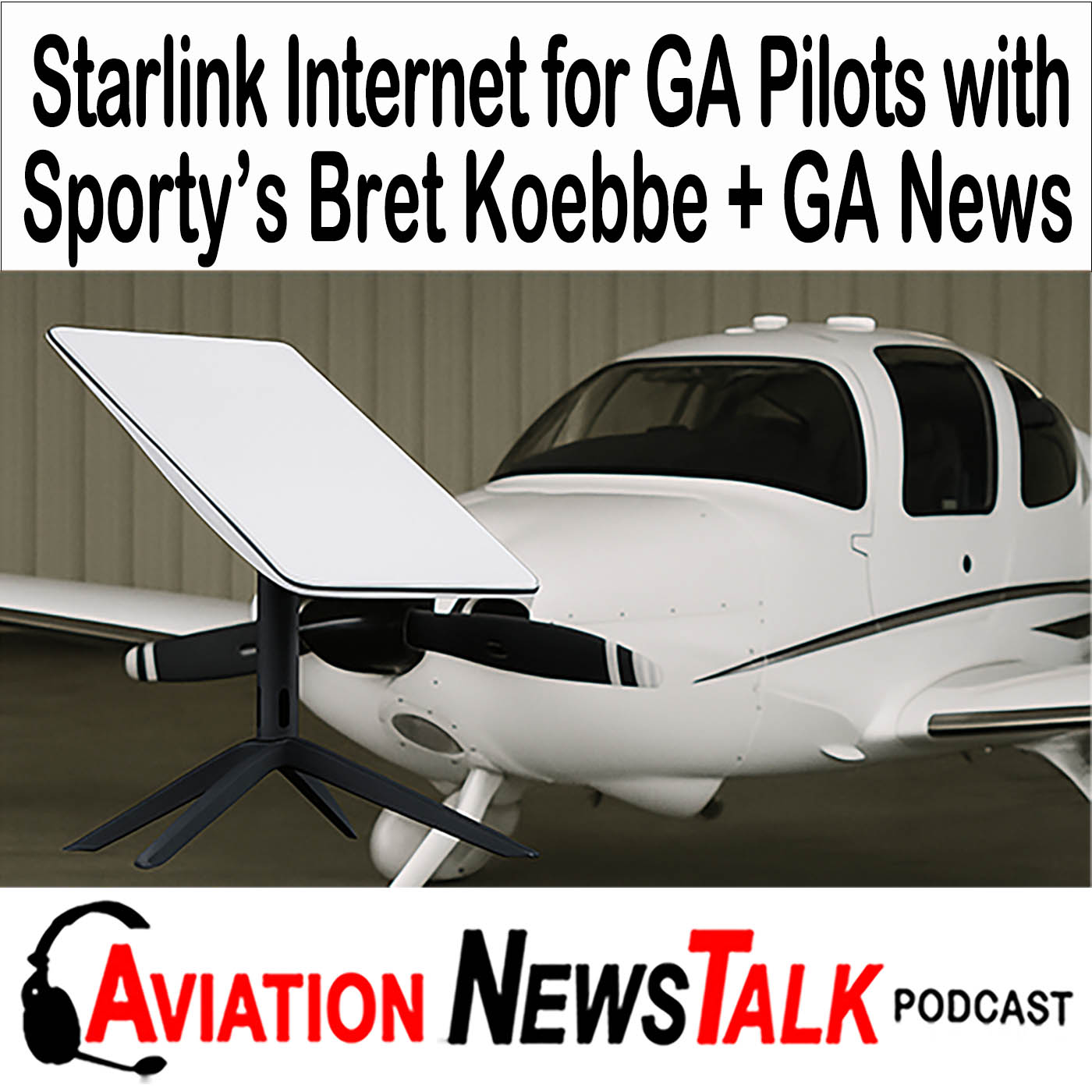
Starlink Internet for Pilots: Safety, Costs, and Future Tech with Sporty's Bret Koebbe
Description
Max talks with Bret Koebbe, Vice President of Sporty's Pilot Shop, about how Starlink internet access is entering general aviation cockpits and what that means for pilots today and in the future.
For decades, cockpit connectivity was mostly reserved for the airlines. Systems like Gogo provided limited bandwidth, required expensive antennas, and were impractical for piston aircraft. GA pilots relied on ADS-B weather, portable receivers, or Iridium text messaging to stay connected. That landscape has shifted with the Starlink Mini, a portable satellite dish small enough to fit in a 182 or Cirrus, delivering broadband internet in flight.
Benefits for Pilots
Bret outlines the legitimate safety advantages. Pilots can text family or FBOs, update arrival times, and share real-time position updates. More importantly, Starlink could enable widespread filing of PIREPs directly from an iPad, improving weather data for all. Weather cameras, now integrated into ForeFlight, could become accessible in flight, offering pilots actual visual conditions instead of relying solely on METARs or AWOS reports.
Risks and DistractionsBut Starlink also poses serious distraction risks. Bret shares a personal story: during a family trip, he streamed an NFL game mid-flight, only to realize within seconds how dangerously it diverted his attention. He immediately shut it off, but the experience was a powerful reminder of how alluring the technology is. Max underscores that the NTSB lists distractions as a top factor in loss-of-control accidents, and Starlink could easily become an "attractive nuisance" in cockpits.
Cost and Service PlansStarlink Mini hardware is about $499, and the Local Priority plan runs $65/month for 50 GB, sufficient for most piston pilots. For corporate pilots and jets, the Global Priority plan at $250/month supports higher speeds and offshore operations. Bret explains the differences in speed limitations (350 mph for Local Priority vs 550 mph for Global Priority) and how to choose based on aircraft type and mission.
Mounting and Power SolutionsBecause Starlink Mini lacks an internal battery, powering it is key. Bret recommends Sporty's Flight Gear Max Battery, capable of outputting 140 watts via USB-C, giving about three hours of Starlink runtime. For longer flights, higher-capacity solutions exist. Mounting options include suction cup mounts for rear windows (ideal in high-wing Cessnas and Cirrus aircraft) or side-window solutions in low-wing and corporate jets. Positioning is critical—blocking the dish with wings can cause dropouts.
Practical TipsBret offers pilot-tested tips:
- Create a custom iPad Focus Mode that blocks notifications except for critical texts when ForeFlight is open.
- Establish SOPs—use Starlink only in cruise and disconnect before descent.
- Enable Low Data Mode on devices to prevent iCloud or app background syncing from eating up gigabytes.
- Don't rely on Starlink radar or traffic feeds, which have even more latency than ADS-B.
Looking ahead, Bret sees huge potential. Automatic turbulence reporting from onboard sensors could update in