Episode Details
Back to Episodes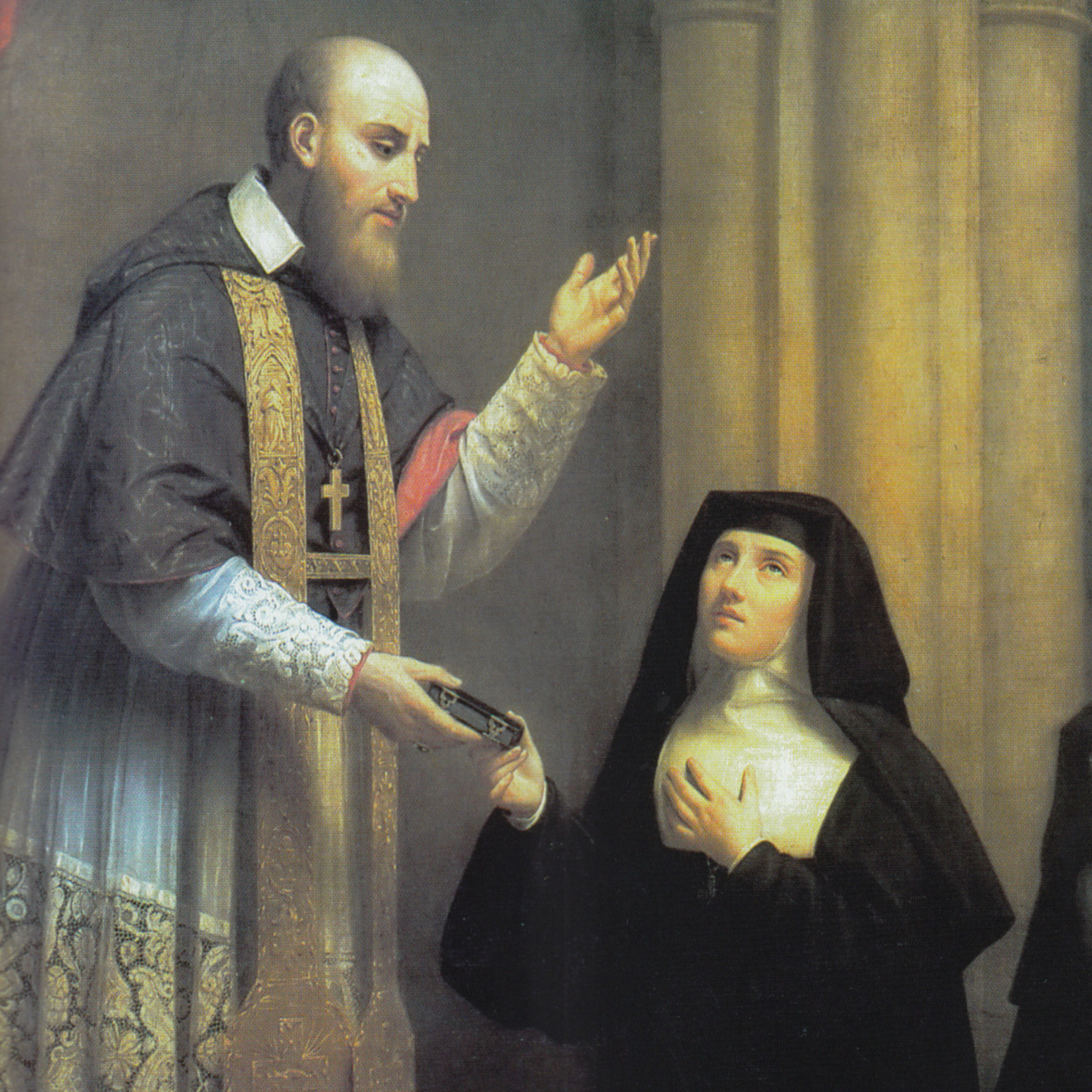
Dom Guéranger's Liturgical Year: August 21 - St. Jane Frances de Chantal
Description
St. Jane Frances de Chantal (1572–1641) was a French noblewoman, wife, mother, widow, and later foundress of a major religious order. Born in Dijon to an influential family, she married Baron Christophe de Chantal and devoted herself to her household and charitable works, but was widowed at 28 after her husband’s sudden death in a hunting accident. Left with four children, she endured deep grief yet dedicated herself to prayer and works of mercy, eventually coming under the spiritual direction of St. Francis de Sales. Together they founded the Visitation Order in 1610, a community marked by humility, simplicity, and openness, welcoming women unsuited to the more austere cloisters of the time. Despite trials, including family opposition, personal loss, and years of interior spiritual darkness, she persevered in her vocation with remarkable gentleness and strength. At her death in 1641, the Visitation had spread widely, leaving a legacy of profound trust in God’s providence and a spirituality rooted in love and humility.The Order of the Visitation of Holy Mary was founded in 1610 in Annecy, France, by St. Francis de Sales and St. Jane Frances de Chantal as a new form of religious life marked by humility, gentleness, and openness to God’s will. Unlike many existing cloistered orders of the time, it welcomed women who were older, widowed, or of frail health, offering a more accessible path to consecrated life through prayer, charity, and simplicity rather than severe austerities. Originally envisioned as an active community serving the sick and poor, the order was eventually directed by Church authorities to embrace papal enclosure, becoming a contemplative community while still preserving its spirit of interior humility and loving service. From Annecy, the Visitation spread rapidly across France and beyond, and by the time of St. Jane’s death in 1641, it had established over 80 convents. The Visitation became especially known for fostering the devotion to the Sacred Heart of Jesus through the visions of St. Margaret Mary Alacoque, a Visitation nun, leaving a lasting spiritual influence on Catholic life worldwide.Dom Prosper Guéranger's The Liturgical Year, a monumental fifteen-volume work, offers a comprehensive exploration of the Catholic Church’s liturgical calendar, guiding readers through the spiritual and historical richness of the Church’s worship. Written in the 19th century, the series provides daily meditations, historical context, and liturgical texts for the Mass and Divine Office, covering the entire cycle of seasons—Advent, Christmas, Lent, Passiontide, Easter, and the Time after Pentecost—as well as feast days of saints. Guéranger’s work, rooted in a deep contemplative spirit, aims to immerse the faithful in the Church’s prayerful life, emphasizing the unity of faith through the axiom lex orandi, lex credendi ("the law of prayer is the law of belief"), and remains a cherished resource for Catholics seeking to deepen their spiritual lives.
Dom Prosper Guéranger (1805–1875) was a French Benedictine monk, liturgical scholar, and founder of the Solesmes Abbey, renowned for his pivotal role in reviving the Benedictine Order in France and restoring the Roman liturgy after the disruptions of the French Revolution. Born in Sablé-sur-Sarthe, he entered the priesthood in 1827 and, inspired by a vision to restore monastic life, reestablished the Benedictine community at Solesmes in 1833, becoming its first abbot. A staunch defender of ultramontanism and traditional Catholic worship, he also championed the revival of Gregorian chant, significantly influencing the liturgical renewal movement.