Episode Details
Back to Episodes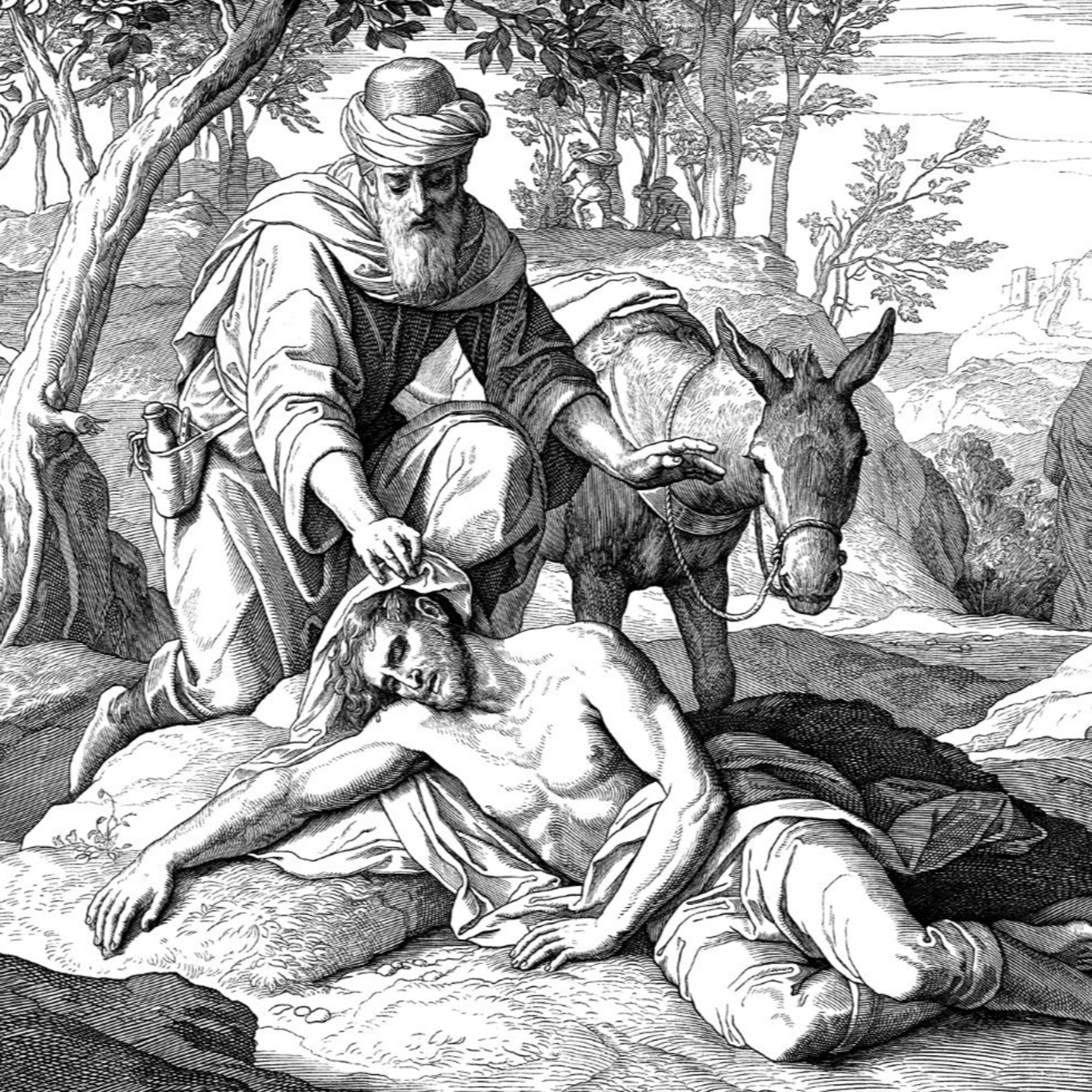
Dom Guéranger's Liturgical Year: August 31 - Twelfth Sunday after Pentecost: the Good Samaritan
Description
In the Parable of the Good Samaritan (Luke 10:25–37), Christ tells of a man who, after being beaten and left for dead on the roadside, is ignored by a priest and a Levite but mercifully aided by a Samaritan—someone despised by the Jews—who tends his wounds and provides for his recovery. In Catholic teaching, this parable exemplifies the universal call to charity, showing that true love of neighbor transcends ethnic, religious, or social boundaries. The Fathers often interpreted the Samaritan as a figure of Christ, who heals fallen humanity (the wounded man) through the sacraments and brings him into the care of the Church (the inn). Its enduring significance lies in its dual lesson: first, that every person is our neighbor deserving of compassion, and second, that the Christian life is modeled on Christ’s merciful love, making works of charity essential to salvation.Dom Prosper Guéranger's The Liturgical Year, a monumental fifteen-volume work, offers a comprehensive exploration of the Catholic Church’s liturgical calendar, guiding readers through the spiritual and historical richness of the Church’s worship. Written in the 19th century, the series provides daily meditations, historical context, and liturgical texts for the Mass and Divine Office, covering the entire cycle of seasons—Advent, Christmas, Lent, Passiontide, Easter, and the Time after Pentecost—as well as feast days of saints. Guéranger’s work, rooted in a deep contemplative spirit, aims to immerse the faithful in the Church’s prayerful life, emphasizing the unity of faith through the axiom lex orandi, lex credendi ("the law of prayer is the law of belief"), and remains a cherished resource for Catholics seeking to deepen their spiritual lives. Dom Prosper Guéranger (1805–1875) was a French Benedictine monk, liturgical scholar, and founder of the Solesmes Abbey, renowned for his pivotal role in reviving the Benedictine Order in France and restoring the Roman liturgy after the disruptions of the French Revolution. Born in Sablé-sur-Sarthe, he entered the priesthood in 1827 and, inspired by a vision to restore monastic life, reestablished the Benedictine community at Solesmes in 1833, becoming its first abbot. A staunch defender of ultramontanism and traditional Catholic worship, he also championed the revival of Gregorian chant, significantly influencing the liturgical renewal movement.