Episode Details
Back to Episodes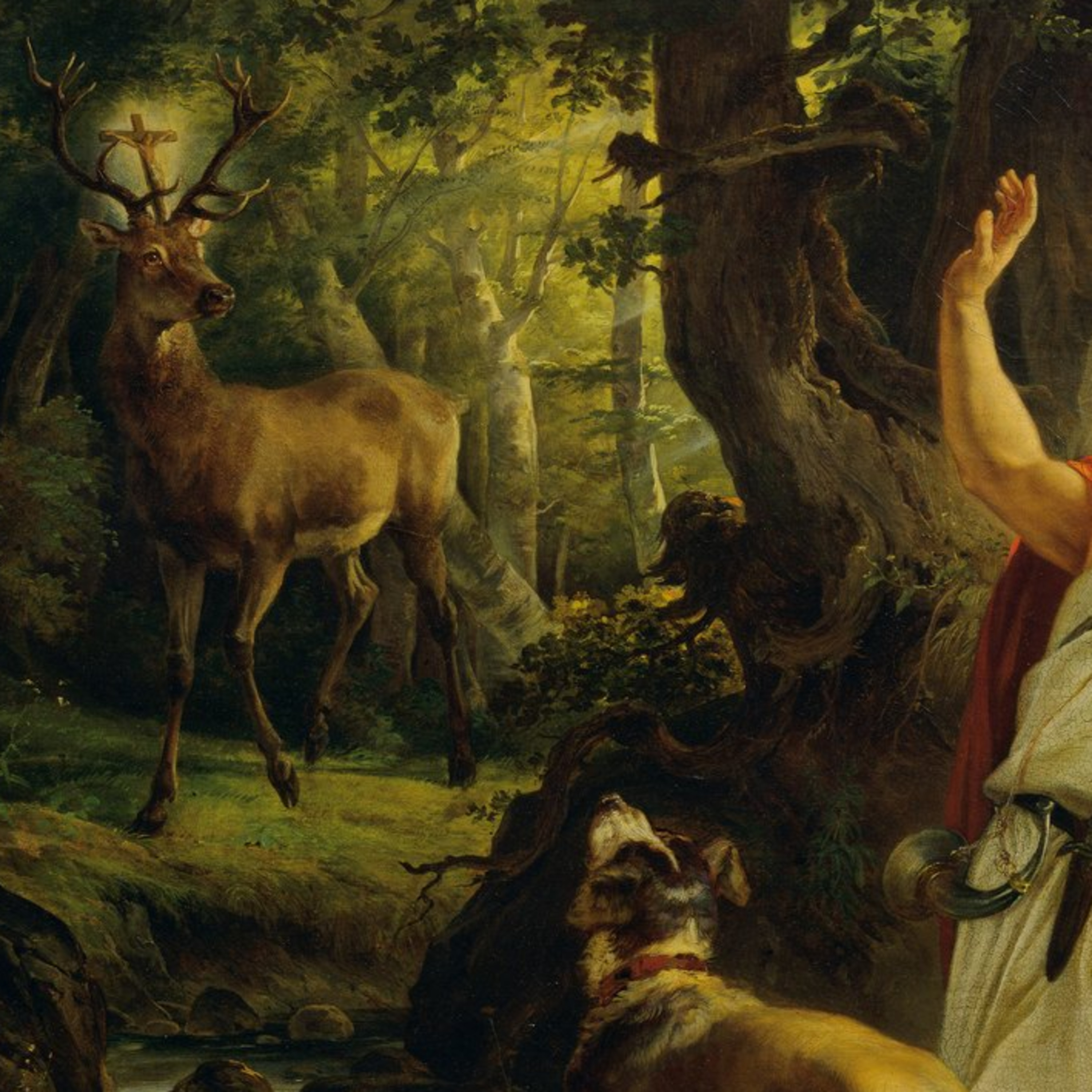
Dom Guéranger's Liturgical Year: September 20 - St. Eustace and companions
Description
St. Eustace, also known as Placidus before his conversion, was a Roman general under Emperor Trajan renowned for his military skill and noble character, who, according to legend, experienced a miraculous vision of a stag bearing a radiant cross between its antlers while hunting, leading to his conversion to Christianity along with his wife and children. Despite his newfound faith, he endured great trials, including the loss of his wealth and separation from his family, but he remained steadfast in virtue and trust in God. Eventually reunited with his loved ones, he continued to serve with distinction until Emperor Hadrian demanded that he offer sacrifice to pagan gods; when he refused, he and his family were martyred, reportedly by being burned alive inside a bronze bull. He is honored as a model of perseverance in the faith and venerated as the patron saint of hunters and soldiers.Dom Prosper Guéranger's The Liturgical Year, a monumental fifteen-volume work, offers a comprehensive exploration of the Catholic Church’s liturgical calendar, guiding readers through the spiritual and historical richness of the Church’s worship. Written in the 19th century, the series provides daily meditations, historical context, and liturgical texts for the Mass and Divine Office, covering the entire cycle of seasons—Advent, Christmas, Lent, Passiontide, Easter, and the Time after Pentecost—as well as feast days of saints. Guéranger’s work, rooted in a deep contemplative spirit, aims to immerse the faithful in the Church’s prayerful life, emphasizing the unity of faith through the axiom lex orandi, lex credendi ("the law of prayer is the law of belief"), and remains a cherished resource for Catholics seeking to deepen their spiritual lives. Dom Prosper Guéranger (1805–1875) was a French Benedictine monk, liturgical scholar, and founder of the Solesmes Abbey, renowned for his pivotal role in reviving the Benedictine Order in France and restoring the Roman liturgy after the disruptions of the French Revolution. Born in Sablé-sur-Sarthe, he entered the priesthood in 1827 and, inspired by a vision to restore monastic life, reestablished the Benedictine community at Solesmes in 1833, becoming its first abbot. A staunch defender of ultramontanism and traditional Catholic worship, he also championed the revival of Gregorian chant, significantly influencing the liturgical renewal movement.